

The biggest financial risks arise long before the factory begins its work. Here are some ways to minimize them.
- Lock in design decisions early to prevent costly changes once modules enter factory production.
- Align designs tightly with state codes before submission to avoid certification delays, redesigns and downstream impacts on on-site work.
- Coordinate early with the manufacturer, GC, engineers and logistics providers to protect the schedule, reduce risk and preserve margins.
Stratton Tingle is Director of Market Development and Strategic Partnerships at Wind River Built, a modular manufacturer headquartered in Cleveland, Tennessee. He says the biggest financial risks in offsite construction rarely stem from factory inefficiencies. Instead, they tend to arise during planning, certification, logistics and coordination — particularly when teams underestimate how different modular delivery is from conventional construction.
Wind River Built delivers its modular buildings to multiple markets, and Tingle emphasizes the importance of detailed pre-construction coordination before production begins. He says that front-end discipline is largely where projects protect their margins.
Here are his suggestions for a more profitable outcome.
Plan Carefully
“From our experience, it becomes more obvious every day that careful planning is critical for offsite construction,” Tingle says.
Because much of the work is completed before modules ever reach the jobsite, there’s less opportunity for on-site corrections. “The planning process is intense, precisely because you’re able to make far fewer choices on-site. There’s less room for on-site creativity,” he says. Teams must lock in decisions early.
If that planning work is rushed or incomplete, there can be dire financial consequences. “If the team is under the gun and rushing to get drawings completed in 24 hours, you’re going to miss things,” he says.
Developers considering modular for the first time need to bear in mind that although the planning phase may feel longer and more intense than site-built projects, that discipline is what protects the schedule, and budget, later.
Work With the Code
One area where projects can lose money is during the state certification process. Tingle has seen projects incur expense “because of a loose or creative interpretation of code during design. When plans enter certification review, those interpretations can trigger lengthy back-and-forth discussions with the state.” And those delays add to the overall expense — or erosion of profit — of a project.
But even bigger issues arise when site work has already begun. “I’ve seen projects where they’ve put the cart before the horse and rushed into site work without taking the proper time to complete planning and certification,” he says. “If certification issues require design changes, site work may need adjustment as well, which adds expense that could’ve been avoided if only more attention to detail had been taken upfront, specifically in making sure that the design was consistent with the state’s regulations.”
If the state requires changes that impact where utilities are run or a change to the foundation plan, “this can throw a seriously expensive wrench into the whole project.” Tingle gives the examples of “unexpected sprinkler requirements that mean water must be run where none was planned, or additional stairwells, elevators, or ADA-compliant access solutions where none was expected or planned for.”
That sequencing risk is especially pronounced in regions where modular is less common. In those circumstances, regulators may be less familiar with the offsite process and less likely to be comfortable with creative code interpretations.
Engineer Everything
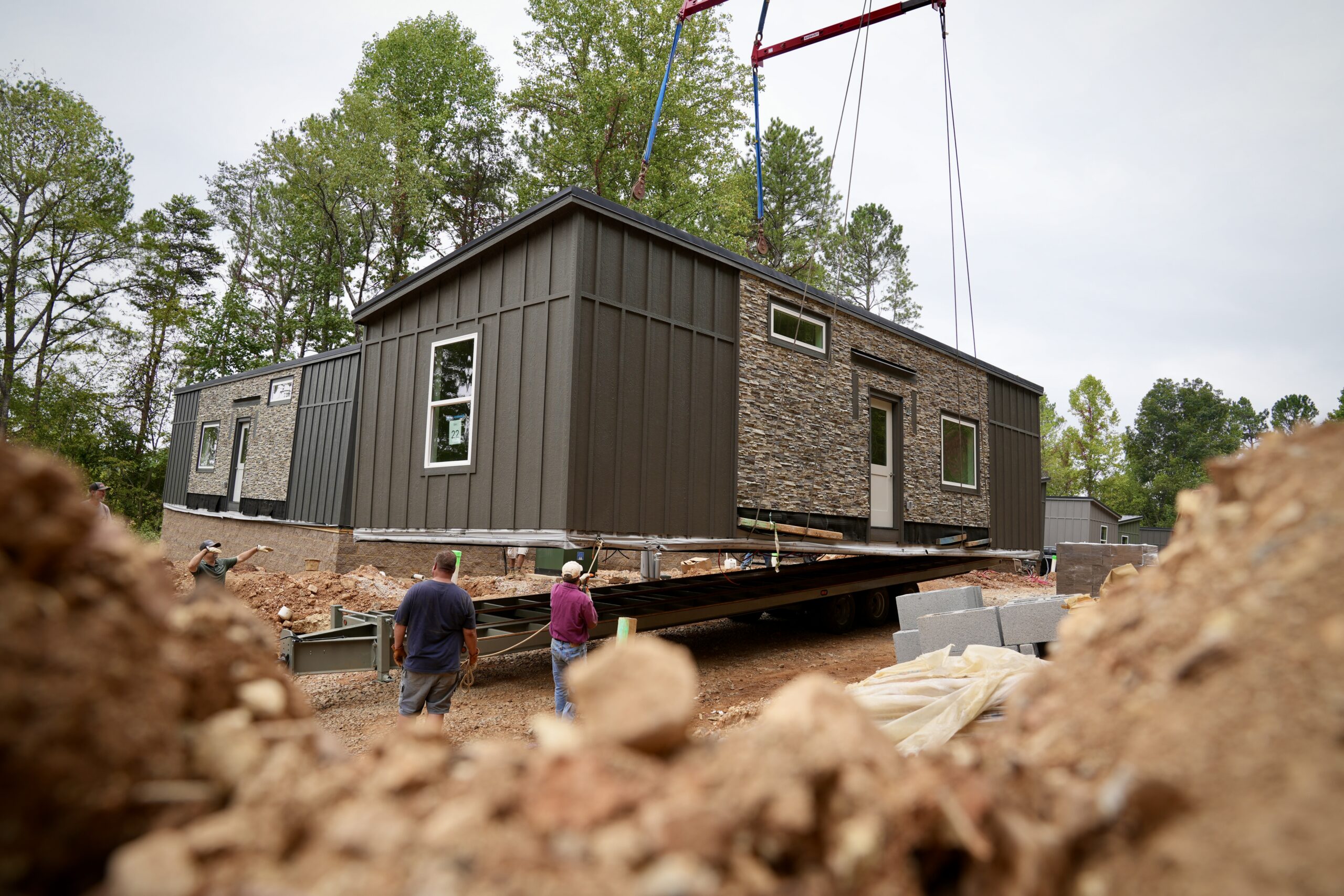
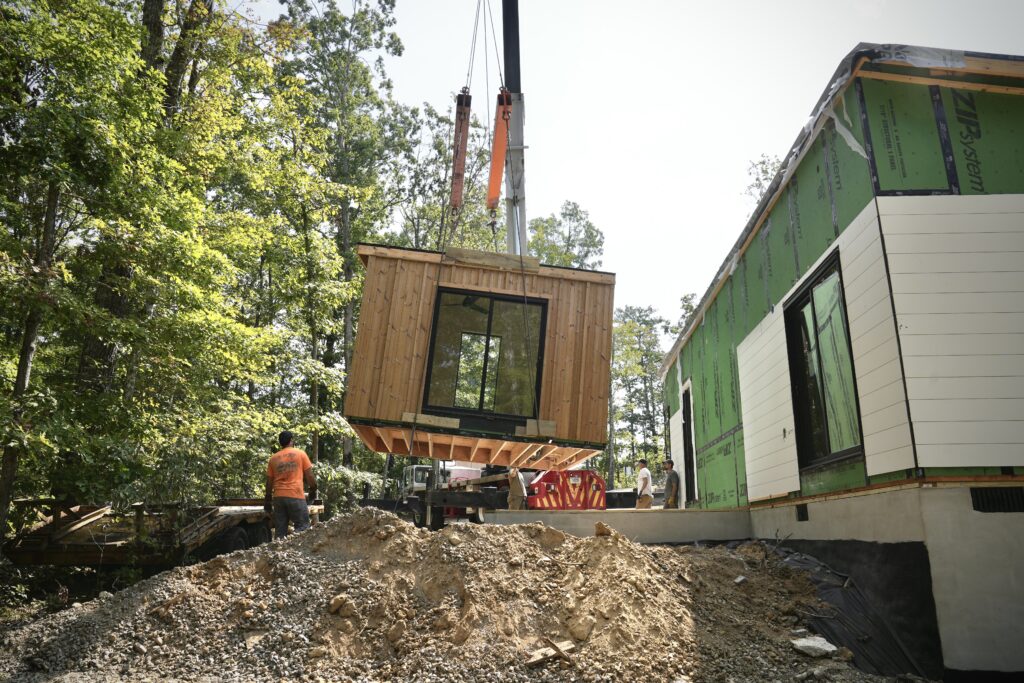
Logistics planning is another frequent source of avoidable cost. Even something as straightforward as crane placement requires early engineering. Teams must evaluate site slope, access points, module storage areas and the number of modules to be set in a day.
“You need to engineer the method by which the modules will be set,” Tingle says. “That includes decisions such as whether cables run through the floor system or another lifting approach is used.”
Engaging crane operators early is also important. The last scenario any team wants is for a crane to arrive and determine the setup won’t work. “That’s incredibly expensive,” he says. Of course, planning has to happen for site-built projects as well, but Tingle notes that “the intensity and sequencing requirements are greater in modular construction.” If you’re considering modular, early coordination with crane companies and structural engineers should be viewed as non-negotiable.
Use Experienced Partners
Having experienced offsite partners at the table is one of the most effective ways to “smooth out any obstacles that may cause a project to leak money,” Tingle says. Inexperienced contractors often build extra cost into their estimates to account for uncertainty. Tingle frequently sees “general contractors, especially if they’re not so experienced with offsite, pad their initial estimates. The padding isn’t malicious; they’re just trying to protect themselves from mistakes they know are likely to come up.” This risk-management strategy increases overall project cost.
But that dynamic can be mitigated through strong communication. “There needs to be an open line of communication, and we really need to be working as a team between the site work contractor, the manufacturer and the owner or developer,” Tingle says. Open communication increases trust and decreases risk.
Clarify Scope and Finish Levels
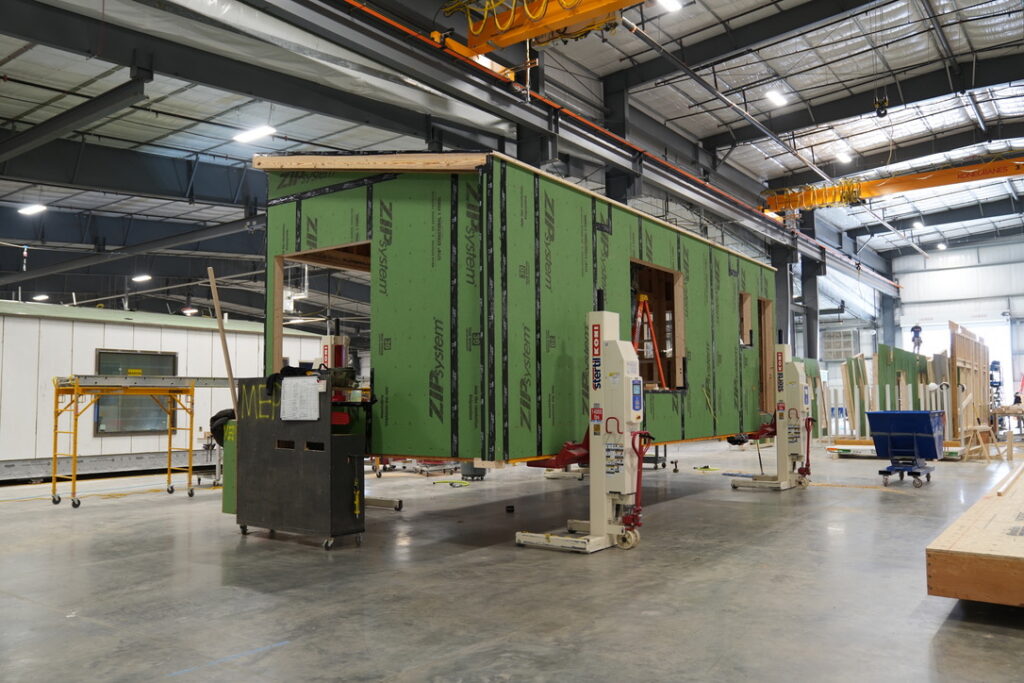
Understanding exactly what the manufacturer is delivering is another important pre-construction conversation. Different manufacturers deliver modules at different levels of completion — with or without siding, with roof systems installed, or completed on-site. Those decisions have financial implications and must be clearly defined early.
Tingle notes that misunderstandings about scope are not typically a major source of mistakes, especially when the team includes an experienced manufacturer. Those expectations are usually clarified during initial meetings.
However, especially when working with less-experienced partners, there can be other issues regarding scope. “A site-work contractor has a vested interest in increasing their scope and doing more on-site work, because they’ll make more profit. So, they might push for modules delivered with no siding, for example,” Tingle says. But teams must evaluate whether that approach makes sense for that particular project.
He offers an example. “On a multi-story project, does it make sense to cover 70% of the building in the factory, and leave 30% to be done on-site? Or is it just as cheap to do 100% on-site all at once, instead of trying to patchwork it together?” These are decisions that should be made during the detailed pre-construction design process.
Do a Logistics Study
Transportation is another way projects tend to lose money. Modules are cumbersome, and delivery requires precise feasibility planning. Tingle emphasizes the importance of a thorough delivery feasibility study.
It’s not enough to rely on satellite imagery and reasonable assumptions. “Boots on the ground are needed to verify site access.” he says. “We’ve seen examples when modules needed to be shipped on lowboy trailers — much lower to the ground than typical trailers — and they got stuck. We’ve seen cranes have to stay extra days on-site, having to be paid overtime, and that’s very expensive.”
Logistics is one of the fastest ways for inattention to detail to translate into financial loss. For this reason, Wind River Built actually requires the logistics providers on their projects to do a detailed, in-person delivery feasibility study.
Quantify Time-Savings
One persistent misconception is that modular construction is inherently cheaper than site-built construction. “That’s not necessarily true,” Tingle says. “From a materials and labor standpoint, offsite construction can sometimes be more expensive.”
The real financial advantage lies in schedule compression and predictability. “A developer — especially a larger one — should look at what those timeline savings translate to in dollars. Does the reduced need for on-site labor free them up to do multiple projects at once, where before they could only do one at a time? Does it allow them to pay X% less debt service over Y% less time?”
Faster turnover allows capital to be redeployed into additional projects. So, if a project is delayed due to insufficient logistics planning, say, those time-savings can be eroded, which, in turn, erodes profit.
Don’t Rush Pre-Construction
When asked where projects most often lose money, Tingle consistently returns to one theme: insufficient planning. Pressure from owners or developers to accelerate the pre-construction phase can undermine the very efficiencies modular promises to deliver.
In Tingle’s experience, the most common financial pitfalls are rushed drawings, unsatisfactory certification coordination, underestimated logistics and padded estimates by inexperienced site contractors.
Developers and contractors considering modular construction need to be aware that the front end of the project requires intense planning and earlier commitment than traditional construction. If the planning phase is well-respected, major money leaks are more likely to be avoided.
Zena Ryder writes about construction and robotics for businesses, magazines, and websites. Find her at zenafreelancewriter.com.
All images courtesy Wind River Built.