

As if there aren’t already enough challenges in this business, modular companies also need to counter misinformation put out by the consumer media. Reporters with little or no experience in offsite construction continually produce murky water pieces that sound important without helping anyone who wants to buy a home.
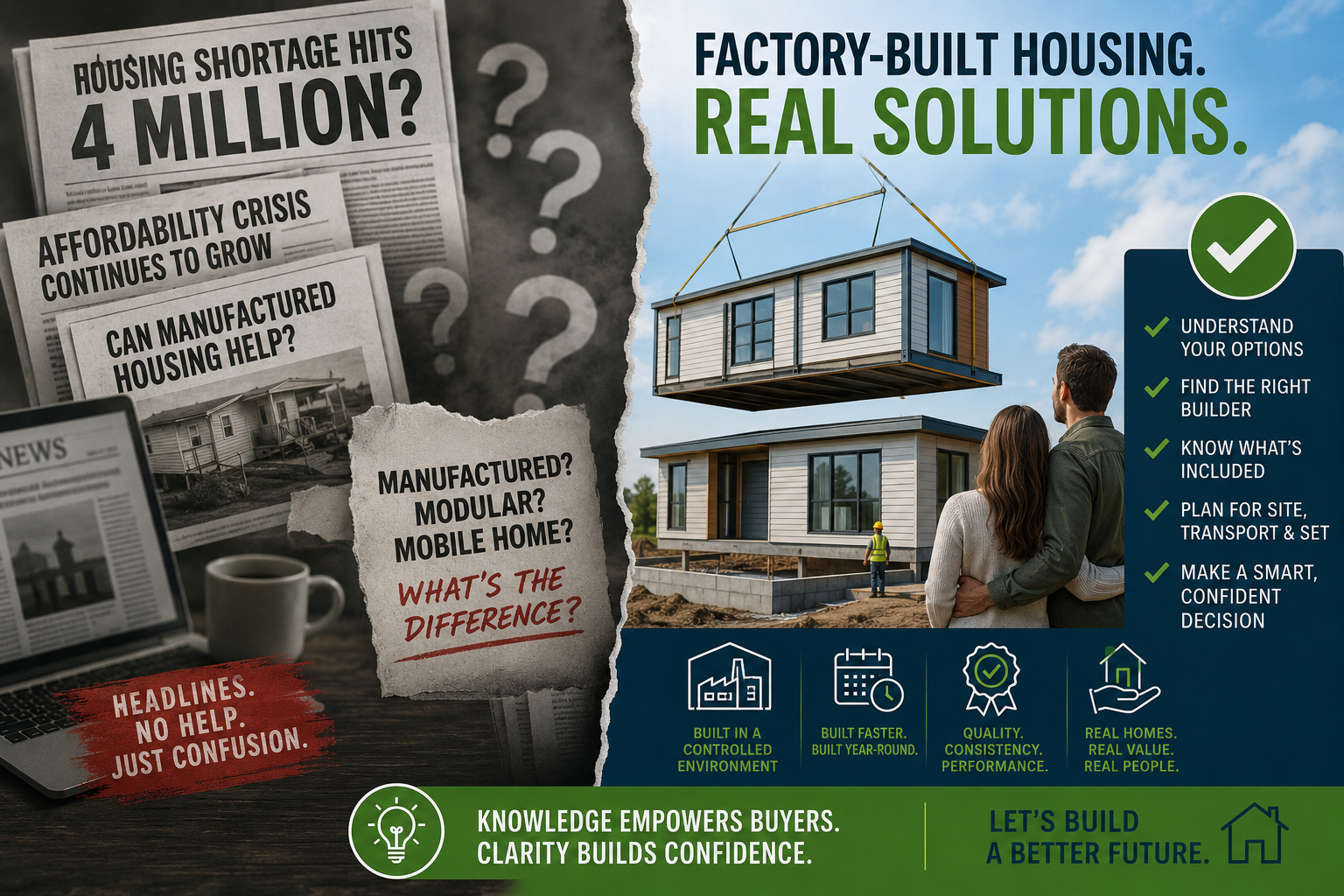
It’s a formula. Quote a big, scary number about the housing shortage, sprinkle in quotes about affordability and then casually toss in “manufactured housing might help.” Readers nod their heads but have no idea what to do.
Reporters also create skepticism by consistently blurring the lines between manufactured, modular and mobile homes. Because they don’t fully understand the product they’re writing about, each article becomes just another headline in a long line of “housing crisis” stories that never solve anything.
What gets buried under the statistics and policy talk is that factory-built housing — whether manufactured or modular — is already housing millions of Americans. But rather than explaining how a buyer might navigate the process, evaluate quality, understand financing, or compare factory-built to site-built options, most articles default to talking about what could happen if zoning were to change or if stigma were to disappear — as if those are the only levers that matter.
They’re not.
Industry pros know that manufactured and modular aren’t the same. Yet they continue to get lumped together under one umbrella, both in legislation and in journalism. That hurts consumer confidence: If a potential buyer can’t clearly understand what they’re buying, how it’s built and how it performs over time, they won’t take the leap. No amount of “housing crisis” headlines will change that.
Here’s what you almost never see in the press:
No one explains what buyers should do if they’re interested in factory-built housing. No one offers advice on finding a reputable builder, understanding what’s included in the price, or how site work, transportation and set costs impact the final price.
There’s no mention of one of the biggest realities in offsite construction — the gap between what people think they’re buying and what’s included. That misunderstanding has derailed more projects than zoning laws ever will.
Manufacturers, modular builders and offsite innovators have spent decades improving quality, efficiency and design. Yet the public narrative still feels stuck between a 1970s trailer park stereotype and a promise that hasn’t quite arrived.
Meanwhile, the real story — the one about consistent production, controlled environments and the ability to build year-round — gets reduced to a footnote.
If the media wanted to help consumers, they’d shift the focus. They’d stop publishing articles that sound like policy papers and start offering practical guides. They’d explain the differences between product types in plain language. They’d walk through a real project from start to finish. They’d show where buyers get tripped up — and how to avoid it.
Most importantly, they would treat the reader like someone who’s actually considering buying a home, not just someone scrolling past another headline about a crisis. Until that happens, it’s up to the industry to provide the necessary context and education.