

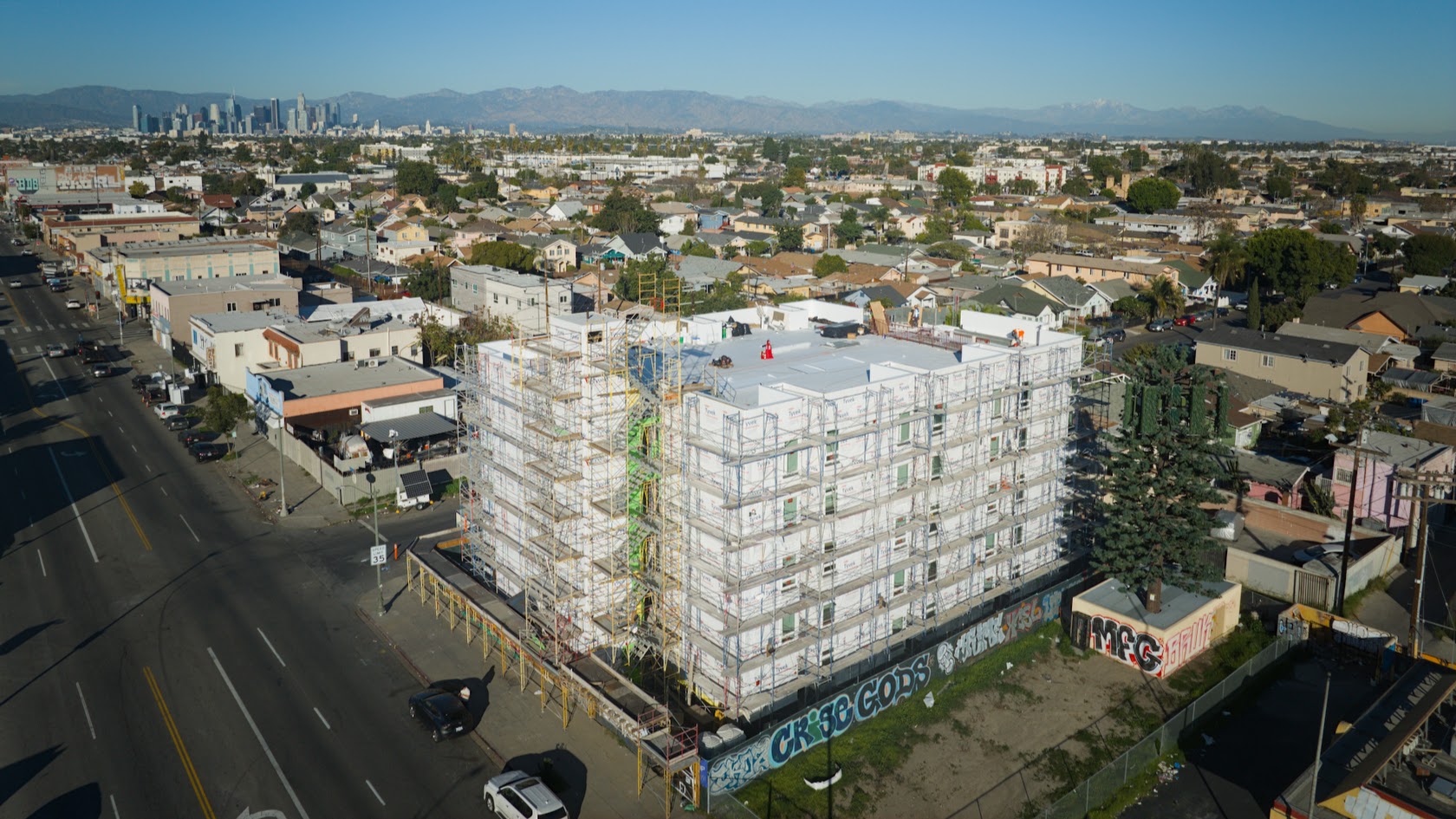
This developer has found success using modular to lower the build cost of affordable homes in southern California.
- Launching their own modular plant has allowed SoLa to integrate development and manufacturing, gaining control over cost, schedule and quality.
- Standardized, steel-based modules built on a repeatable chassis enable faster construction, higher durability and consistent execution across projects.
- By offering a scalable platform for third-party developers, SoLa aims to expand modular adoption and to accelerate affordable housing delivery.
The first time Los Angeles-based developer SoLa Impact tried modular, it nearly blew up on them. Projects came in over budget, a factory went bankrupt mid-production and the efficiencies they were hoping for never materialized. So, they took over the factory, studied what went wrong and used the lessons to launch their own modular operation called Model/Z.
SoLa Impact is in the business of developing, owning and operating affordable and workforce housing projects. It’s a for-profit company, founded in 2014, but has an affiliated non-profit called the SoLa Foundation, which provides services to residents. Model/Z is SoLa’s modular manufacturer, also based in Los Angeles, California. It’s legally separate from SoLa Impact but has same ownership.
Nick Caton leads investor relations and business development at both companies. We asked him about the lessons his team has learned, and how they’re working to make affordable housing actually affordable.
Q: How did the relationship between SoLa and Model/Z come about?

Credit: Sergio Gonzalez, SoLa Impact
In 2019, SoLa transitioned from multifamily acquisition and rehab to ground-up construction. To date [March 2026], we’ve built 24 affordable and workforce housing projects.
In 2023, SoLa determined that modular was really the only way to scale our efforts — by speeding up construction timelines. We did our first two modular projects using two different modular vendors. Both came in over budget and probably cost more than stick-built would have. One factory went bankrupt mid-production, while our modules were on the production line.
SoLa took over the factory, operated it, got our modules out of there and finished the project. The executive team was like, “That wasn’t so hard.” So, they went on a road trip and visited about 15 modular factories across the US and Mexico and really bought into the vision of shorter construction times, higher quality, and — eventually — lower costs.
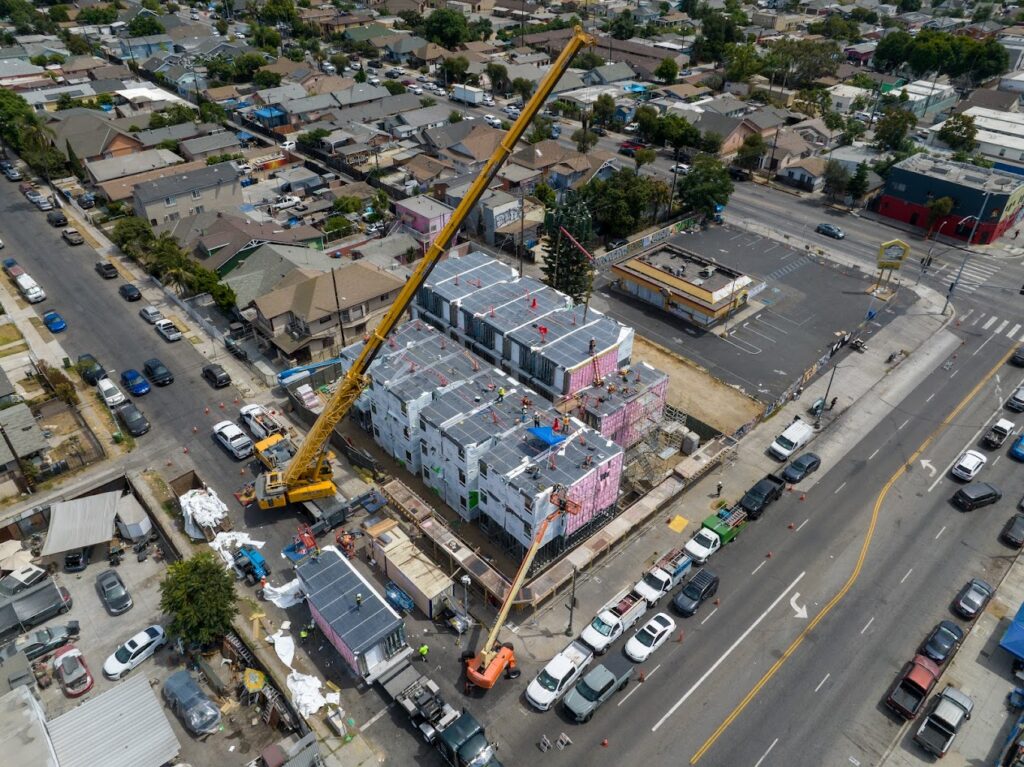
So, we launched Model/Z with a facility in the Watts neighborhood of Los Angeles. Today, the company manufactures volumetric steel modules for SoLa’s own affordable housing projects and for third-party developers.
Q: Can you describe your modules?
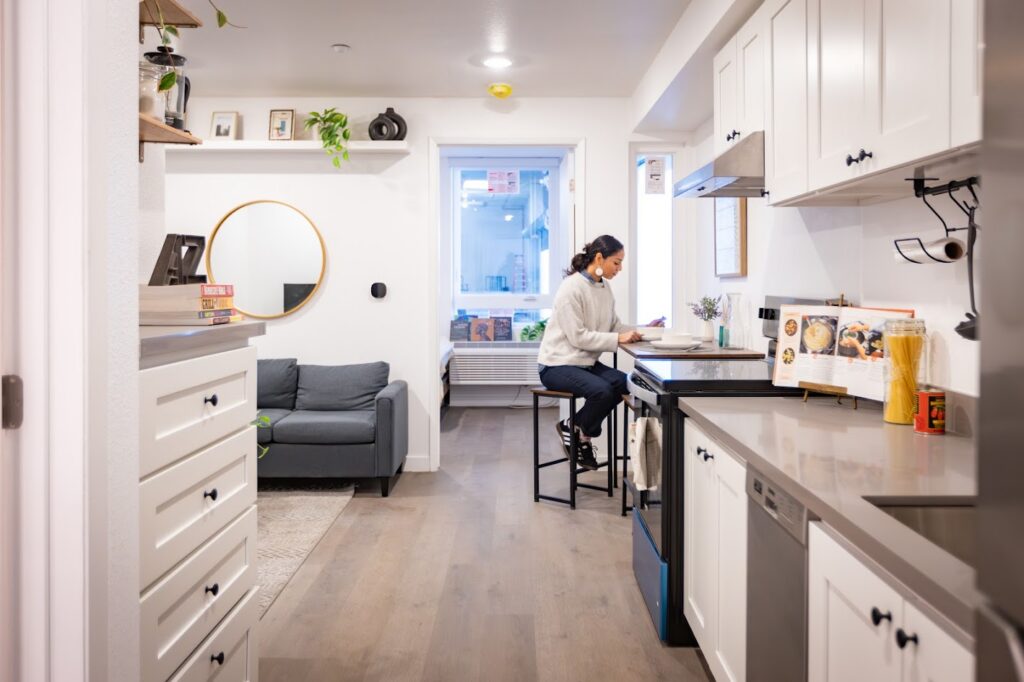
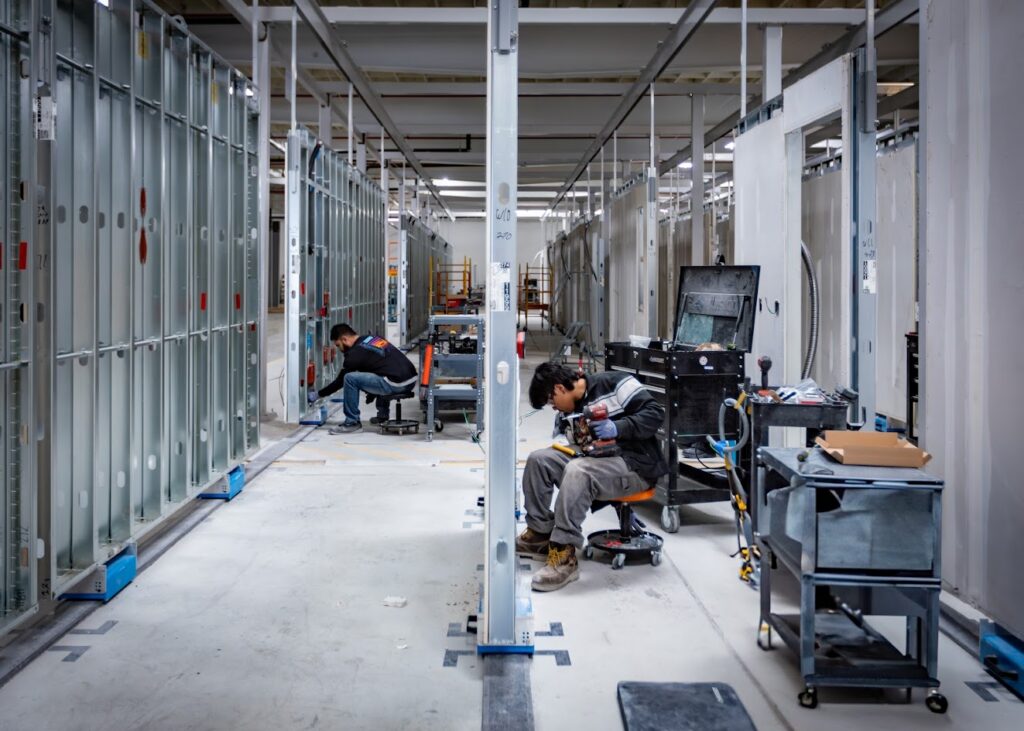
Model/Z’s modules are built around a standardized steel chassis and steel framing system, rather than a conventional wood-framed module with steel used only selectively. We designed this structural system to create a durable, repeatable, factory-built product that can be stacked efficiently across projects.
The units incorporate finished interior elements such as drywall, insulation, windows, doors, MEP systems, cabinetry, fixtures, which are installed in the factory before delivery to the site.
Credit: Sergio Gonzalez, SoLa Impact
Q. Why steel?
It’s much more durable than wood. We’re long-term owners of the buildings we develop. When you think like an owner rather than just a builder or developer, you weigh long-term performance differently.
As an owner, durability isn’t just a nice-to-have, it directly impacts lifecycle costs, maintenance and long-term asset performance. That’s a big part of why we’ve leaned into a steel-based modular system, it holds up better over time, especially in high-use multifamily environments.
Steel warps less than wood during transport. It’s also more resilient against water damage, termites, mold and fire. Our CEO lost his home in the Palisades fires, so this is very real for us. Watching Altadena rebuild, we’ve seen a real shift towards steel in the Los Angeles market.
Q: How do you keep modular costs down?
Our biggest focus has been time, bringing construction timelines down from 24 to 12 months. That’s goal number one.
Number two is the standardized, repeatable nature of modular and the ability to leverage previous buildings and plans to help reduce costs. By working with the same GCs, you can drive the costs down even further and squeeze even more out of the construction timeline. All with higher quality construction.
The average affordable housing unit built in California costs over $700,000 a unit to build. By comparison, SoLa Impact’s average project costs us just $275,000 per unit to build.
There isn’t one big, radical thing that’s responsible for those lower costs. It’s about a hundred different levers that we pull. Sometimes, what’s innovative isn’t exciting — it’s about being reliable, keeping it simple and staying focused.
Q: Can you describe how you standardize your projects?
We don’t customize for individual clients or projects. We’ve landed on what I’d call “configuration” rather than “customization.” Everything runs off the same universal chassis. And if we use a GC and contractor on one project and then a year later the same people do another building half a mile down the road, then they follow the same SoLa ‘spec book’, as we call it — the Bible of our design and development standards — getting more efficient over time.
What varies is how units are arranged. Buildings can be I-shaped or C-shaped, and so on. They can have a varying number of stories, with interesting and unique façades and colors, but the fundamental design is rinse and repeat.
The use of these kinds of repeatable, standardized designs is one of the biggest levers modular manufacturers have to reduce costs and timelines, and to ultimately accelerate housing production. The more we can treat housing like a product rather than a one-off project, the more we benefit from manufacturing efficiencies. We’ve seen that consistency across unit types, structural systems and even MEP layouts. It drives real savings, not just in the factory, but also across procurement, scheduling and installation in the field.
Q: What are the other levers?
First, alignment between design, manufacturing and development is critical. If those functions are siloed, you lose the efficiencies modular is supposed to deliver. We’ve invested heavily in integrating those decisions upfront so we’re not redesigning or value-engineering late in the process.
Second, pipeline matters. Factories only work if they’re fed consistently. Having visibility into a multi-project pipeline allows you to plan production, lock in procurement and truly operate at scale.
Third, early decisions have outsized impact. Things like grid dimensions, module sizes and structural systems should be optimized for manufacturing from day one, not adapted later from traditional construction approaches.
The Model/Z software platform is our next stage of innovation. We expect that to bring construction timelines down by half and total development costs down another 10% to 15%. Our ultimate goal is to build housing at $200,000 per unit, using Model/Z.
At the end of the day, the goal is to create a more efficient, scalable way to deliver housing across the board.
Q: What does the Model/Z software do?
It gives a score from one to 10 on the modular suitability of land parcels. In minutes, it generates building configurations, so we don’t have to go back and forth with architects just to get a sketch. It has all the building codes and regulations inputted, so you can see how many units are allowed on a given parcel.
Our platform is designed to reflect the realities of development in California and other complex jurisdictions. When a user is configuring a project in the system, they can input the specific entitlement strategy they’re pursuing, whether that’s something like ED1 [Executive Directive 1, which expedites processing of shelters and affordable housing projects in Los Angeles], density bonuses, or another local incentive program. The software then adjusts things like unit count, massing, parking assumptions and even cost implications based on that path.
Credit: Roxana Herrera, SoLa Impact
The goal is to give developers a more accurate, real-time view of what’s actually feasible on a given site before they spend significant time and money.
The software can provide three or four layout options for a building on a particular site. Our pro formas are loaded into the software so it can quickly give us a rough estimate of what the returns would be on that project. We can do all this for other developers, too.
Our first third-party client using this product is Logos Faith Development — a faith-based developer that co-develops affordable housing on church properties. They’ve signed a letter of intent for over 300 units across multiple projects, with an initial building of more than 80 units. That first project will probably be complete in the summer of 2027. External customers create real market validation for our product.
Q. Have you encountered any local inspection issues?
We needed to engage in a lot of education before our first modular project. But we’re a regional developer — in Southern California, primarily Los Angeles — so most [inspectors] in the area get it now.
The state inspects our modules in the factory. Local inspectors handle connections, exteriors and landscaping — but their instinct is often to want to inspect everything. But they’re not actually allowed to go into the units and inspect them themselves unless the developer invites them to do so.
We engage in education on an ongoing basis. Every Thursday, we run an open house at the factory and anyone can come see the production line and some finished units.
Q. How do you see the future impact of this approach?
Modular is about 4% to 5% of the multifamily market in general in California. We’d like to see that number go up. There’s a hell of a lot more parcels that are suitable for modular than are currently being used.
If another real estate developer wanted a building like SoLa builds, they would enter into a development services agreement with us. We would help them entitle, permit and design their building, and we would work with their consultants and architects to make it more efficient. Then we would execute on a purchase order with them, and we’d sell them modular apartment units, so they can build their building the SoLa way. We’re heads-down focused on delivering more projects, and on finding more developers out there who want to use Model/Z.
While our roots are in affordable and workforce housing, the Model/Z system is applicable to market-rate projects as well, particularly in urban infill where speed, cost certainty and site constraints matter most.
One of our core beliefs is that we’re not going to solve the housing shortage project by project or developer by developer. The real opportunity is to create a platform and production system that many other developers can plug into.
Zena Ryder writes about construction and robotics for businesses, magazines, and websites. Find her at zenafreelancewriter.com.
Photos courtesy of Sergio Gonzalez, SoLa Impact, except where noted.