

Modular construction success depends on lender understanding. Here’s what banks need to hear.
• Modular projects often face financing hurdles because lenders still misunderstand draw schedules, costs, and risk compared to site-built construction.
• Consultants Wendy Anderson and Don Jahnke say successful loan pitches require modular-specific financials, market research, and clear explanations tailored to banks.
• Builders should emphasize reduced risk, faster occupancy, predictable factory contracts, and stronger returns to improve lender confidence in modular construction.
Even the best modular project plan won’t become reality without funding. If you’re reading this magazine, chances are you know the advantages of modular volumetric construction versus site-built. However, your lender may not. What does it take to convince a bank to back a modular project, and what should your pitch include?
Wendy Anderson and Don Jahnke are consultants with NEXT Development Solutions, a Minnesota-based firm with deep expertise in modular and Structural Insulated Panel (SIP) construction, paired with strong public-private and layered financing experience.
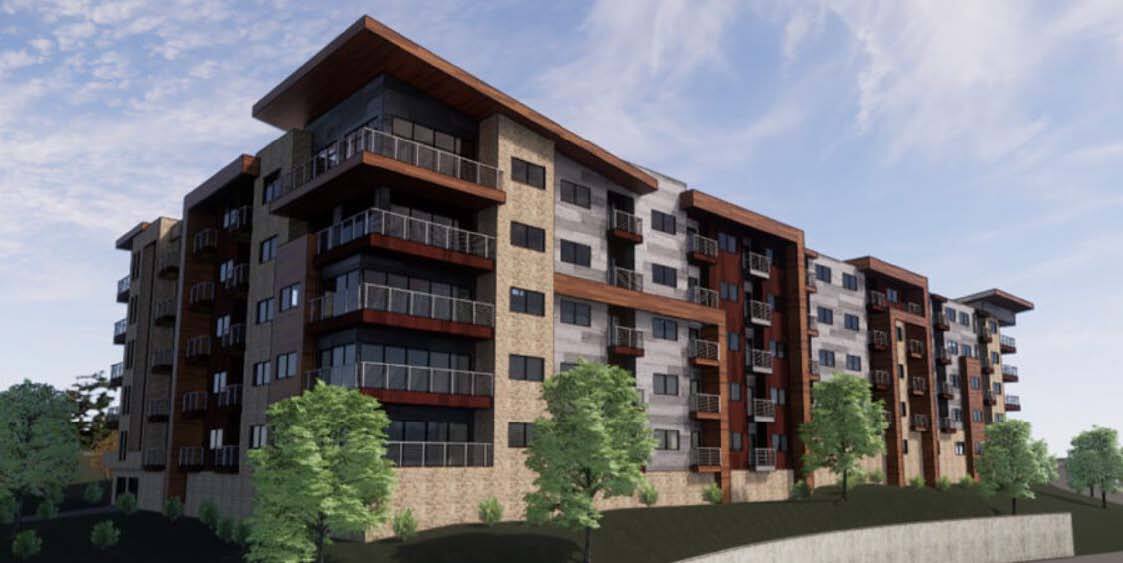
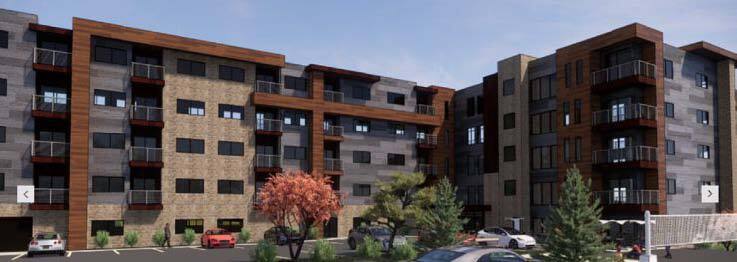
The two veteran consultants have worked on many projects, including the 185-unit Riverwalk Apartment Development currently underway. This project, located on a small parcel in the Midwest and consisting of two buildings, exemplifies a strong fit for modular volumetric construction, according to Anderson.
Anderson notes that a site-built approach would have required the team to work through two winters, potentially affecting buildability. The risk of delays and/or shortened workdays, along with the added cost of temporary heating, would have reduced profitability.
It would also have required a couple of more million dollars in equity.
With the decision on the construction type made, the next step was to secure a loan. In a recent webinar on ModularHomeSourcePro.com entitled “IRR and Return on Capital,” the two consultants, along with Ken Semler, President & CEO of Impresa Modular in Martinsburg, W.Va. and Publisher of Offsite Builder, discussed the project and offered tips for how to talk to banks about this construction method.
The Good News
The biggest challenge in securing a bank loan for modular volumetric construction is lender unfamiliarity with the process. For example, the draw schedule is a key consideration for lenders. It differs significantly between volumetric and stick-built projects.
Lenders expect year-long draw schedules, but modular projects typically complete draws in three months, drastically shortening the loan period.
However, Semler and Anderson have seen growing awareness among lenders.
“We, at Impresa, have seen a big change over the last six months as more lenders are now discovering modular and understanding that it’s more predictable and less risky,” Semler says. “They understand how it mitigates risk and are looking to fund modular projects.”
Anderson agrees. “In the last couple of years, I’ve found more bankers understand the modular volumetric construction process,” she says. “Therefore, we’re not seeing pushback when we present it.” Though she notes that NEXT also knows which bankers are more inclined to be open to modular volumetric construction.
Fail To Prepare, Prepare To Fail
Does that mean it’s now easy to secure a loan for modular volumetric construction, since bankers are in the know?
Not quite.
“Lenders have a million things going on, so every time you have a meeting, you have to explain,” Jahnke says. “So, don’t assume they’re clear on the process and what it entails.”
Even if the person you’re meeting with understands the process and what modular construction entails, they’re just the first layer. Those who review the paperwork and approve the loan may be less open or familiar with the modular construction process.
That’s why, according to Anderson, the key to securing the loan is preparation.
“Before you walk into the bank, there’s tons of prep work,” Anderson says. “You need to know if the project is bankable, what kind of rents you can get, income level in the area, is the site buildable, what type of projects a bank is looking for, and more.”
Ultimately, Anderson says the team applying for the loan needs to know the product inside and out and have a good relationship with the bank.
For the Riverwalk Apartment Development, the team prepared a side-by-side investment overview, comparing site and modular build costs. There was a 15% savings with modular, which reduced the construction loan.
The paperwork presented to the bank must focus specifically on modular construction. “Teams need to stop using site-built financial templates,” Semler says. “Instead, they should use modular specific pro forma frameworks.”
Jahnke agrees.
“The person writing the pro forma should be clear and make the bank understand the changes between a site build and modular,” Jahnke says. “The pro forma should include clear, refined verbiage.”
For example, Jahnke and Anderson say to avoid using the word “manufactured,” which lenders associate with mobile homes.
Answer Questions
A responsible bank will ask many questions before determining whether to lend a customer money. However, ultimately it boils down to, “How is the bank’s money being deployed, when will it be repaid and what return will it generate?”
Semler suggests focusing on three points:
Risk Reduction: Emphasize that there’s a super contractor (i.e. the factory) rather than 15 contractors to deal with, which reduces risk.
Predictability: With modular, you have the predictability of one fixed contract at the factory.
DSCR Protection: Modular construction is faster, and average occupancy is four to six months earlier, reducing the lender’s risk and boosting the Debt Service Coverage Ratio (DSCR). Semler emphasizes that speed has value.
“You’ve actually derisked the financial profile of your project by using modular construction,” Semler says.
Beyond these tactics, more can be done to ensure lenders truly understand modular construction. One of the keys is the old saying: “Seeing is believing.”
“You need to make sure the bank really understands the modular volumetric process,” Jahnke says. He suggests including pictures from the volumetric modular factory in the application and during the meeting. “It helps communicate the process.”
Anderson says some bankers will visit the factory to see how production is proceeding.
Semler suggests showing the factory contract milestones. For example, 50% to 60% of projects are locked in as single contracts with predictable cash flows, eliminating piecemeal site payouts.
“They need to know they’re not going to need to coordinate 15 to 18 —or more — subcontractors on a project, which means a reduced change order contingency. Unlike
a site build, which requires a 10% contingency, modular typically needs just 3% to 5%.”
There are multiple examples of current and past modular projects that have benefited the bank. Semler shares details of a 10-duplex, build-to-rent project in Texas.
Construction took seven months — compared to 12 months if it had been site built. This led to $100,000 in early revenue due to rent-up acceleration.
Another area of lender uncertainty is the true cost structure of modular construction. “It can be hard for lenders to understand the full cost of modular,” Jahnke says. “It’s not just about the cost of the plant as there are other factors including the costs of trucking modules to the site.”


Modular construction doesn’t just change how projects are built; it changes how they’re financed. To receive financing, builders need to clearly articulate the benefits, so lenders understand them.
They should emphasize reduced risk, faster timelines and stronger returns. As banks grow more familiar with the ins and outs of modular construction through tailored financials and a clear narrative, their comfort level will grow. This will better position builders to secure financing for modular projects in the future.
Larry Bernstein is a freelance writer based in northern New Jersey. He focuses on all things construction. Learn more about him on his LinkedIn profile.