

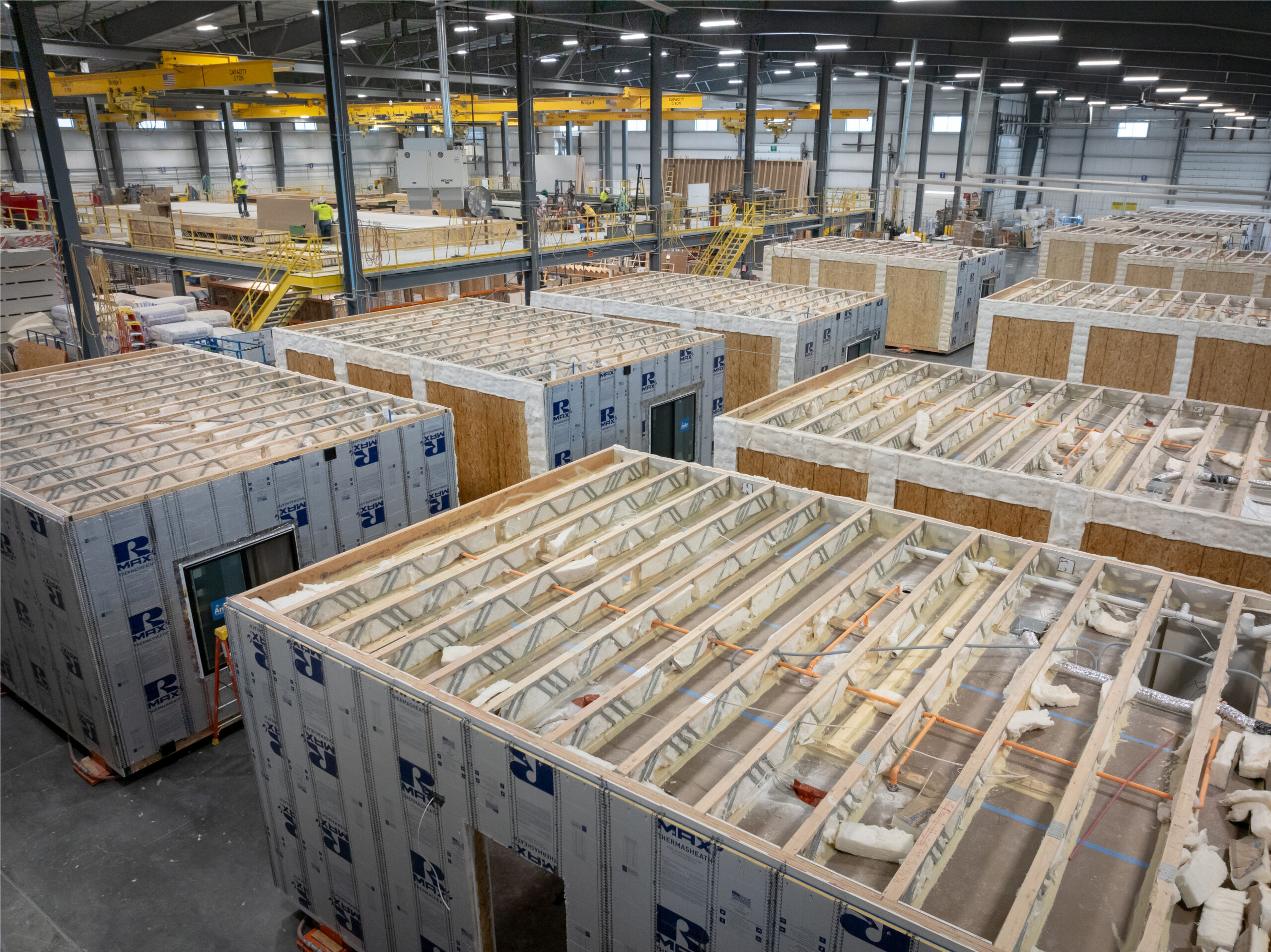
California’s recent update will force offsite builders to rethink assemblies, and could have nationwide implications. But the constraints may be an opportunity for some.
- California continues to shift its code focus toward envelope performance, reduced heat transfer and lower operational energy use.
- When designing assemblies, offsite manufactures will need to consider cost, performance and compliance tradeoffs.
- For modular builders, it’s an opportunity to differentiate themselves by delivering resilient homes with low monthly costs.
The latest updates to California’s Title 24, Part 6 Building Energy Efficiency Standards signal a clear shift toward higher-performance building envelopes. Although this will obviously affect offsite manufacturers and builders delivering to or working in the state, there are also nationwide implications, and opportunities.
Title 24, Part 6 includes state regulations designed to reduce energy use and greenhouse gas emissions in residential and nonresidential buildings. It is one of many energy codes across the nation pushing towards improvements in building energy performance.
Since 1978, when it enacted its first energy standard, California has consistently led the country in advancing greater energy efficiency. The state has been recognized by the American Council for an Energy Efficient Economy’s State Energy Efficiency Scorecard seven times since the Title 24 program was implemented sixteen years ago. The program benchmarks progress in utility programs, transportation, buildings, industry and state-led initiatives to foster economic growth and emissions reductions.
Under the most recent updates, companies delivering to, or building homes in, the state of California will need to meet the updated maximum allowable U-factors for walls, roofs/ceilings and fenestration. While specific U-factor targets vary by building type across California’s 16 climate zones, prescriptive requirements (a checklist of specific component performance values), or performance pathways (whole-building energy modeling) can both be used to reach these updated energy requirements.
A U-factor, or U-value, is a measurement of how easily heat passes through a building component. It represents the rate of heat transfer — the lower the U-factor, the better the material is at insulating and reducing heat loss or gain. When calculating the U-factor of a building assembly, all materials used — not just insulation — are factored in.
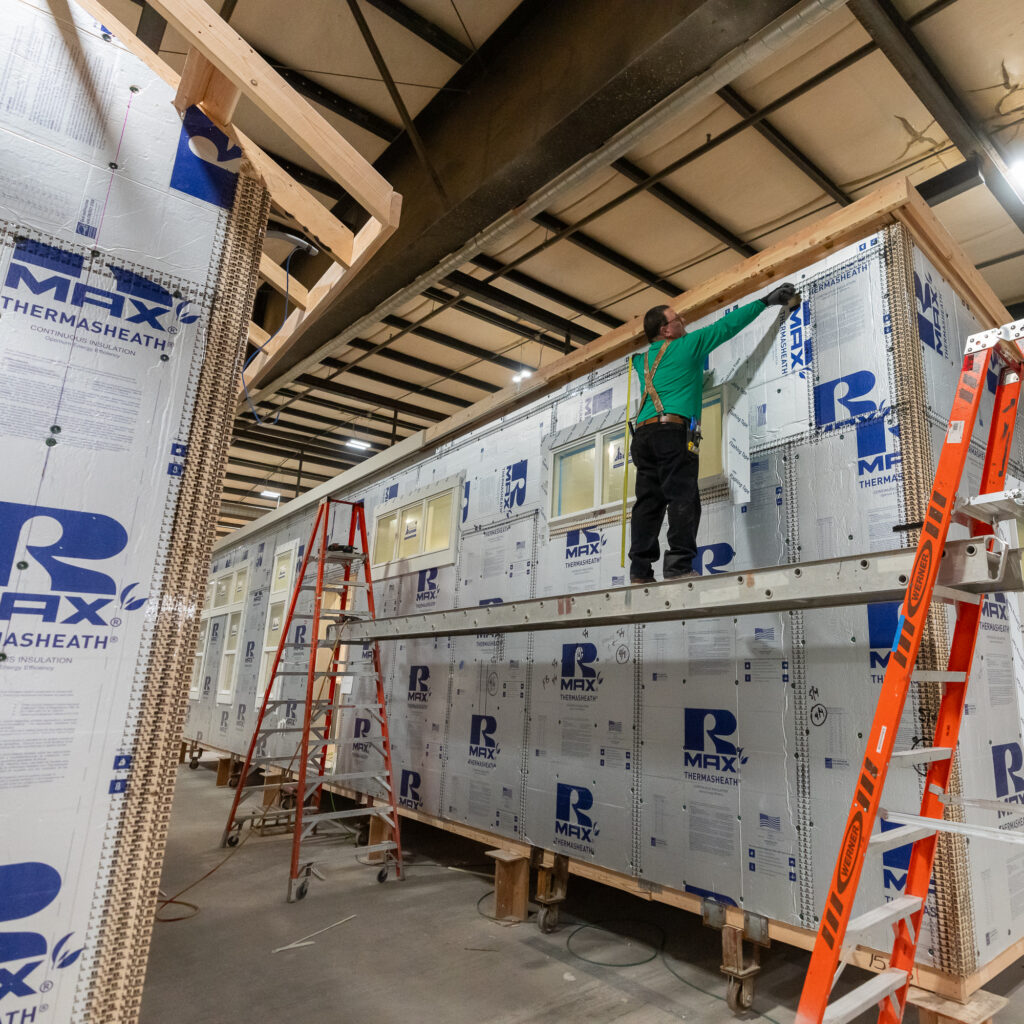
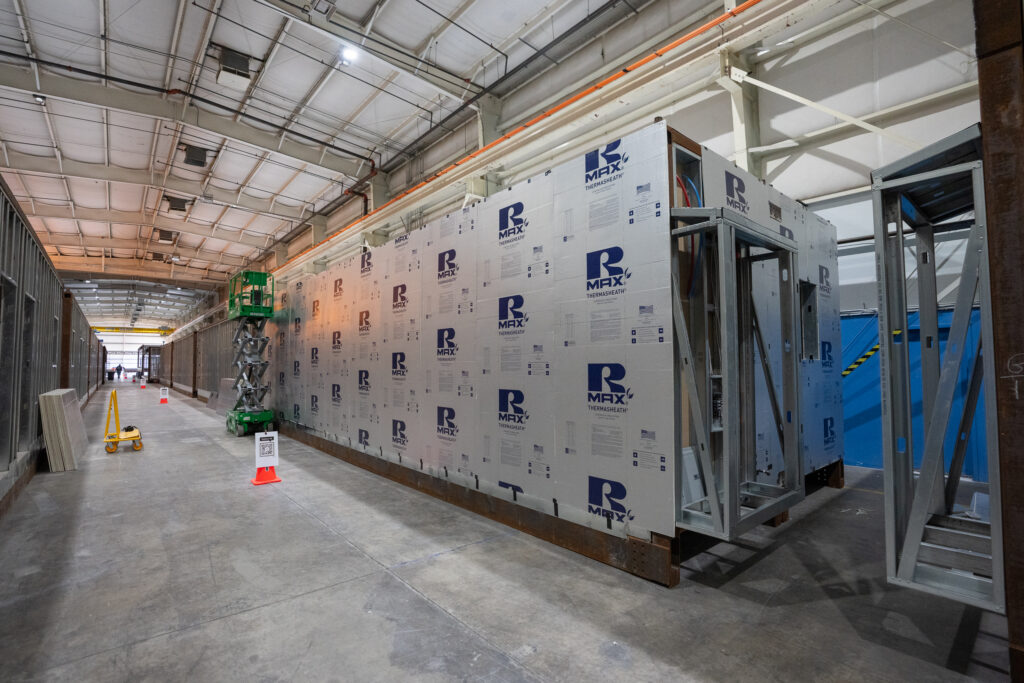
Of course, insulation is crucial, and one performance pathway to achieving the necessary U-factor for walls, roofs and ceilings is to pair continuous exterior insulation with cavity insulation. Continuous insulation runs uninterrupted across structural members, prevents thermal bridging, and can improve overall envelope performance by reducing heat flow paths that occur with traditional cavity-only insulation.
“Many people look at insulation incorrectly,” says Steve Dubin, Business Development Manager – Modular/Offsite for Rmax, a polyiso rigid insulation manufacturer based in Dallas, Texas. “Using R-21 and adding R-5 to the outside doesn’t get you to R-26. That will get you going in the right direction, but these energy standards are not looking for a total R-value; they want the U-factor.”
Wood studs, for example, have a lower insulating value (approximately R-1.25 per inch) than the insulation between them, allowing heat to bypass insulation and escape — reducing the overall wall assembly efficiency by 25% to 30%. “R-19 insulation in a wall with 16 in. on-center 2×6 studs, doesn’t give you R-19, it’s closer to R-13,” says Dubin.
The U-factor calculation includes framing, cavity insulation, sheathing and any air barrier membranes with lower U-factors representing better thermal performance that can reduce heating and cooling loads and lower operating energy use.
The 2025 update also specifies more efficient windows by reducing single-family prescriptive maximum window assembly U-factors in climate zones 1-5, 11-14 and 16, from 0.30 to 0.27. Upgraded windows come with a higher upfront cost but, unlike the HVAC system, they have little-to-no long-term maintenance requirements for the homeowner.
New Rating Procedures
The state is also replacing the industry standard Home Energy Rating System (HERS) scores and raters with Energy Code Compliance (ECC) raters, who will document results on a Certificate of Verification (CF3R). However, this shouldn’t be a big change for manufacturers and builders. The California Energy Commission (CEC), a California energy policy and planning agency based in Sacramento, says there is no real difference between the HERS program and the ECC program in terms of field verification and diagnostic testing.
The HERS Index is a comprehensive, third-party, on-site assessment of a home’s total energy performance — think miles-per-gallon sticker for buildings. It’s recognized as a US industry standard and measures a home’s energy efficiency on a scale. The lower the score, the more energy efficient the building. A score of 100 represents a 2006 energy code standard home, while 0 represents a Net-Zero energy home. While HERS can be used to prove that the home meets code, it is often more rigorous than standards set by local jurisdictions. The “HERS score” includes factors like air leakage and duct efficiency, not always required for basic energy code compliance.
The ECC program is limited to the field verification and diagnostic testing required by the Energy Code for newly constructed homes, as well as for additions and alterations to existing homes. The Energy Commission will be entering into a new rulemaking (expected to begin by mid-summer 2026) regarding a new approach to the voluntary home energy rating program (or scoring system) for California homes.
Per the CEC, almost all former HERS raters will be able to perform field verifications and diagnostic tests as ECC raters for the 2025 Energy Code as well as for older code cycles. (Projects with permit applications dated before January 1, 2026, must only comply to the 2022 Energy Code.) New ECC raters are classroom and laboratory trained (and tested) prior to receiving a certification on all field verifications and diagnostic tests required by the Energy Code.
Understanding the Tradeoffs
For homebuilders and housing manufacturers who are required to meet updated energy standards, it’s important to understand what the tradeoffs are. What are the best choices for making changes to materials, equipment, etc.? What method will offer the most attractive first costs while also reducing potential maintenance and energy bills over the home’s lifespan?
Greg Kaplan, a member of the National Association of Home Builders’ (NAHB) Climate Risk and Sustainability Committee based in Dallas, stressed that while codes and standards need to adapt, the primary goal should be giving homebuilders options for meeting them. He believes the focus should be less on the specific technologies required and more on ensuring that codes allow builders to comply in multiple ways.
“My biggest piece of advice for any homebuilder is to consider all the options,” says Kaplan. “Identify what is going to offer the biggest bang for the buck. What is going to benefit your build cycle or your building assembly the most? That may be HVAC, that may be more energy efficient lighting systems or windows. It might be continuous installation or thicker walls with more batt insulation. Whatever it is, identify the trade-offs. If I go with a higher HVAC, where can I reduce somewhere else? If I go with energy efficient windows and walls, where can I reduce something else?”
He also says that it’s in builders’ and manufacturers’ interest to stay informed of upcoming code changes and to get ahead of them. “Meeting and exceeding codes early has significant return on investment for the builder because you can market that you build a better home. Being reactive to code will almost always cost you more.”
Modular Implications
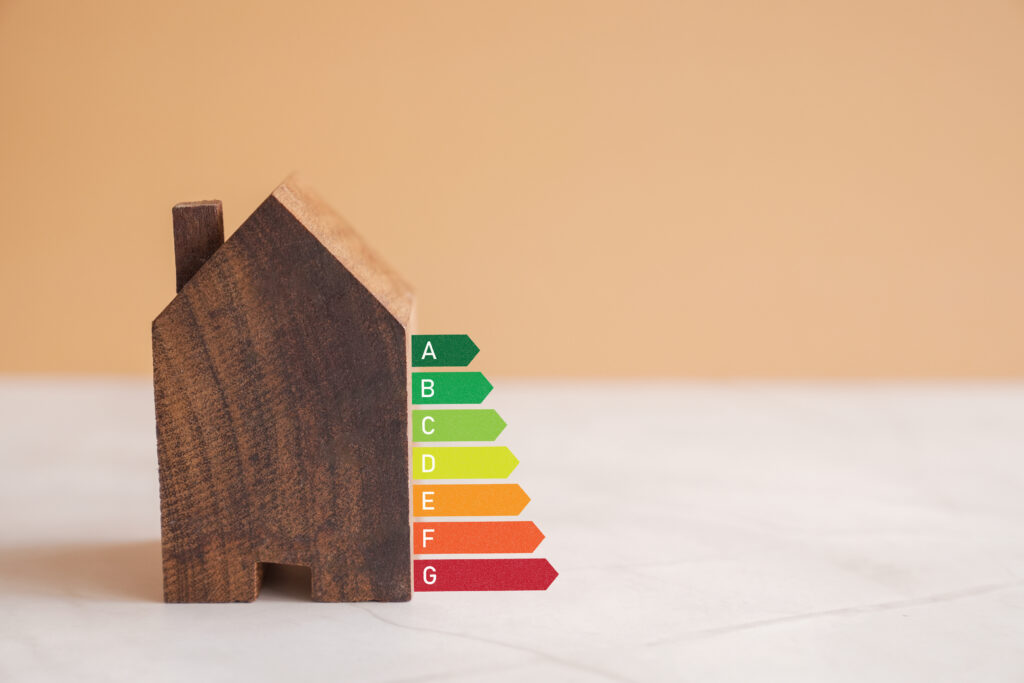
Photo: SewcreamStudio
But what does this all mean for companies focused on modular construction? If you are not building in, or supplying to, an area with strict energy codes and standards, it may mean nothing if compliance is your only priority.
But if damage from weather-related events continues to increase and insurance premiums continue to rise, then long-term resiliency becomes more essential than ever. Modular builders are in a great position to offer customers better quality and more resilient products. The upfront design decisions required by modular construction allow companies to demonstrate to customers where they can save and make energy improvements that create the biggest impact.
Whether through continuous insulation, higher-performing windows, upgraded mechanical systems, or strategic trade-offs, builders and manufacturers who approach compliance proactively, rather than reactively, stand to gain both operational efficiencies and market advantage. For modular and offsite companies in particular, these standards present not just a regulatory hurdle, but an opportunity to deliver better-performing homes designed for long-term value, durability and energy efficiency.
Heather Wallace is a freelance writer and industry engagement specialist with over two decades of experience in various areas of the building industry. She has covered topics on construction, technology, workforce development, green building, and sustainable living.