

Early meetings, stronger submissions and clearer contracts help modular teams move faster through permitting and keep projects on track.
- Two approval layers — local permitting and state modular programs — define timelines. Permits are needed before production starts.
- Delays stem from incomplete submissions, zoning issues, or inspector unfamiliarity with modular, not with the construction method itself.
- Engaging officials early, clarifying responsibilities and submitting complete documents will reduce rework and avoid costly setbacks.
Although speed is one of modular construction’s most compelling selling points, modular companies aren’t immune from the construction industry’s notoriously slow permitting and approval processes. How can they mitigate approval delays to maintain their speed advantage over stick-building?
Before getting into that, let’s do a quick overview of the approval processes.
Two Levels of Approvals
Local permitting is done at the jurisdictional level — city, county, or municipality — and applies to any construction project, modular or conventional. It’s usually handled by a developer or GC, not manufacturers.
“The manufacturer is typically not part of the [local permitting] process, and a lot of times they simply have to wait for that process to be completed,” says Jon Hannah-Spacagna, former Director of Government Affairs at the Modular Building Institute (MBI), and now principal of JHS Consulting in Fishersville, Virginia. “In most cases, manufacturers won’t start production until they know the local building permit is secured.”
State-level approvals are specific to modular construction. “Thirty-nine states out of 50 now have a formal residential modular program, with Wisconsin and Utah just coming on board,” Hannah-Spacagna says. (Thirty-six of those states have a modular program for commercial construction, too.) He describes a state modular program as “a set of guidelines to make sure every project meets state building code requirements for structural, MEP, solar, wind, seismic, snow, and so on.”
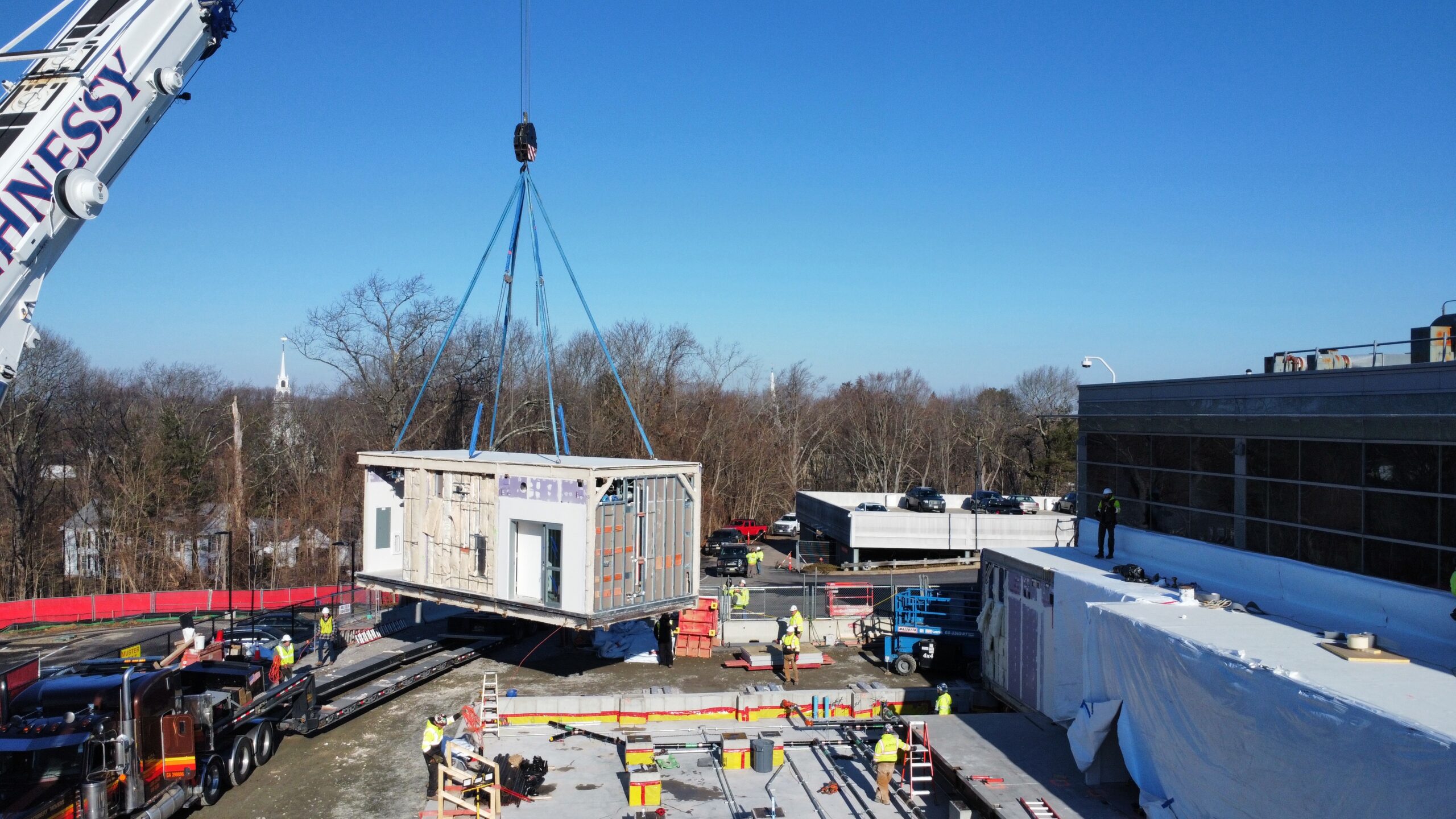
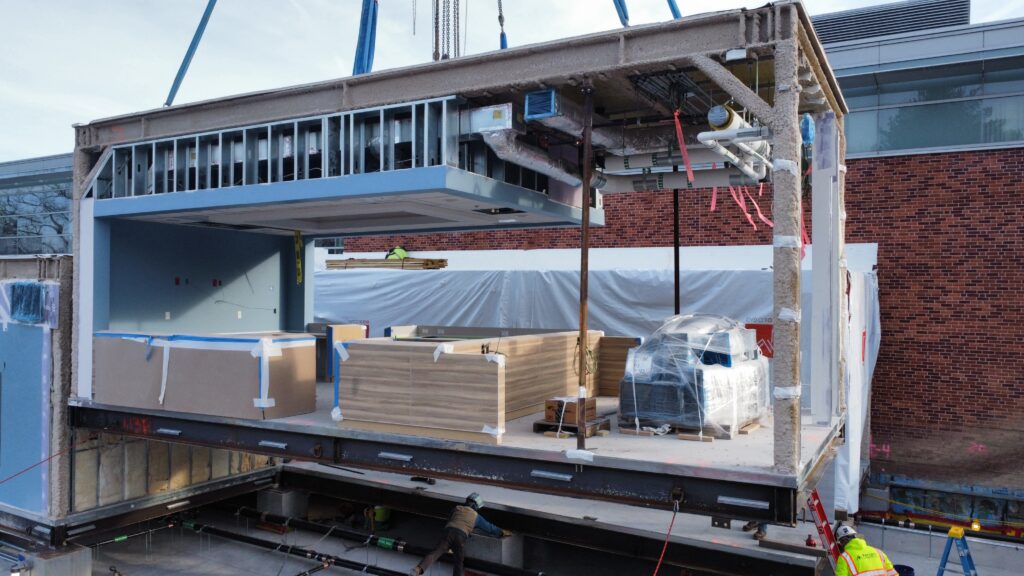
Under these programs, modules are inspected in the factory and receive a label confirming that they meet building code requirements in the state where they will be located. “When the modules arrive at the site, the local code official knows they’ve already been inspected and don’t need to be re-examined, other than at the on-site connection points [where the modules come together],” Hannah-Spacagna adds.
In states without a modular program, the manufacturer must work directly with the local authority having jurisdiction on a project-by-project basis, “to make sure that the building official who’s going to be doing the inspection feels comfortable that it’s being built to code in the factory,” Hannah-Spacagna says. In these scenarios, he says it’s critical to have upfront pre-construction meetings “as well as regular conversations during production — so you don’t get a situation in which a building is delivered and then the local official has problems with it.”
Understanding Local Issues
John Buongiorno is the Vice President of the Modular Division and Director of Human Resources at Axis Construction, a general contracting and construction management firm, based on Long Island, New York.
Sometimes, Buongiorno says, “building officials at the local level may be newer or less familiar with modular construction — potentially leading them to scrutinize aspects they wouldn’t scrutinize in a conventional stick-built project,” in which case, it’s really helpful to educate them in advance.
However, Buongiorno explains that because almost 40 out of 50 states have state-level modular approval or certification programs, which clearly delineate state and local responsibilities, there are rarely modular-specific issues at the local level. “The state oversees factory plan review, third-party inspections and certification of the modules themselves to ensure compliance with state-adopted codes, while local officials primarily handle site-specific elements like foundations, utilities, zoning and final occupancy approvals.”
The upshot is that, because “core building compliance is pre-approved at the state level” delays at the local level are rarely modular-specific. “It’s pretty much the same process whether the building is conventional or modular,” says Buongiorno.
For example, zoning variances can cause local delays, but that’s the case for both modular and conventional projects. If a property isn’t clearly zoned for the intended use, or if adding square footage triggers parking requirements, “the variance process has to be worked through before the building department is even involved,” Buongiorno says.
And then there are simply unforeseen conditions. On a New York City project a few years ago, Buongiorno says, “Within the first 15 minutes of digging on-site, we uncovered a high-pressure gas line that nobody knew about. The utility markouts hadn’t shown it. Everything came to a screeching halt.” Even with the city expediting the process through the New York City Building Department and at the National Grid (which owned the gas line), the situation nevertheless took about six weeks to resolve before construction could resume. “We’ve also uncovered buried oil tanks that were certified as removed but were still in the ground,” he adds.
Slow permitting can be frustrating for everyone involved on a project. But modular construction has an advantage over stick-building because as soon as permitting is done, work on the site and work on the building can proceed at the same time.
Better Documents Equals Fewer Delays
Buongiorno is blunt. “If the set of documents that you, or the design team, submits to the state is weak, all they’re going to do is redline it and send it back. You then have to correct it, and get back in the queue again. That’s where you can start to lose a lot of time.” A weak structural drawing, for example, might show dimensions but “lack supporting calculations demonstrating how the framing system handles load, seismic requirements, or wind loads.” A drawing without life safety details, including showing paths out of the building, or proper mechanical specs will get rejected, too. “And it should,” he adds.
Part of the problem, Buongiorno says, is that architects and engineers are under pressure to cut fees. “Clients push A&E teams to lower their fees, which means fewer billable hours on the job, which, in turn, means that when they hit their billable hours, they’re done — pencils down — whether the drawings are at 70% or 100%.” The result is incomplete submissions that bounce back, costing far more time and money than a properly funded design process would have in the first place.
In addition to poor submissions, another major source of delays at the state level, is backlog. Hannah-Spacagna notes that most state agencies with modular programs saw a 20% to 30% increase in project volume in 2025, with more growth expected in 2026. “Those agencies are sometimes underfunded, they have turnover and don’t always have the internal capacity to keep up with a growing industry,” he explains.
You Need To Be Proactive
The single most effective thing manufacturers and GCs can do at the local level is get in front of officials early — well before any drawings are submitted.
“Set up a meeting in advance, ask to come into their office, discuss what you’re envisioning,” Buongiorno advises. “Tell them you’re thinking about going modular. Ask if they know about modular and the state requirements. Ask what their requirements are and what they’d like to see. Just talk to them. Go in early.”

Axis typically meets with local officials a couple of months before submission. “We try to get in as early as possible, sometimes even before we have drawings. We might just have a sketch or a rendering of the concept and show them that, so they have an idea of what we’re envisioning. We don’t want them to be taken by surprise when we do submit drawings.”
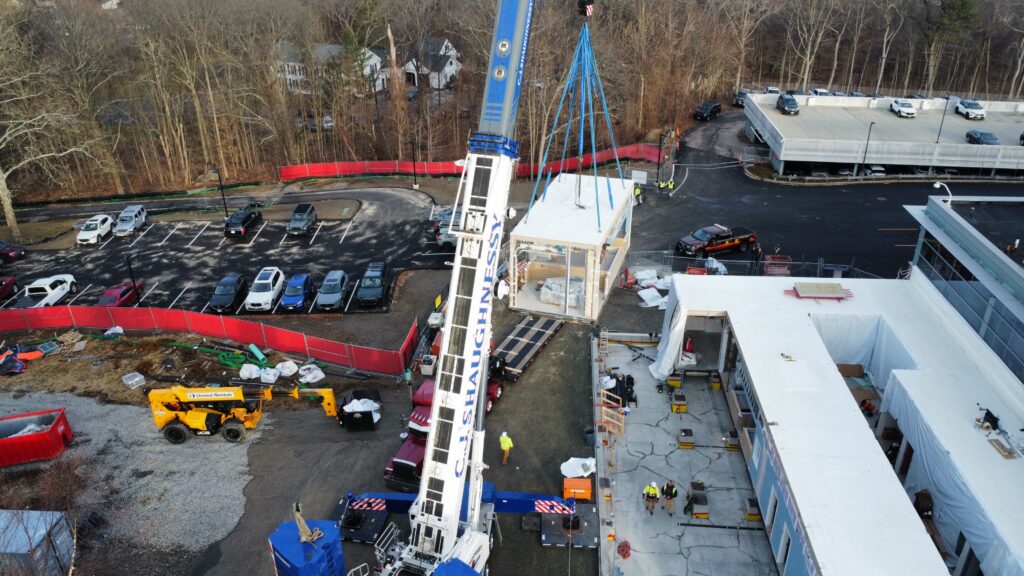
But on more complex or unusual projects, or when officials are unfamiliar with modular, they start even earlier. Currently, they’re installing modular locker rooms underneath existing stadium bleachers at a Long Island university — a configuration they’ve never built before.
“Well over a year ago, when we knew what the concept was, we set up a meeting with the building department,” Buongiorno says, “and told them what we wanted to do. What do you think? What do we have to worry about from a fire rating and fire code standpoint? We know what the state code is, but what do you want to see? What are your concerns?” Buongiorno said it was a great meeting, and the project is now under construction. “Get in early — that would be my advice.”
A key part of those early meetings is addressing the building official’s liability concerns directly. “We put them in touch with the people at the state to talk to about what their responsibility is, what their liability is,” Buongiorno says, “because that’s really what everybody’s worried about — what could they get in trouble for?”

Hannah-Spacagna says that there are still some local officials that resist modular out of unfamiliarity. “In some cases, you’ll have a local building official who just says, ‘This is my town, we’re doing it my way.’” His approach is to facilitate meetings between the state modular program administrator and the local official to help them understand where their authority starts and ends. “When they have that understanding, it typically goes well,” he says. And once a jurisdiction has been through one modular project, subsequent ones become significantly easier.
When problems do arise, both our interviewees emphasize the importance of tone. “Go to the local building official or the permitting office and don’t demand or accuse — just ask, what can we do to resolve this?” Hannah-Spacagna advises. “You’d be surprised how often just asking that question, instead of demanding, is a much better path to a solution.”
Some Practical Strategies
At the state level, the most important thing is the quality of the submission package. Buongiorno’s group spends significant time reviewing drawings before they go out. “We have a direct line of communication with the group in Albany that handles New York. We talk to them on a regular basis. We’ve developed the same connection with the folks in Massachusetts.”

Staying in regular contact with state reviewers serves two purposes: it ensures submissions match exactly what the state wants to see, and it lets the team gauge how backed up the reviewers are before a submission goes in.
On contracts, both Buongiorno and Hannah-Spacagna stress the importance of clearly defined roles. Hannah-Spacagna mentions ConsensusDocs — an organization MBI collaborated with to create a standardized document that clearly defines the responsibilities of the GC versus the modular manufacturer. Having clear language that spells out from the beginning who’s responsible for what “makes the whole process go much smoother,” he says.
Buongiorno’s firm uses a similar approach: a six-to-seven-page scope document, agreed to before pricing is finalized, that becomes part of the contract. “The clearer the lines, the cleaner the job will be,” he adds.
On production timing, the advice is straightforward: Don’t start building until permitting is confirmed. “Once you start fabrication in the factory, you’re not going to make changes there,” Buongiorno says. Any significant design change after fabrication begins would likely require going back to the state for re-approval, which will certainly slow things down.
Standardization Efforts
Even with delays factored in, both experts are confident that modular remains faster than conventional construction in the vast majority of cases. “Even if, compared to conventional construction, you factor in an extra month or six weeks for approvals at the state level, that time is more than offset by the accelerated on-site assembly and reduced construction phase, because modular is inherently faster,” Buongiorno says.
Hannah-Spacagna says, “Permitting delays are a variable, whether you’re building with modular or conventional construction. But modular eliminates many other variables that can cause delays,” such as bad weather, supply chain problems and labor issues.
At the industry level, both point to the lack of standardization across state programs as the most significant systemic problem slowing things down. “A factory in Pennsylvania has to be aware of the requirements for every state it ships to: Pennsylvania, Virginia, Maryland, Delaware, New York, New Jersey, Connecticut, Maine, Massachusetts,” Buongiorno says. “How do you keep up?”
Hannah-Spacagna is working on regional building code reciprocity agreements — arrangements where neighboring states agree to accept each other’s code compliance. “Because, let’s face it, if you’re building in Colorado or Utah, you’re probably going to have similar snow load, wind and seismic requirements. So does it really make sense to have a manufacturer change how they’re building a structure, just because it’s going to a neighboring state?”
Hannah-Spacagna is also part of the International Code Council’s Code Development Committee, which is working to incorporate ICC/MBI standards 1200, 1205 and 1210 (standards that include utilizing full third-party agencies for plan reviews and inspections) into the 2027 International Building Codes and International Residential Codes. He says, “If those standards are adopted by every state, it would be a significant step towards creating consistent processes for our industry.”
Zena Ryder writes about construction and robotics for businesses, magazines, and websites. Find her at zenafreelancewriter.com.