

Don’t underestimate the capital, pipeline and operational challenges of owning manufacturing capacity.
• Volumod’s Ethan Fernhaber and Fading West’s Eric Schaefer say that while factory ownership provides control, it comes with unrelenting pressure to keep production moving.
• Factory ownership rarely improves margins quickly. Schaefer advises securing 12 to 24 months of committed work before investing in a manufacturing facility.
• Both executives emphasize that success means learning to think and operate like a manufacturer, rather than a builder who has moved indoors.
For many modular builders, opening a factory seems like a logical next step.

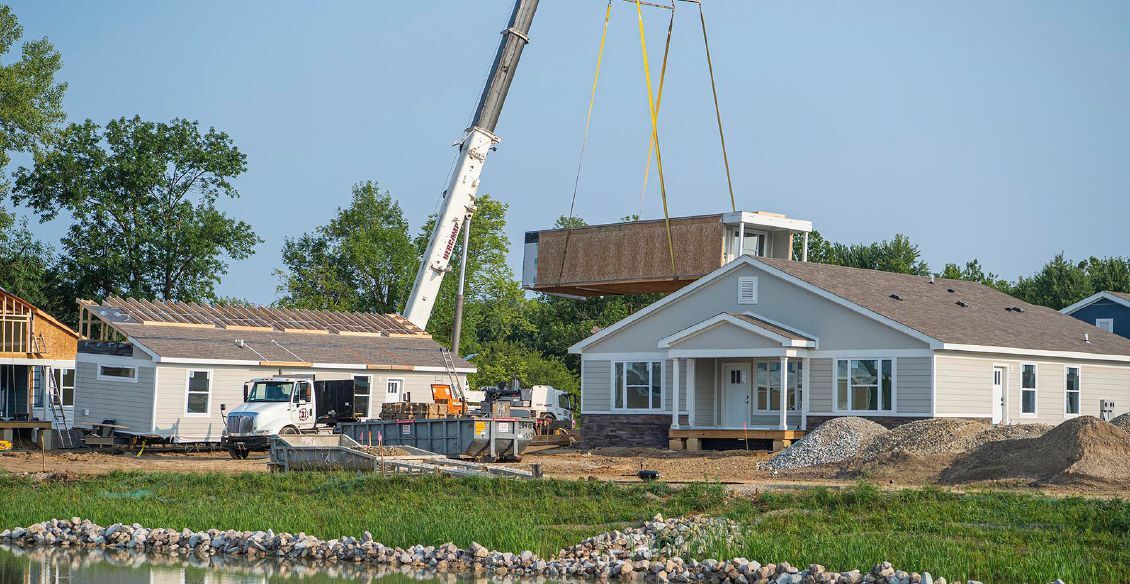
A company that controls its own manufacturing can directly influence product quality, delivery timing, pricing, design standards and customer experience. It can also reduce dependence on outside manufacturers whose backlogs may not satisfy the builder’s project schedule.
But two modular housing executives who have made the leap say that factory ownership is more than a simple expansion strategy — it is a fundamentally different business.
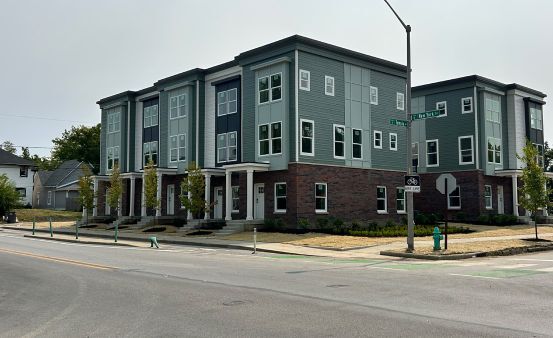
Ethan Fernhaber, Co-Founder of Volumod (a modular construction facility located in Indianapolis, Indiana), says the primary reason to own a factory is control. Volumod grew out of Fernhaber’s real estate development background and was launched in 2021 to support the company’s move into higher-value housing assets. It’s on track to produce its 1000th unit this year.
“If you control the factory, you control what the factory produces,” Fernhaber says. “I only want to produce units that I would want to own in perpetuity.”
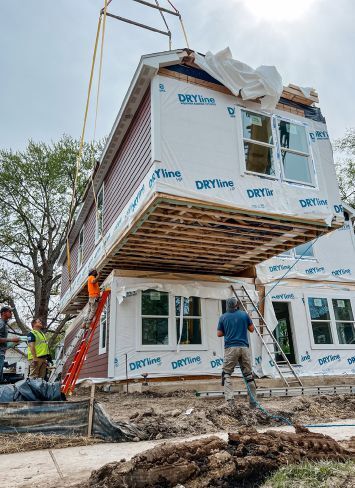
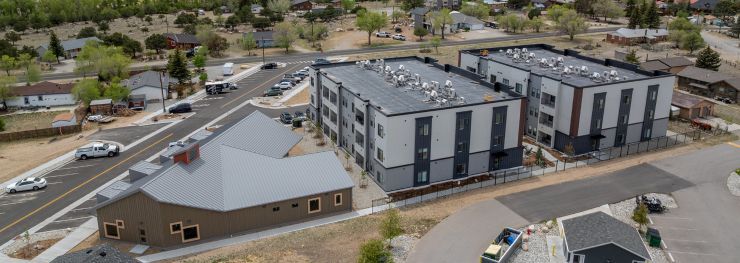
Eric Schaefer, Chief Business Development Officer at Fading West in Buena Vista, Colorado, agrees that control is a key benefit. Fading West operates a 110,000 sq. ft. factory focused largely on workforce and affordable housing for Colorado’s mountain, rural and resort communities.
However, Schaefer is blunt about the financial trade-off. Owning a factory does not automatically improve margins. “The capital needed to keep the thing churning without a consistent pipeline can make it a precarious undertaking,” he says.
Keeping the Factory Full
In fact, both Fernhaber and Schaefer say that Job #1 needs to be building the production pipeline and keeping it full.
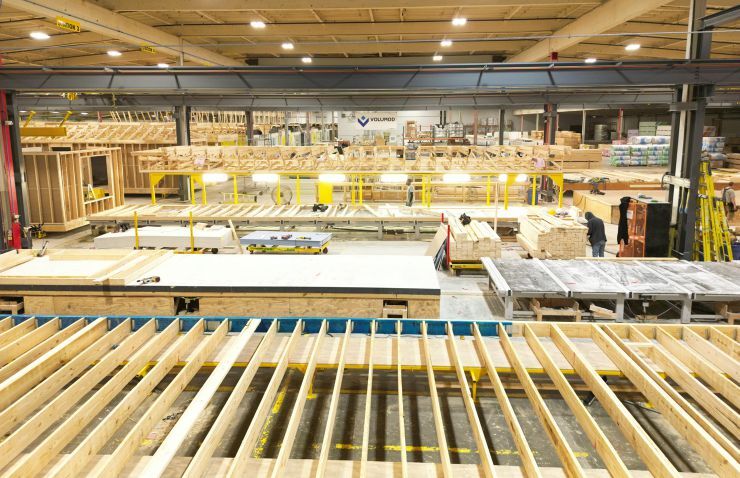
Factories carry high fixed costs. Buildings, equipment, cranes, software, management, production staff and working capital all must be paid for before the factory reaches steady production. Once people are hired, a production slowdown can do more than create a short-term cash problem. Layoffs can drain the organization of hardwon manufacturing knowledge.
Fernhaber says that Volumod experienced this challenge firsthand during a slowdown in September 2024. When employees left, the company lost some of the “tacit, or tribal, knowledge” that had developed on the factory floor. Production later recovered, but the experience underscored the importance of consistent work to a factory’s health.
“When you have 100 human beings all wanting a paycheck every single week, you need to make sure that you have your backlog figured out,” he says.
For Volumod, the answer has been a captive development pipeline. The company is not only manufacturing units; it is also engaged in development activities that help generate the demand needed to feed the production line. Fernhaber says development can be an 18-month cycle involving land acquisition, rezoning and permitting, which means the pipeline must be planned well before the production capacity is needed.
“I don’t know how anybody does it without being a developer themselves,” he says. “It would be way too hard to try to depend on third-party orders.”
Schaefer suggests that a builder have 12 to 24 months of work secured through signed contracts or letters of intent before opening a factory. “It is by far the most important piece to any of this,” he says. “If you don’t have multiple projects lined up, either with letters of intent or signed contracts, we would strongly discourage anyone from opening a factory.”
One Big Project Is Not Enough
Even signed work can be misleading. Projects get delayed, resized, redesigned, or killed.
Schaefer says that Fading West looks at its pipeline as it would a bucket it needs to fill with rocks. Large projects are the “big rocks,” but they need to be surrounded by smaller projects, or pebbles. That combination makes it possible to fill production gaps if a major job slips.
For Fading West, those big rocks can include public-private partnerships, philanthropic partnerships, state or municipal agency housing, employee housing for institutions such as hospitals or ski companies, FEMA-related work, nonprofit projects and the company’s own developments. Smaller projects from developers and repeat customers help fill the spaces around these projects.
The risk is that a project that looks solid on paper may not be by the time it reaches the factory. Schaefer cites entitlements, parking requirements, density changes, snow and wind loads, financing limits and local code differences as factors that can change the number of homes or modules a project can support.
A developer may begin by discussing 50 homes, only to have the bank finance ten. A project scheduled to occupy the factory for two and a half months may take only two weeks. If a manufacturer has 100 or more employees counting on steady work, that difference matters.
“What are we going to do with those 110 workers?” Schaefer asks. “We can’t just lay them all off and expect them to come back in a month.”
The practical takeaway is that modular builders should not base a factory decision on a single large customer, a single large project, or a general belief that the market needs more housing. They need a diversified pipeline that can absorb normal project delays.
Understand the Capital Commitment
Factory ownership also requires patience from capital partners.
Fernhaber estimates that a modular factory, built from the ground up, can cost between $40 million and $60 million, with a payback period of more than ten years, depending on backlog, production volume and margins.
Schaefer provides a lower, but still substantial, benchmark for a roughly 100,000 sq. ft. plant. He says a builder could face more than $20 million in costs when construction, working capital, equipment, staffing, software and startup requirements are included. A plant of that size may need more than $35 million in annual contracts to reach the scale required for viable operations.
The first year is especially difficult. Schaefer says a startup may produce only three boxes a week for the first six months, then perhaps one box a day in the second six months. Profitability may not be achieved until the process has matured and the factory can reliably produce two or more boxes per day.
Despite this learning curve, it’s crucial to ensure adequate cash flow from the beginning. Schaefer says modular manufacturers often need to educate customers and lenders about payment schedules because the factory must buy materials and build units before delivery. If payments are not structured correctly and a project stalls, the manufacturer can end up carrying too much work-in-progress risk.
“Cash is always king,” he says.
Control Is the Reward – And the Burden
The strongest argument for factory ownership is that it gives the builder greater control over its own destiny.
For Volumod, factory ownership helps align production with internal developments and with the product quality the company aims to maintain over the long term. Fernhaber says the company can set pricing for internal projects to support the broader development model while still serving outside customers differently.
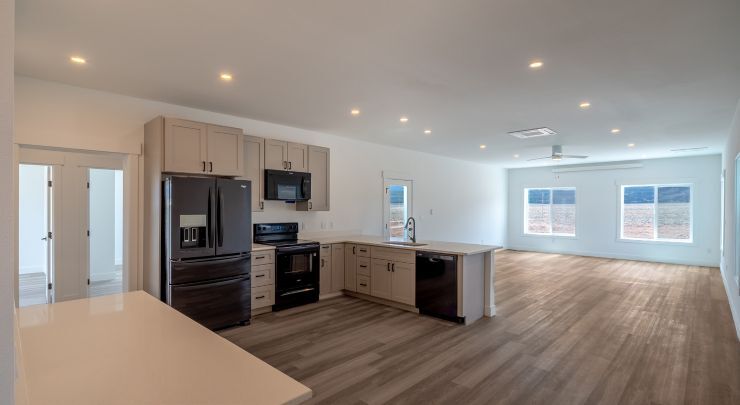
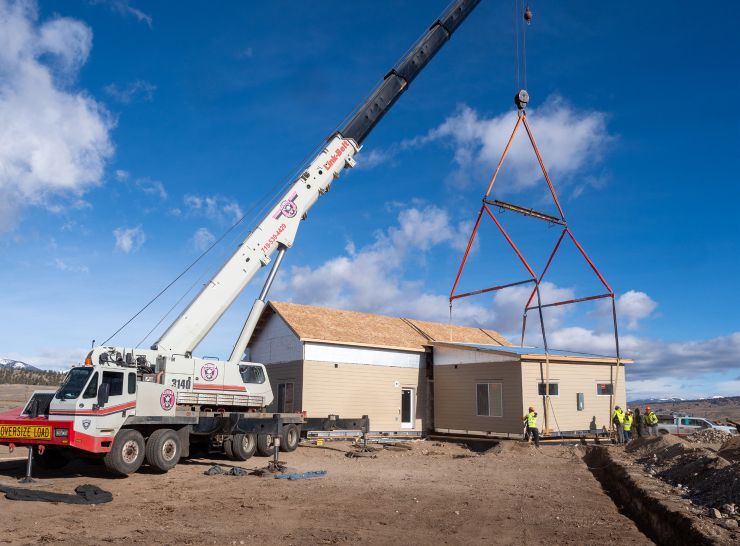
For Fading West, control allows the company to design production around the realities of remote or labor-constrained markets. Schaefer says some partners want as much work as possible completed in the factory, including roofing, interiors, painting, porches and overhangs, because there may not be enough subcontractors in the destination community.
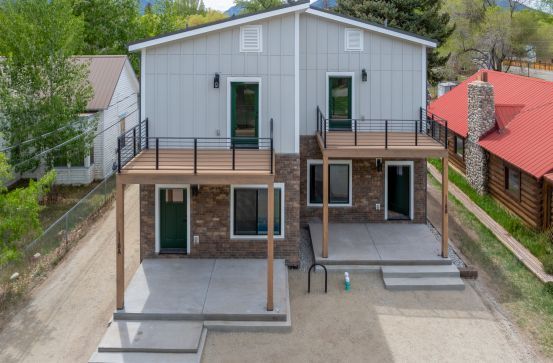
That level of factory completion can be a major advantage in mountain towns, rural communities, islands, or other hard-to-build locations. But the same control also creates an obligation. A factory cannot easily pause when demand softens. The payroll, building and equipment remain.
Fernhaber describes it as both a blessing and a burden. “We can build what we want when we want to,” he says. “Conversely, we always have to be doing something because we’ve got a big nut to crack.”
It’s Manufacturing, Not Construction
One of the most common mistakes made is to assume a modular factory is simply a construction site moved indoors.
Fading West designed its factory to be more like a Toyota-style manufacturing plant, with stations, process discipline and repeatable products. Homes move from station to station every four hours, allowing the line to produce two or three modules per day when it’s running well.
Further, their product offering is deliberately narrow. Fading West limits options for cabinets, countertops, flooring and floor plans. It focuses on two-, three-, and four-bedroom attached and detached homes. That discipline helps the company value-engineer its products while preserving speed and quality.
Schaefer warns against trying to serve every market at once. “Don’t say ‘yes’ to a four-story hotel and then ‘yes’ to a bunch of ADU tiny homes,” he says. “Start with a pretty strict plans library.”
The reason is simple: factory economics depend on repetition. Every unusual design, unclear scope item, or ill-suited project can slow the line and increase costs.
Schaefer also cautions against heavy automation too early. Robotics may eventually help, but he says a startup should avoid investing $10 million to $15 million in automation before the process is stable. Fading West has used lasers, subassemblies and lean manufacturing methods, but it has not made robotics the foundation of its early model.
People Remain the Biggest Challenge
Factories need people who can build consistently, learn quickly and work within a process. In many locations, that workforce is hard to find.
Fernhaber says recruitment is especially difficult when a factory is in an area without nearby modular manufacturers. It can take years for workers to become highly proficient. “It has been a lot longer and more difficult than what I originally anticipated,” he says.
Volumod has made culture a central part of its workforce strategy. Fernhaber says the company hires people from diverse groups, including those who have experienced incarceration, addiction, or homelessness. “We believe that relationships trump transactions 100% of the time,” he states.
He adds that some of those employees have become among the company’s most loyal and productive workers.
Fading West has also had to think carefully about its workforce. Schaefer says the company’s Buena Vista location gives it access to the communities it wants to serve, but it also requires recruiting from outside the area. The company cross-trains employees across stations and partners with high schools, trade programs and universities to attract younger workers to the field. About 22% of its workforce is female, which Schaefer notes is high for construction- related work.
Coordination Can Make or Break the Model
A modular factory does not eliminate the need for strong site coordination. In fact, it increases the importance of clearly defining who is responsible for what.
Fernhaber recommends building a prototype and removing imperfections before launching a larger order. He also advises using clear scopes of work, even color-coded drawings, to show where factory responsibility ends and site responsibility begins. Customers should inspect units on the factory floor, he says, because problems are easier to correct before shipping.
Schaefer makes a similar point. He says modular projects fail when communication breaks down among the factory, general contractor, set crew, transportation team and customer. Scope gaps or duplicate charges can quickly undermine the economics, especially on affordable housing projects with thin margins.
Architects, engineers, lenders and code officials also need to understand modular. If plans are not designed for the factory, the production line slows. If banks do not understand modular payment schedules, financing can stall. If state approvals or inspections are not coordinated, completed units may wait rather than move.
Who Should Not Build a Factory?
The answer from both executives is clear.
Builders should not open a factory if they lack firm demand, patient capital, a reliable workforce, modular-savvy design partners, lender support, strong site partners and the discipline to standardize their designs.
They should also think twice if their primary goal is short-term margin improvement. Factory ownership may improve schedule control and product consistency, but it shifts financial risk from the supplier to the owner.
Schaefer says builders who are not ready for that risk may be better off developing relationships with two or three third-party factories. That strategy can provide access to capacity without taking on the fixed overhead of ownership.
Fernhaber notes that opening a factory requires a great deal of dedication. “If you’re not high on commitment, this wouldn’t be a great industry for you to enter into,” he says.
For a modular builder, the decision to open a factory should therefore begin with a frank question: Do we just need more reliable access to production capacity, or are we prepared to run a manufacturing business?
If the builder has repeatable products, committed demand, adequate capital, strong partners and a pipeline that can survive normal development delays, a factory may be the next logical step. If not, simply outsource.
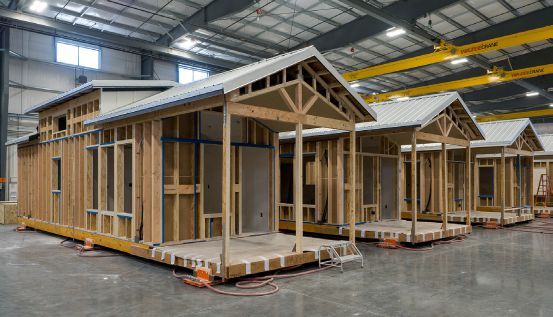
The factory is not a shortcut, but a strategy. The builders most likely to benefit from factory ownership will be those prepared to operate it as a disciplined, long-term manufacturing business.
Jim Mahannah is a freelance B2B technology writer specializing in construction, energy, water/ wastewater treatment, and cleantech. He is an engineer, and his work experience includes construction project estimating and management in addition to founding and operating a structural components fabrication company supplying residential and commercial building projects.