

From early design involvement to fast decisions, here are the habits that separate smooth projects from those with costly delays.
• Modular benefits depend on preparation, realistic expectations and an understanding that it’s not a universal solution.
• Site constraints, transport logistics and early manufacturer involvement strongly influence cost, feasibility and outcomes.
• Clear responsibilities, fast decisions and learning curve awareness improve outcomes across repeated modular projects.
The advantages of modular construction, such as faster schedules and cost savings, don’t materialize automatically. They depend in part on how prepared a client is before a project begins. We spoke with representatives of three modular manufacturing companies and asked them what they wished every client understood going in.
Modular Isn’t Magic
The first thing manufacturers want clients to let go of is the idea that modular is a cure-all. Craig Landri is the President of Signature Building Systems, based in Moosic, Pennsylvania. “Modular is a construction method, not a magic elixir that’s going to solve all problems,” he says. “Like any tool, it’s not suitable for every job and it can’t solve every problem.”
In particular, modular doesn’t magically lower costs. Heith Bibby is President of Palmdale, California-based Mandeville Modular. “Clients are always coming in saying, I heard modular is cheap,’” he says. “But modular units are built out of the same materials you have on stick-built projects, using the same labor force. However, modular is more efficient, and it’s with efficiencies that you get some savings.”
The marketing around modular hasn’t helped. Claims of 40% lower costs and 50% faster schedules circulate widely, but Landri is blunt about what those numbers actually require. “They require the perfect project to achieve, and oftentimes you’re not working with a perfect project.” His advice to builders: help clients have realistic expectations and budgets and evaluate each project on its own merits.
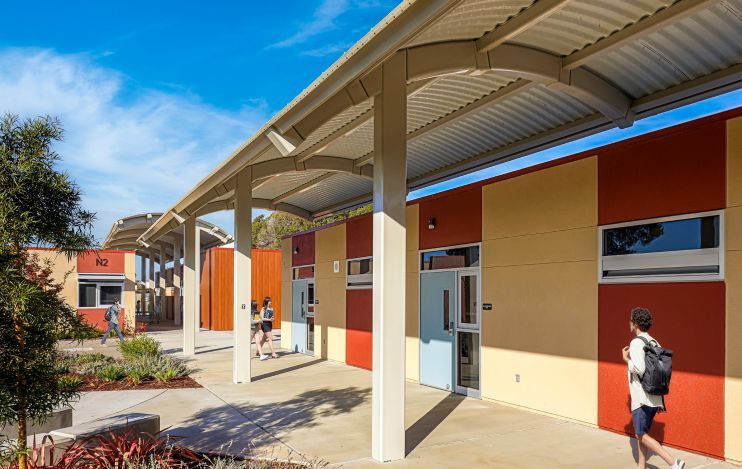
Related to misconceptions about cost are misconceptions about quality. “There’s still a lingering perception that modular is temporary or somehow less durable,” says Maggie Howland, Director of Marketing and Business Development at American Modular Systems, which has offices in Manteca and Temecula, California.
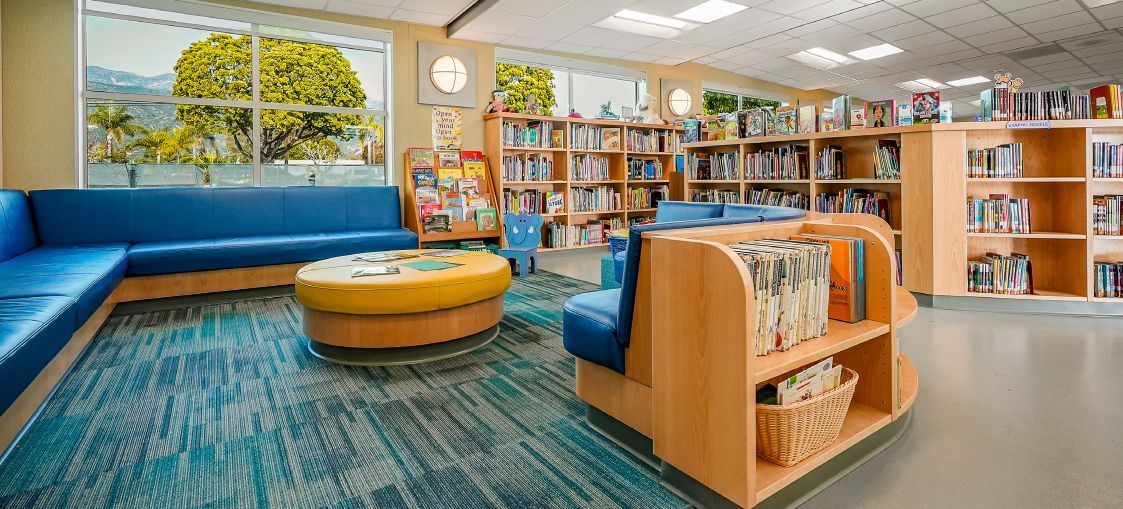
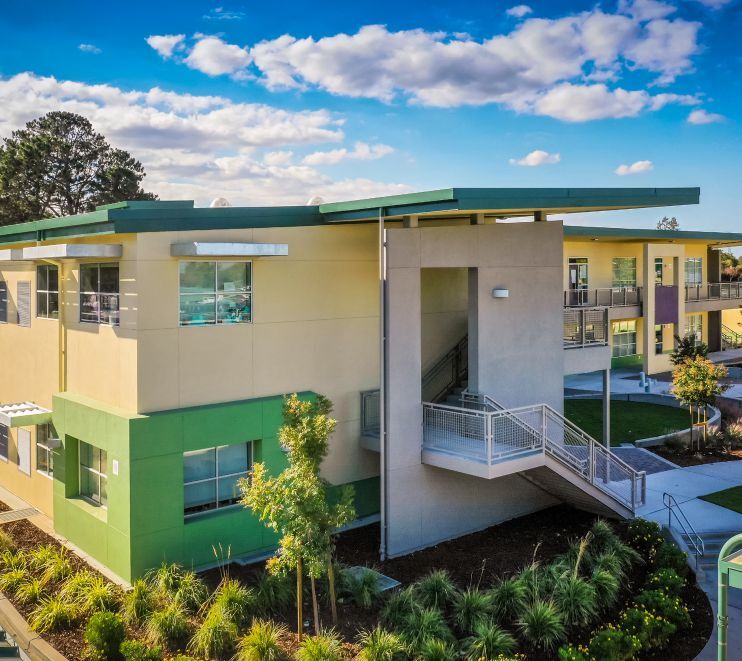
American Modular Systems manufactures school buildings, and Howland says the misconceptions about quality, “trace back to older portable classroom models. What we’re building today are permanent, code-compliant structures, and in many ways the quality is consistently better because everything is happening in a controlled environment rather than out in the field.”
Site and Route Have Big Impacts
Before committing to modular on any project, clients need to honestly assess whether the site is a good fit. Not every site is.
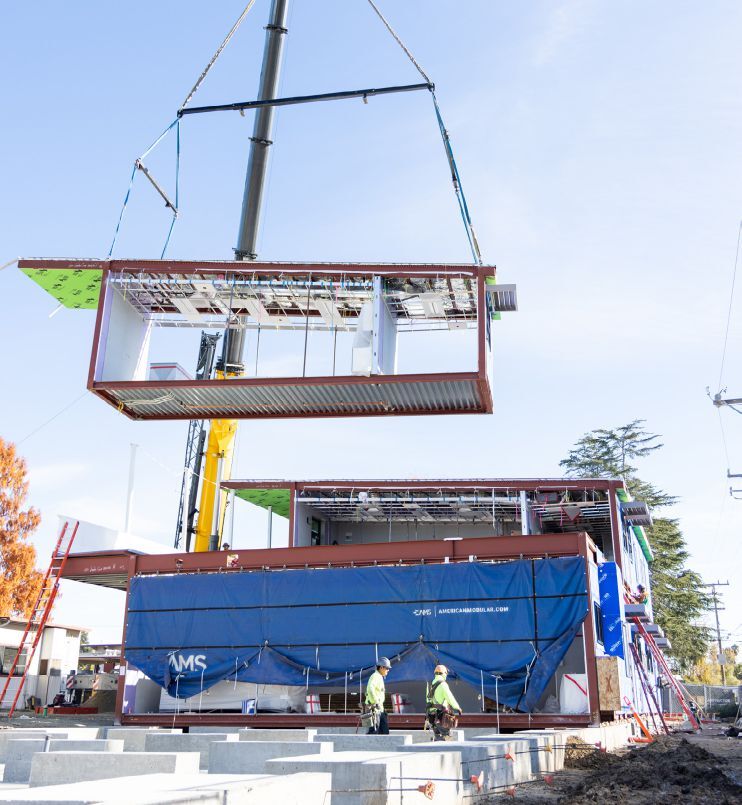
Landri mentions overhead power lines, dense urban infill and difficult access routes as factors that add cost and complexity — not necessarily dealbreakers, but things that need to be accounted for. “These challenges can typically be overcome,” he says, “but it’s a matter of thinking through the solutions ahead of time and understanding how much cost you’re adding to overcome them.”
Landri’s team looks at things like whether there are “school bus routes running past a site at 7 a.m. and 3 p.m., whether there are obstructions like trees and fences. You have to look at the route and see whether a 60-foot module — plus another 18 feet for the truck and tongue — can navigate it.”
Involve the Manufacturer Early
“If you take a design to a manufacturer and ask for a price, it’s going to be much more expensive than if you worked with them on the design,” says Landri. That’s because designing for modular from the beginning allows you to cost engineer around what modular can do best. “You will be able to take better advantage of the cost and time savings that modular offers. Engaging a factory early on in the design phase should yield a higher ROI.”
Relatedly, if a site-built design doesn’t seem to be pencilling out, “pivoting to modular at the eleventh hour is unlikely to close the gap,” Landri says. Not only would you be unlikely to save money by switching to modular, but you also would probably end up spending more because you had to re-design the project.
There are hard physical constraints that need to inform design. Department of Transportation rules limit module widths and lengths on the road. “If you design the first module to work within those constraints, you can certainly scale it,” Landri says. “But if your first module doesn’t work within those constraints, then you’re just scaling an unworkable — or more expensive — project.”
But, contrary to common opinion, those constraints don’t mean that modular projects can’t be aesthetically pleasing. Howland says, “There’s still an expectation that modular will look generic or out of place. Most of our projects are fully integrated into the campus, and once they’re complete, it’s not obvious what was modular and what was site-built.”
Timely Decision- Making Is Crucial
In traditional stick-built construction, decisions about fixtures and finishes can often wait until relatively late in the build. In modular, they can’t.
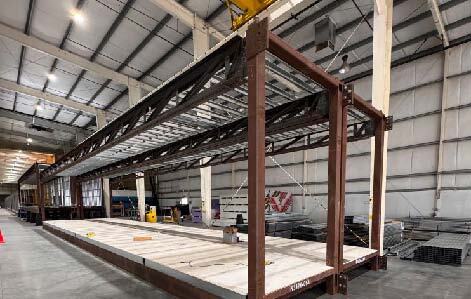
“We can tell clients they have two days to make a decision on a component, but they don’t always understand the critical nature of that,” Bibby says. “If they miss their two-day deadline, the factory floor stops progressing the mod forward, which is an inherent cost to us and creates a huge inefficiency. So, it’s important to educate the client about their obligations on a project.”
When clients miss those decision windows, the cost is real and immediate. “When our floor production has stopped because of a client’s inability to deliver critical information, there’s a punitive cost for every day our floor stays static,” Bibby says and his team has had to issue formal notice to that effect. He mentions a current client whose project has been stalled for over a year because critical design information still hasn’t been delivered.
To reduce these kinds of critical decisions during manufacturing, Bibby’s company procures all materials as soon as a contract is executed. As the modules move through each station — framing, drywalling, MEP — the components need to be on the shelf.
Light switches illustrate the point. “We go through rigorous testing, with state inspectors here every day, and we test each circuit within a module,” he says. “To make sure that circuit is complete, we have to have all the fixtures in — lighting, wiring, switches, everything.” Clients accustomed to stick-building treat those items as fit-and-finish decisions, made near the end. But with modular, they’re needed during production and that’s “one of the things we need to educate clients on the most,” Bibby adds.
Bibby’s team at Mandeville is structured to keep clients actively involved as needed. “Our project managers’ role is to engage with the client on a regular basis, so the client realizes, here’s the next step, here’s what’s going to happen, here’s the consequence of this.”
The company’s developer clients need to be kept informed, and Mandeville needs to keep them accountable for timely decisions as well. “We shepherd the developer through the project and, really, the only way they respect that is by there being a cost associated with their delays.”
The team frequently has to remind its developer clients that the reason they chose modular was that it’s more efficient, and that that cost savings comes from speed “Their ROI depends on quicker heads on beds. That’s what motivated them. But if inaction causes a delay, then they’re no longer realizing those efficiencies.” When Bibby has a client who doesn’t need so much nudging, he says, “It’s so refreshing. Those are the days you leave the office with a smile on your face thinking it’s such a joy to work with this client!”
With retail, single-family customers, Landri says that emotional factors tend to play a big role. “It’s the largest investment they’ll probably ever make, and they’re going to be seeing that cabinet, that flooring, those windows, every day as they live in that house.” That emotional weight can slow decision-making. His approach is transparency about the reason: “When people know the “why” behind decisions, it makes them feel more comfortable — they need to know that they’re not being bamboozled, that no one is trying to get an edge on them. That helps give them some confidence in making their decisions.”
Scope Clarity Matters a Lot
Manufacturers say it’s important for clients to be clear on who’s responsible for what. “Scope is one of the most important things to get aligned early,” Howland says. “Confusion can come when assumptions from traditional construction carry over. We spend a lot of time upfront clearly defining roles and responsibilities so there aren’t gaps or overlaps.”
She says that once the scope is clearly established, most clients are very comfortable with it.
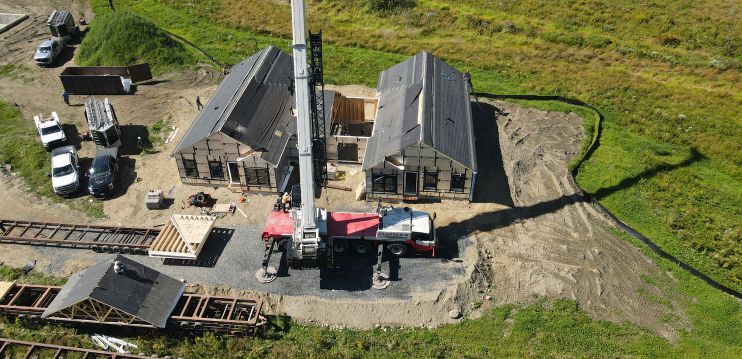
Landri adds that, for first-time clients, the boundary between what happens in the factory and what happens on-site isn’t always intuitive. “If you have complex roof lines, how much of the shingles will be installed in the factory versus on-site? If you have modules that mate together to form a single room, how much flooring and drywall is held back to accommodate joints?”
A modular manufacturer might take answers to questions like these as perfectly obvious because they’re part of its everyday workflow. But they won’t be obvious to the client, so the manufacturer needs to make sure they understand.
Budget for a Learning Curve
For clients doing their first modular project, manufacturers want them to know that the first few jobs are the most expensive.
“You’re putting your systems in place, you don’t know what you don’t know, and there’s a cost to that education,” says Landri. “That’s true whether you pay a consultant or you’re learning in real time while the dollars are adding up.” But while the learning curve is real, it does flatten. “As you get your systems down, you gain experience, you know what to avoid, you know the pitfalls, and you’ll see your profit margin increase.”
Bibby says that subsequent projects are easier for the client and the manufacturer. “It’s so refreshing when you work with a client who’s done it before and gets it.” A client who understands the process, respects the timelines and holds the manufacturer accountable is the ideal. “I love clients who are so proactive they’re holding our feet to the fire,” he says.
The Manufacturer is a Partner
Finally, manufacturers stress that the client-manufacturer relationship isn’t transactional — it’s a partnership, and clients need to vet manufacturers accordingly.
“The modular manufacturer is truly your partner and holds the majority of the cards for the success of your overall project,” says Bibby. “This is a collaboration and we like to have clients come into the factory for weekly visits so they can see the progress of their project.” He believes it’s important that manufacturers are open and accessible to their clients in this kind of way.
Howland agrees about the importance of factory visits. “Many of our clients visit the factory to see how their buildings are constructed, attend installations on-site and walk completed campuses,” she says. “That level of visibility helps teams understand the process more quickly and builds confidence in how everything comes together.”
Landri says, “You need to find a manufacturer you’re comfortable with, that you’re philosophically aligned with, because when problems arise, you want problem-solving, not finger-pointing.” He adds that, “Taking accountability and solving a problem right away is usually cheaper than pointing fingers and not addressing the issues until something blows up.”
Zena Ryder writes about construction and robotics for businesses, magazines, and websites. Find her at zenafreelancewriter.com.