


Developers who understand where the real risks lie are better equipped to choose the right factory, avoid costly mistakes and build with confidence.
• Much of modular’s perceived risk comes from misconceptions rather than from objective evidence.
• Experienced manufacturers address concerns by education, factory tours, quality systems and clear explanations of project requirements.
• The greatest risk may be resisting productivity improvements while other industries continue embracing more efficient manufacturing.
Developers tend to think offsite construction is riskier than building on site. Is that a prudent attitude or is it a misconception that’s not serving them? If the latter, how do they verify that it’s safe to proceed with this method and with a particular manufacturer?
We talked with two offsite industry veterans who take part in conversations about risk with developers. We asked them where developers perceive higher risk, and the ways which those impressions are mistaken. And we look at the ways in which offsite construction can actually lower risk.
Wariness About Early Decisions
Doug Tollin is Director of Customer Experience at Champion Homes, headquartered in Troy, Michigan. He has worked at Champion for more than 30 years, first on the factory floor and now in a corporate role as the company’s Director of Customer Experience.
According to Tollin, one challenge developers have when looking at modular for the first time is that their operations tend to be based on site-build expectations. “There’s a bit of change management that needs to happen, because developers need to do a lot more upfront planning and when using offsite construction,” he says. “That’s a significant adjustment to how they’re used to working.”
He says that modular can be construed as riskier because so much depends on that upfront work being done correctly. The developer can’t pivot and change direction midstream, which is possible, even common, on a site-built project.
His fix is to educate developers about the realities of modular, and that fix should include a factory visit. “[Potential developer customers] come to the factory. They see the units coming down the production line, they see our engineering teams in the office working on houses, they see the forklifts unloading materials off of trucks. Then they get it,” he says. Once they’ve experienced the factory operation in person, they have a better grasp of why so much planning has to be done ahead of time, and why designs need to be frozen a relatively early point. “They see that things move quickly once manufacturing starts.”
Shorter Schedules Lower Risk
Tollin’s central argument is that modular compresses time, and that compressing time cuts exposure to whatever can go wrong while a project drags on.
“We live in a volatile world, when it comes to weather, natural disasters, and things like tariffs and wars,” Tollin says. The longer a project takes, the more of these things the calendar can throw at it. “Suppose I’m roofing a house, and a tornado wipes out a shingle manufacturer. Now, I either can’t get shingles, or my cost to do so escalates,” he says. “Whenever we can reduce that time to completion, we reduce risk in basically every metric.”
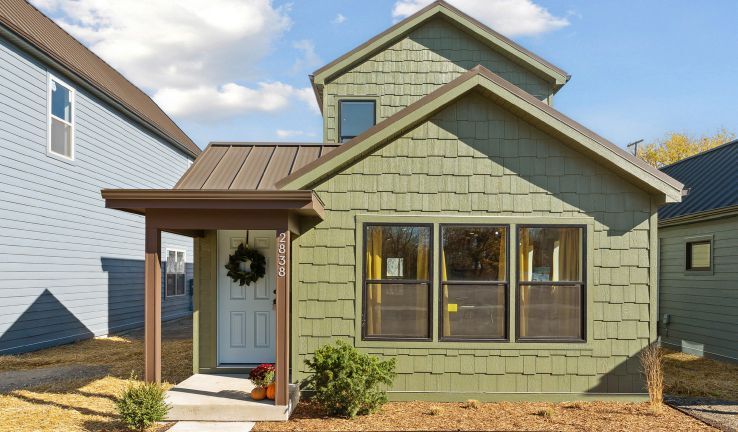
With modular, the shorter production schedule eliminates a lot of time risk. A modular unit will go from “the start of hammering nails to it coming off the line substantially complete in just 2 to 3 weeks,” says Tollin. That’s compared to months for a conventional project.
Unfamiliarity Is Uncomfortable
Jim Dunn is President and Founder of Stack Modular, a modular manufacturer that builds in China and ships worldwide. Its North American offices are in Vancouver, BC and Irvine, CA. Its Asian offices are in Hong Kong and Shanghai, China. Dunn has 25 years of construction experience, with 16 years of that in modular.
Dunn’s view is that much of the risk developers attach to modular is unfamiliarity. “The word ‘risk’ is the favorite word of construction, ” Dunn says. But with modular the perception of risk is magnified to developers who don’t know the industry well. “They’re not able to assess challenges, opportunities, and risk appropriately.”
He illustrates his point with the example of his 8-year-old daughter going on a trip to Montana. “Because I’ve never been there, because I’ve never had an 8-year-old daughter go there before, that feels risky to me,” he says. But that’s not an objective evaluation of the situation. It’s based on ignorance and fear. He says, “The person who tells me they’re concerned about the risk of drywall cracking has never hung a layer of drywall.”
Risk is a Moving Target
Because construction is so fragmented, Dunn says, a skeptic about modular construction can always find something to object to. “There’s architecture, structural engineering, financing, permitting, city officials, manufacturing, building, shipping. They can perceive risk in any one of those pockets,” he says.
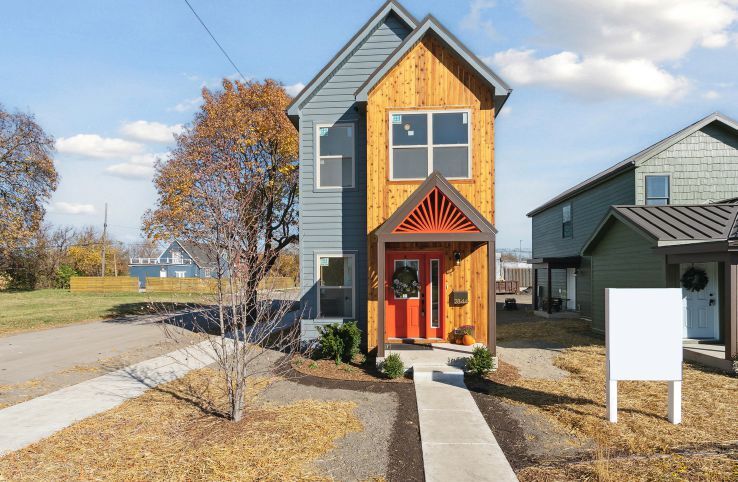
If a developer is concerned about quality, “you can fly your quality control guys into the meeting, show them your QC manuals, show them reference letters from every one of your projects that speak to their high quality.” But, he says, you answer one objection and a new one pops up.
The shipping costs for modular construction is another common objection but that’s largely because they haven’t quantified the shipping costs included in a site-built project.
“My delivery cost to ship from China to Vancouver is about $18 a square foot, roughly 2% of the cost of the finished building,” says Dunn. When speaking with developers, he turns the question around: “What are your delivery costs to the job site?” he asks them. He maintains that most can’t answer that question because the costs are spread across every trade. “The plumber is in charge of his deliveries, the electrician is in charge of his, and so on.” Nobody pays attention to the total cost of delivery, but they complain that modular delivery costs are high without having anything meaningful to compare them to.
When it comes to “design freeze,” Dunn thinks the label scares people for no reason. “We don’t have a design freeze; we just use common sense when developing a product,” he says. For instance once the steel frame has been designed, it’s done and they don’t go back and revise it. Same goes for the plumbing, wall systems, electrical, or anything else. “Going backwards costs money and time,” he says. This is really just disciplined project management, a concept that is familiar to conventional builders— when building onsite, you don’t want to go back and make changes to your MEP systems after you’ve finished drywall and painting.
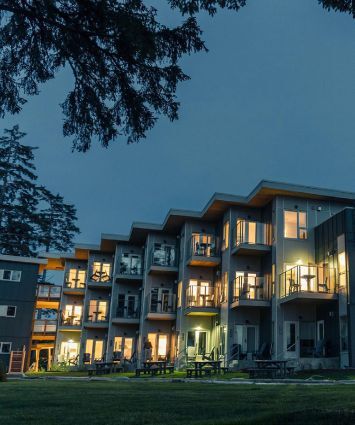
Dunn compares these initial interactions that manufacturers have with developers to dating, in that if someone has decided they don’t want to do business with you, you need to move on. “At the end of the day, if she doesn’t want to date you, no matter what story you come up with, she’s going to find a reason to reject you,” he says. “There’s no amount of convincing, or evidence, or past examples that’s going to change her mind.”
He also has little sympathy for objections based on the failures of some modular companies, or on the story of a friend-of-a-friend “who did this 10 years ago and his project failed.” And while Dunn admits that sarcasm doesn’t tend to go down well with developers, sometimes he can’t resist. “BlackBerries and DeLoreans aren’t around anymore, but mobile phones and automobiles have been pretty successful.” A single company’s collapse tells you little about the category.
Choose a Trustworthy Manufacturer
All this is not to say that due diligence isn’t needed: it is. Tollin acknowledges that there’s genuine risk in picking a manufacturing partner. A developer shouldn’t select a factory because “they’re down the road or happen to pop up on Google,” he says. It’s crucial to make sure the factory is a good fit for the project the developer has in mind, whether it’s a rural subdivision, a commercial project, or a multi-story, multi-family building.
The honest factory, Tollin says, will tell you early whether a job is “in their wheelhouse or not, and not give any false pretenses on what they can do.”
Financial stability is also important, especially for long-term projects. Tollin has seen seen manufacturers go out of business with big jobs only half-finished. If the factory is part of a publicly traded company, the developer has the advantage of being able to see its published financials. And if the company has been in business for a long time, that’s a sign of stability. “If you find someone that’s been building for 50 or 70 years, there’s a reason why they’ve been around that long,” Tollin says.
Once a developer who has identified some financially sound companies, it’s time to match factories to projects. Do you need design flexibility or lower costs? A company will likely excel in one but not both. “Really know the ins and outs of your manufacturer. Do your homework,” Tollin adds.
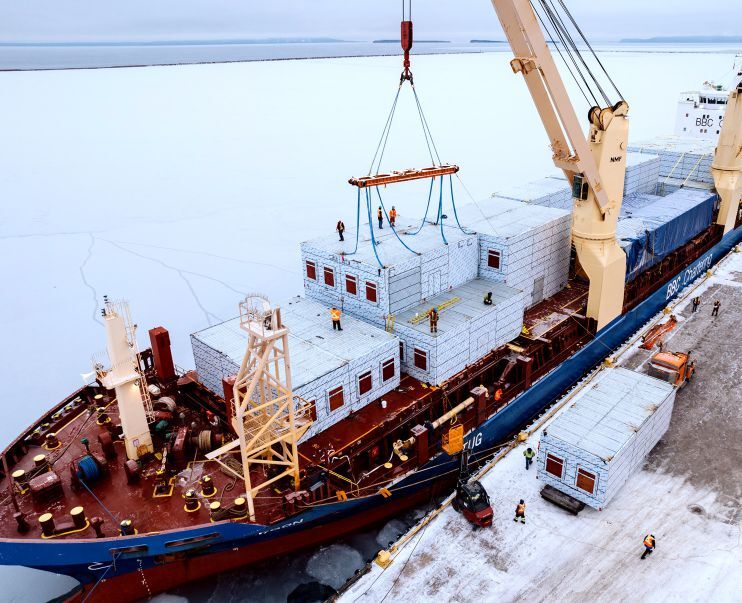
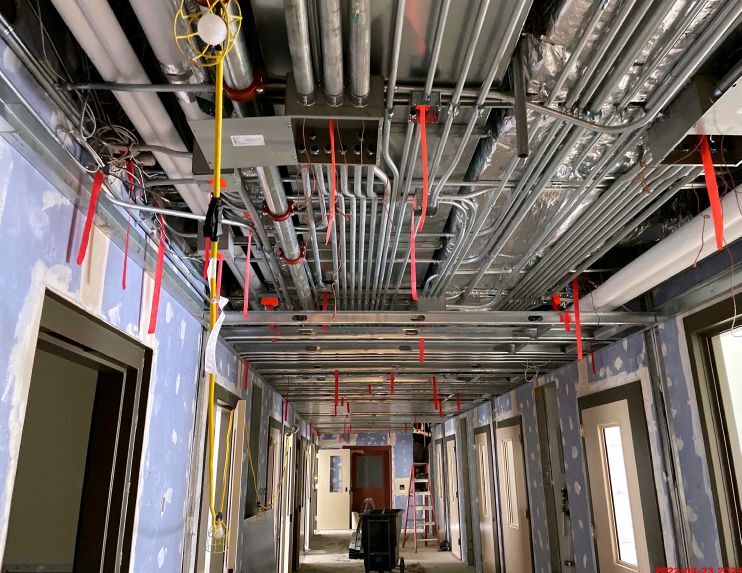
For a first project, he suggests starting with a proven, financially sound manufacturer that you have personally verified. “As you progress, you can take the knowledge you’ve gained into more complicated projects or different markets, and maybe use a boutique manufacturer,” he says.
Whether you need an owner’s rep depends on the job. “If it’s a single-family development, or even a light multifamily project, I don’t personally think you need an owner’s rep,” he says. “If you are getting into multi-story, multi-tenant complexity, or you’re building in a state or jurisdiction that’s pretty complicated, it might be helpful.”
We Need to Raise Productivity
An embrace of modular will, of course, go a long way towards addressing construction’s notorious productivity deficit. Dunn says that, by some measures, construction productivity has gone backwards over the last 70-plus years. “I’m not even going to bring tech into the argument. Look at agriculture, look at textiles. 70 years ago, Grandma knit you a sweater. Now, you go to H&M and there’s a new colour on the shelf every week.”
His diagnosis is that there’s a systematic risk aversion and a lack of desire to change in the construction industry — with Canadian developers being even more change-averse than American ones. He says, “Americans are a little more prone to come to the table comfortable with the idea of change.”
Zena Ryder is a copywriter and content strategist. She writes for magazines and companies, and also helps B2B service business owners and consultants turn their expertise into content that converts traffic and followers into clients. Find her at zenafreelancewriter.com.