

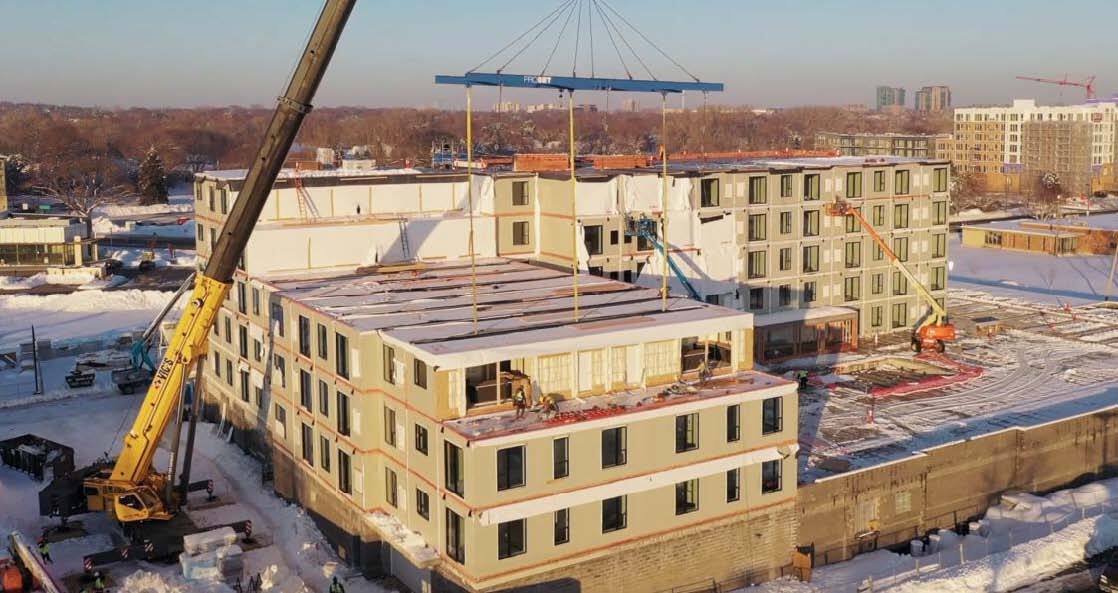
Procedures for incident-free stacking need to be built long before modules ever leave the factory.
• McCarthy, Modset, and ProSet emphasize the need for detailed preplanning, mockups and communication before the first module ever leaves the truck.
• Sequencing, crane access and site logistics all need to be worked out ahead of time, not on the day of the set.
• According to our sources, companies that enforce rigorous procedures, challenge complacency and learn from OSHA create safer, more predictable modular projects.
Speed and cost are the most common advantages people cite when making the case for modular construction, but safety deserves just as much attention. After all, construction is notoriously dangerous. According to an April 2025 Data Bulletin published by the Centers for Disease Control and Prevention, one-fifth of all 2023 workplace deaths occurred in the construction industry.
So, improving safety should be a priority for everyone. And while modular construction is safer than traditional stick-built construction the contractor’s systems will help determine whether it’s as safe as it can be. What can teams do to make sure these systems are in place?
First Things First
Sometimes, the first answer that comes to mind is an important one. The choice to use modular reduces the risk of injury versus traditional stick-built construction because the majority of the work is completed in a factory setting.
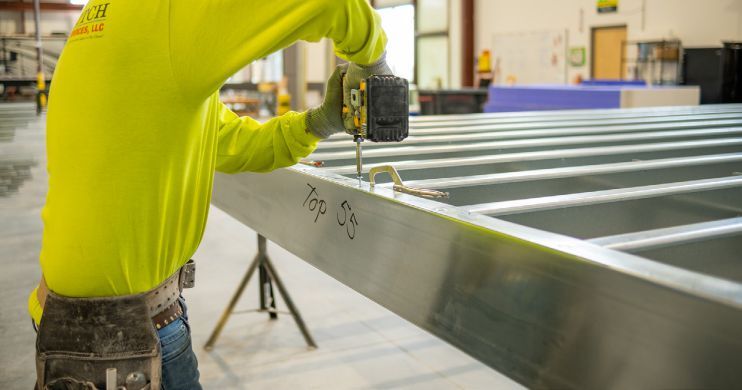
Working in a factory improves safety because in a controlled indoor environment, workers are less exposed to fall hazards, adverse weather conditions, heavy manual lifting and hazardous dust and fumes.
In addition, crews spend less time on-site. So, the challenges associated with on-site construction, such as inclement weather, fall risks and worker exposure to dangerous conditions, are lessened.
Ultimately, however, final assembly still must take place on-site, and crews must take appropriate precautions to minimize risks during module stacking and finishing.
Improving safety on-site should start well in advance of module stacking.
Prepping for the Set
It starts during the design phase, according to Virgil Pope, Project Director of St. Louis, Missouri-based McCarthy Building Companies. “In modular construction, safety starts in design. When teams account for lift strategy, access, connections and erection sequencing early, they reduce risk in the field and create a safer installation process.”
Sometimes, according to Kenny Hall, President of Infinitas, California-based Modset, potential owners will investigate safety issues before buying property, to ensure that stacking can be done safely.
What would impact safety?
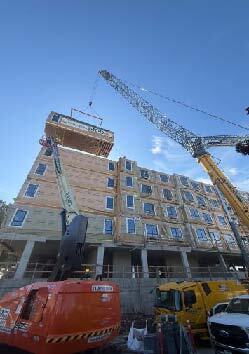
“We confirm that we can safely use a crane to set modules, as we won’t do it within 10 feet of power lines or any potential shock hazard,” Hall says.
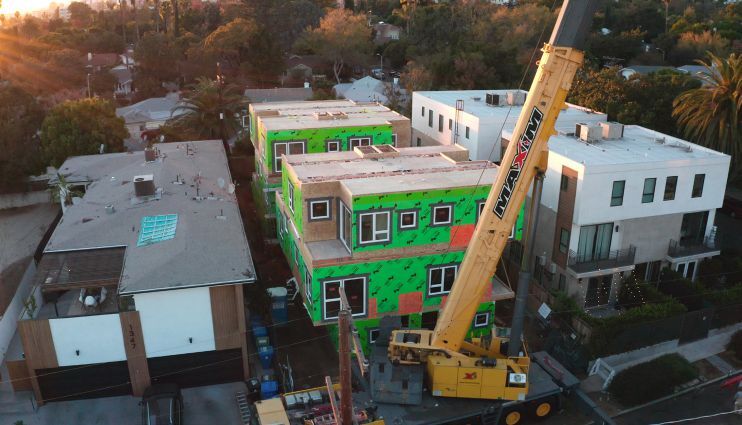
Hall and his team also visit the site during the entitlement phase to review site logistics and determine the crane size required for modular installation. They verify that a crane can be safely positioned, maintain adequate clearance from potential hazards and reach all module placement locations.
Delivery sequencing also impacts safety, according to Pope. That’s because which modules arrive when directly affects how safely crews can unload, hoist, stage and set each module in the field. If units arrive out of order, crews are more likely to have to double-handle them. Units also need to be properly stacked during transport to ensure that pick (or lift) points and crane positioning will work within the constraints of the site.
Once teams have a firm grasp of the jobsite conditions, they should complete additional prep work needed to enhance safety.
By developing a thorough pick plan, teams can clearly define how the crane will move and hoist the modules and set them into place.The plan should include specifics about the crane requirements, rigging configuration and the step-by-step lift sequence. This type of planning will support precise,controlled module installation on-site.
“We do mock-ups or test runs before going into mass setting of units,” Pope says. “Taking into account the tolerances of adjacent materials and building components is key to eliminating field issues. We don’t want crews on-site solving fit-up problems, because module connections aren’t aligning or field modifications have to occur.”
Jobsite Tips
Weather still matters when stacking modules. Of course, no one can control the weather, but teams need to be smart when determining what weather conditions allow safe module stacking.
Matt Mitchell, President of Montrose, Colorado-based ProSet Modular, suggests teams be careful to keep snow and ice cleared from the jobsite. He adds that teams should avoid working in the mud, and should lay gravel on the ground to reduce slip-and-fall hazards.
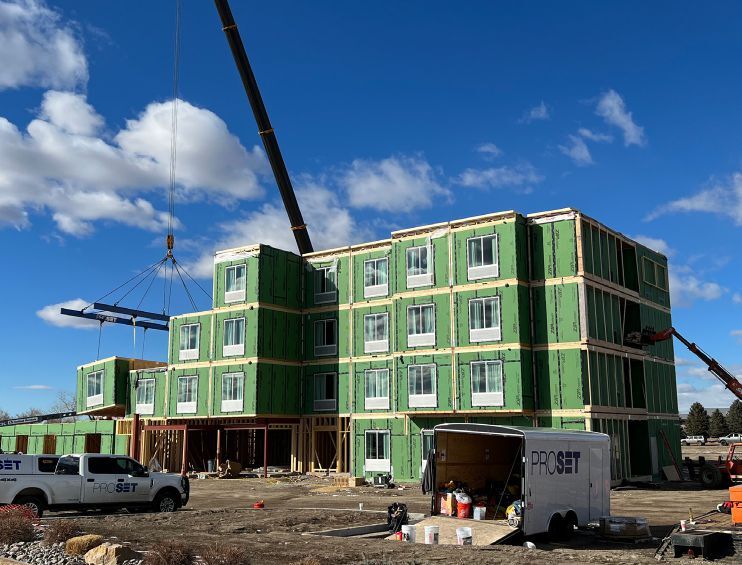
Day one of construction operations is ‘meeting time’ for ProSet. “Prior to every building we install, we have a safety meeting with everyone on-site to make sure each crew member understands what’s going on,” says Mitchell. They need to understand the planned flow of the modular units, including how the trucks will arrive and how the modules will be brought to the crane.”
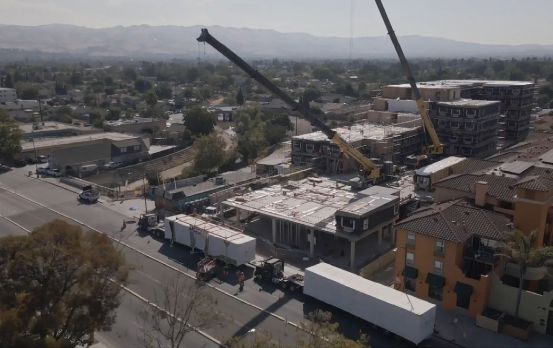
Modset also has a meeting before proceeding with construction on day one. “Everyone on-site knows what will happen. They know what the crane looks like and what the swing path will be,” Hall says. “We don’t want to ever swing the crane over anyone.”
ProSet employs a stringent tie-off rule when they set modules and make the structural connections. All employees must wear a safety harness and full protection gear. When modules are on the cranes, a horn is blared so everyone on-site is aware there’s a load in the air. Nobody is allowed under a load at any time.
Pope suggests that teams have a designated signaler on-site to ensure the crane operator knows exactly how to position the modules when hoisting. “A best practice is to have the signaler wear a different color high visibility vest to ensure the crane operator can easily identify them from the rest of the crew onsite. Constant visual and audible (radio) communication is key to ensuring safe hoisting operations.”
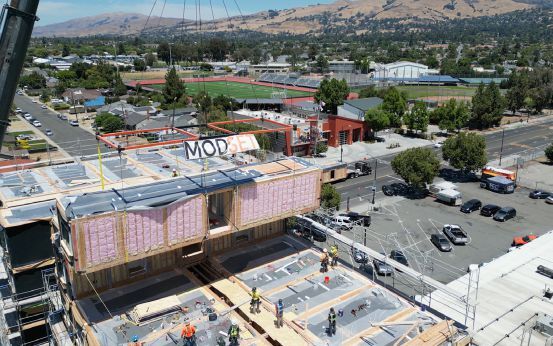
Manufacturer: Autovol, Inc. Photo credit: MODSET
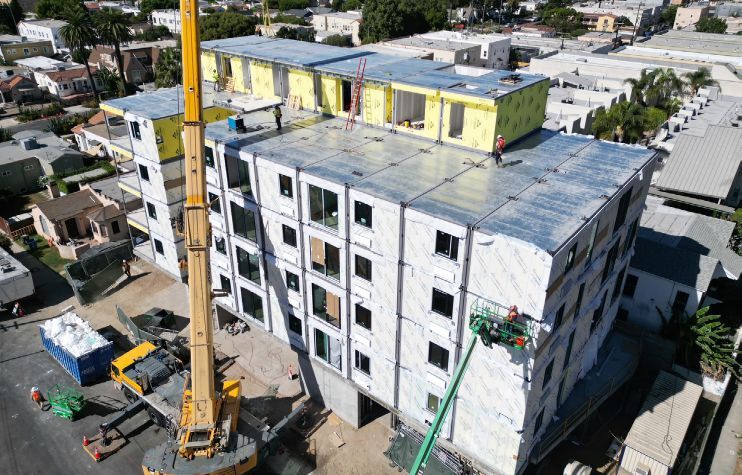
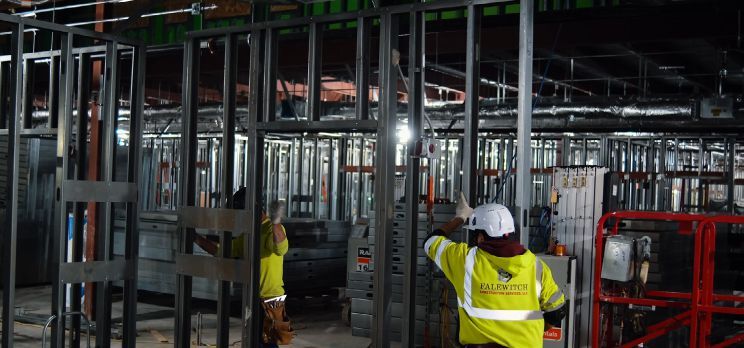
Sometimes, the best safety tips come from an outsider who is free of biases.
“While some people are scared of OSHA, we’ve had them on our jobsites many time to try to help us improve safety in modular construction,” Mitchell says. “We work with them to create rules for modular construction such as engineer pick plans for modular units, which has helped us be on the leading edge of safety.”
Working with OSHA has also reminded the team that they need to be strict about wearing proper safety attire.
When Precautions Fail
Even when teams go above and beyond regarding safety preparations, issues can arise. Human nature being what it is, crews can get complacent when doing repetitive work so the company needs to take steps to counter that tendency.
“Having crews complete a thorough Task Hazard Analysis (THA) prior to each shift ensures safety stays top of mind, especially during repetitive work activities like installing modules over and over. Complacency is the enemy of safety,” Pope says.
In fact, Pope suggests treating every module as if it is a critical lift and following the well-thought-out plan that the team designed.
Fall protection is also important. “Crews should install scaffolding and OSHA-compliant fall protection systems before stacking begins, ideally on three sides of the structure, using systems that will later integrate into the permanent building,” suggests Hall. “During stacking, fall restraint systems with toe boards can be used where edges are exposed.”
Another major point of emphasis at Modset is the immediate establishment of emergency egress upon completion of each level.
Stair towers should be erected as soon as available, ensuring at least two points of access per floor in case of a fire,” says Hall. “Without this, workers would be limited to evacuating one by one via a ladder.”
Note that OSHA requires that once buildings reach 36 feet, teams have a material man hoist and an OSHA-approved elevator for emergency evacuation.
However you slice it, construction is a dangerous profession. Moving much of the work indoors (out of the elements and the air), like in modular construction, increases safety. Once construction involves placing modules, the dangers reappear. Teams can and should take precautions to limit the danger, making safety one of modular construction’s major benefits.
Larry Bernstein is a freelance writer based in northern New Jersey. He focuses on all things construction. Learn more about him on his LinkedIn profile.