


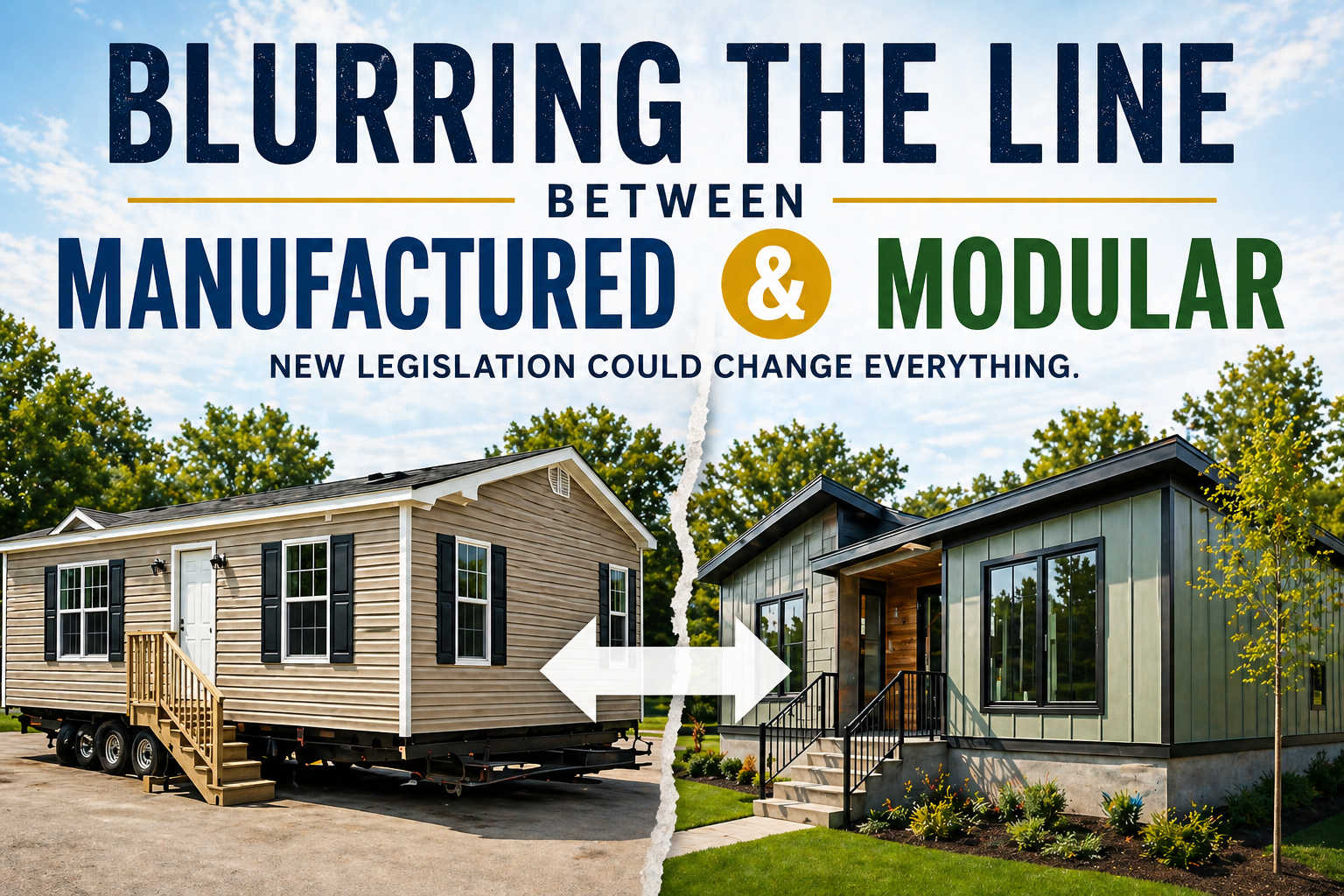
New legislation promises to reshape the factory-built housing landscape. The Housing for the 21st Century Act, which was passed by the US House of Representatives in February 2026, includes a provision to eliminate the federal mandate requiring manufactured homes to be built on a permanent steel chassis.
The steel chassis rule dates to the 1974 Mobile Home Construction and Safety Standards Act. It was passed when manufactured homes were expected to be mobile, and thus needed a structural frame for transport. Today, however, more than 90% of manufactured homes never move after installation, making the requirement feel outdated.
Supporters of removing the mandate argue that the chassis has become a costly relic. Estimates suggest that eliminating it could reduce the price of a manufactured home by $5,000 to $10,000 per unit — real money in a market desperately searching for affordability. The chassis requirement also limits design flexibility and, in some cases, gives local zoning boards an excuse to exclude manufactured housing because it carries the “mobile home” stigma.
Of course, if you remove the permanent chassis, it begs the question: What’s left to separate a HUD Code manufactured home from a modular home built to the International Residential Code?
Manufactured homes could be designed with permanent foundations in mind. Architectural flexibility would expand and the mobile home stigma would weaken or disappear. Financing, insurance and appraisal conversations would look more alike. Over time, consumers might not even care which code their home was built under — as long as it looks good, performs well and has a price they can afford.
It would represent a major industry shakeup. For decades, modular manufacturers have argued that their product is “real housing,” built to the same codes as site-built homes. Manufactured housing, despite its incredible affordability and factory efficiency, has been forced to carry the weight of outdated regulations and outdated public perception.
Removal of the chassis rule would make manufactured housing more competitive. Factories could explore hybrid approaches. Design engineers could borrow from both worlds. Builders and developers might begin comparing modular and manufactured based on speed, scalability and cost — not labels. Investors might start seeing both as part of the same industrialized housing ecosystem.
The consequences would be huge. Some modular companies may find themselves competing directly with manufactured producers on cost. Some manufactured producers may begin moving upmarket. Suppliers, lenders and regulators will need to rethink categories that have been frozen for decades.
And zoning officials? They may struggle to explain why they’re banning one factory-built home, but allowing another that looks identical.
The irony is that this legislation promises to accomplish something that years of industry lobbying, marketing and education never could. It may slowly dissolve the artificial walls that have divided offsite construction into competing camps.
Removing the steel chassis mandate won’t solve the housing crisis, eliminate zoning barriers, or magically create millions of homes. But it could be one of those quiet regulatory shifts that changes how the industry evolves.