
Adding New Modular Products
Advice for modular manufacturers on how to diversify their product lines.
• Blazer Modular uses multiple building types to balance economic cycles and keep factory capacity filled.
• Adding product lines affects everything: estimating, crews, management structure, engineering coordination and production workflow.
• Manufacturers must carefully vet opportunities, track performance metrics and expect long development timelines.
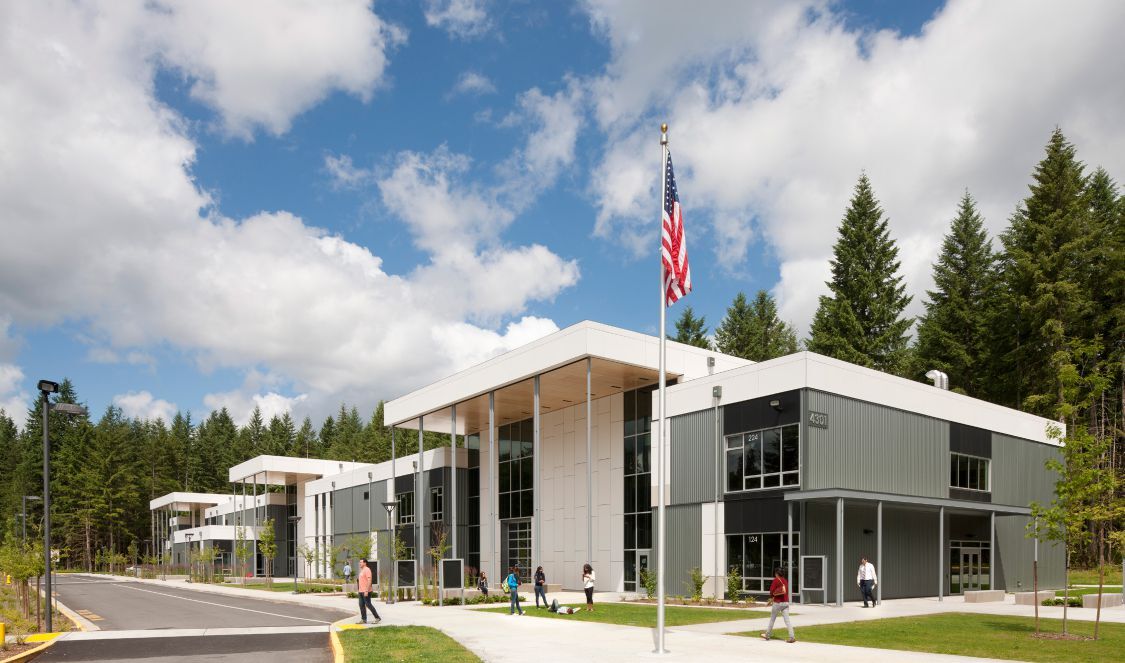
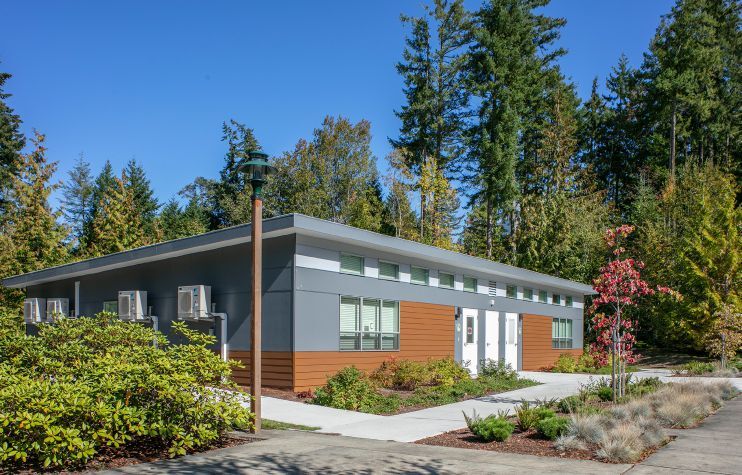
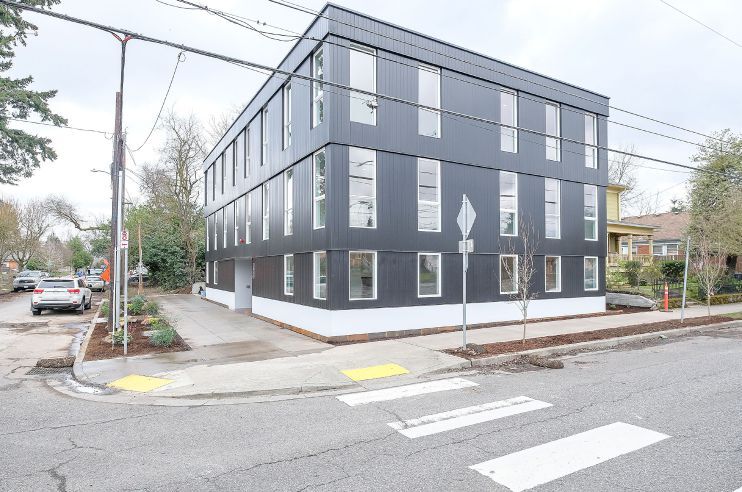
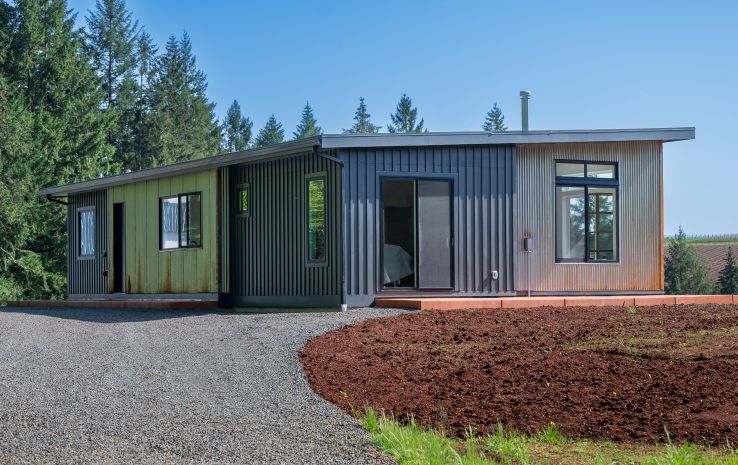
Blazer Modular Construction (Blazer) is a wholesale modular building manufacturer, based in Aumsville, Oregon, that has been in business for five decades. Its primary markets are commercial offices, classrooms and public restrooms, but over the years the company has also built medical clinics, dental offices, equipment shelters, and, more recently, residential buildings.
“Really, we’ve done whatever a client needs that makes sense for modular construction,” says Kendra Cox, who handles business development at Blazer.
That breadth of experience gives Cox a useful perspective on the challenges and rewards of running a factory with multiple product lines — and on what manufacturers should think carefully about before adding a new one.
Why Diversify?
The most straightforward argument for offering different product lines is that doing so makes it possible to produce on a steady basis. “Multiple lines help keep the factory full as the economy impacts one sector or another,” Cox says. “For instance, commercial and residential construction tend to run on different economic cycles,” so a slowdown in one doesn’t necessarily mean a slowdown in the other.
Diversification comes at a cost, though. “If we’re building 150 projects a year and they’re all different, there’s a lot more upfront work, and somewhat of a learning curve for production each time,” Cox says. Manufacturers considering a new product line need to weigh the benefits against that added complexity.
The cost of not diversifying, however, may be a failed enterprise. “A lot of factories go out of business because they build just one product,” she explains. “The reality is, at least in the US, people want choices.” That said, Blazer’s 50 years of experience has taught her that the key is not to offer everything — it’s to offer enough choices to fill the factory, and to be disciplined about which ones those are.
Making the Decision
How does Blazer decide whether to pursue a new product type at any given time? Partly, Cox says, it depends on how much they need the work. “In a slow year, we tend to look at a broader range of product lines. But if the outlook for our current product lines is good, then we’re less likely to consider alternatives.”
The more important question is whether there’s a realistic path to long-term clients and repeatability. “But that’s really hard to know at the beginning,” Cox acknowledges. Before committing to a new product, Blazer looks for partners who will use it on an ongoing basis, usually well-established general contractors and clients.
Cox recommends that any manufacturer thinking about a new product line start with an in-house feasibility discussion before doing anything else. This means bringing in not just management but also the engineer, production group managers, estimating personnel and “anyone dealing with innovation, in case there are details that need to be invented or refined.” Tapping into the expertise you already have will make it possible to assess what the product will cost (in both materials and labor hours) and whether you can actually be competitive with it in the marketplace.
She cautions that you must be prepared for disagreements. “Our in-house team doesn’t always agree on what we should and should not pursue,” Cox says. As Head of Business Development, Cox makes her case for a new product line and talks with the team decide on how they will evaluate success. “Once they’re on board with developing it, we create checkpoints” — points at which the company has to decide whether to continue, or not.
Factory Expectations
Adding a new product line affects almost every part of factory operations.
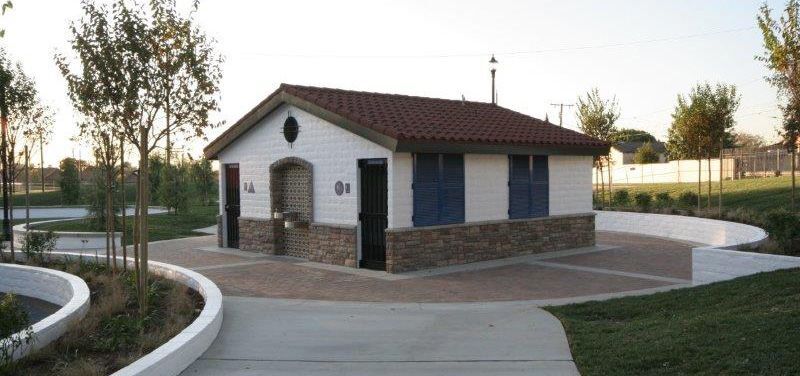
On the production floor, workflow is shaped by the availability of skilled labor for the type of construction involved. Blazer’s public restrooms, for example, are “built with concrete and concrete block, and are more steel-intensive than our other products. That product line actually has its own dedicated crew, and while workers can be moved between lines to some extent, specialized crews can’t be mixed too freely,” Cox explains.
The transition to residential construction created a different kind of challenge. “All we really knew was commercial,” Cox says, “and our estimator was taking a commercial spec and trying to make it into a residential spec. The result was a hybrid blend of materials that turned out to be impractical. We probably should’ve just started from scratch.”
Skill requirements between commercial and residential may not differ dramatically, Cox says, but because finish details do differ, “we decided to dedicate core people to each crew so they can focus on the installation details for each particular product.” One example is the separate crew for the concrete block restroom buildings. “This crew has specialized skills such as concrete and masonry that require more training and experience than, say, installing siding or trim.”
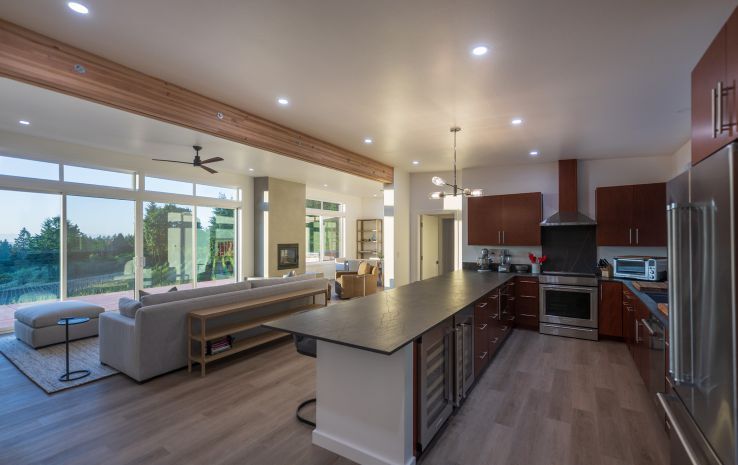
In addition, residential products include kitchens, which the company’s commercial buildings tend not to include. “The bathroom fixtures and finishes are also different than fixtures and finishes for commercial buildings,” Cox adds.
So, while many of the Blazer crew members are skilled in both residential and commercial construction, “we’re finding that it’s better to keep them focused as much as possible on one or the other. This also helps us control quality and consistency or identify staffing or skillset issues,” explains Cox.
Instead of hiring new people, Blazer has trained existing commercial-side workers for its new residential products. This also keeps workers flexible. Cox says, “We do need to be able to move people from one product line to another as needed, so we’re not wasting labor hours.”
Management structure may need to adapt as well. Blazer initially created a separate residential management group when it moved into that market. But they recently blended the residential group back in with the rest. They’re monitoring the situation to figure out which structure works best. “It’s challenging for people to switch back and forth from one type of building to another,” Cox says.
It’s challenging because “there’s a different relationship with the architect, different contract structures, different end-users with different views on warranties and perceived quality,” Cox explains. Blazer might do 150 projects in a year, “which is a lot for any manager to keep track of. If the types of products become more diverse, then it gets more complicated and difficult for people to jump back and forth between them.”
Blazer’s experience with the restroom line has shown that a distinct product can be its own semi-autonomous operation. Whether that makes sense for their other product lines remains to be seen.
Technical Challenges
The most difficult technical issues that arise when adding a product line tend to involve MEP. “Providing enough space for MEP connections, particularly when stacking modules, is a recurring challenge,” Cox says. Residential construction also brings different fireproofing requirements than commercial products, which requires careful attention.
Cox says Blazer has learned, sometimes the hard way, that it needs to invest more in outside consulting when entering new territory. “We need to reach out to companies that have built similar products before, that have experience. We need to invest in consulting more than we might care to do.”
Working with architects and engineers has proven more complicated than anticipated. “We underestimated the learning curve in working with architects and outside engineers,” Cox says. Every firm has a different scope of service, different capacity and a different approach to collaboration. For example, “We’ve worked with a contract engineer who’s worked in modular for a long time. His method is to work closely with the architect who creates the schematic. Then the engineer would develop the drawings all the way to the construction drawings that we can use for manufacturing.” The problem is that most engineering firms don’t do that.
Cox says that it’s more typical for the architect to “take the plans through schematic all the way to construction drawings — but then modular builders need to redraw those construction drawings, which can be pretty expensive for a large project.” Finding and locking in the right team of architects, engineers and consultants, she says, has been more challenging than expected.
Patience Needed
Developing a new product line takes time. Cox points to Blazer’s public restroom line, which the company began developing with a client in the early 2000s. “There were 10 or 15 very bumpy years as the client was establishing their processes, and as we were locking in the details of construction,” she says. More than two decades later, the line is a stable and profitable part of the business.
Blazer tracks profitability and labor productivity as its two main metrics for evaluating a product line, but Cox is candid about the difficulty of gathering that data in a mixed factory. “It’s a little hard to track in a mixed factory line, but we’re doing our best to gather the data,” she says. For their residential line, they still don’t know with certainty how profitable specific projects are relative to others — and she notes that this kind of clarity simply takes time to develop.
The implication for manufacturers is that a product line shouldn’t be written off too quickly. “We can’t just say in the first two or three years that the product line is a failure,” Cox says. At the same time, if losses are significant and ongoing, there has to be a point at which the company decides to move on.
Managing Inquiries
The factory’s product lines also have implications for how it presents itself to the market — and how it handles inquiries.
Blazer learned this lesson through experience. On its previous website, the company posted images of every building it had ever built. “People would call and say they wanted that building, and in our minds, we were thinking we don’t want to build that building again, we’re done with that,” Cox says. The company has since worked to refine what it shows on its website to reflect what it actually wants to build, “instead of giving the impression that we’ll build anything.”
On the inquiry side, the challenge is how to quickly evaluate whether a potential project is a good fit. “Our first step is to look at a floor plan as soon as possible. For residential, for example, a typical suburban house with a garage is rarely a good candidate for modular construction — garages don’t suit modular dimensions,” Cox says. So, they’re able to tell the client very quickly, “This is too difficult. You can either start over or try another method.”
There is, she adds, “a balance to maintain between showcasing what’s possible in modular construction and communicating its limitations.”
Conclusion
The overarching lesson from Blazer’s experience is that adding a product line is neither quick nor simple, and it’s easy to underestimate the challenges. Her advice to any manufacturer thinking about doing it: Start with an honest internal conversation, build in formal decision checkpoints, invest in the right outside expertise and plan for a longer development timeline than seems necessary.
“New product lines can take a long time and lots of patience and frustration to develop,” she says. For manufacturers willing to commit to that process — and to track the results rigorously — the payoff of an uninterrupted production schedule can be worth it.
Zena Ryder writes about construction and robotics for businesses, magazines, and websites. Find her at zenafreelancewriter.com.