

Factory-built homes are helping this Blacksburg, Virginia nonprofit meet strict funding deadlines and reduce project complexity.
• The Stroubles Ridge development combines the Community Land Trust model with modular construction to expand homeownership opportunities.
• Factory-built homes allow nonprofit developer CHP to meet tight grant timelines and reduce project management complexity.
• Net Zero Ready homes with high-performance envelopes ensure affordability through both price and long-term energy savings.
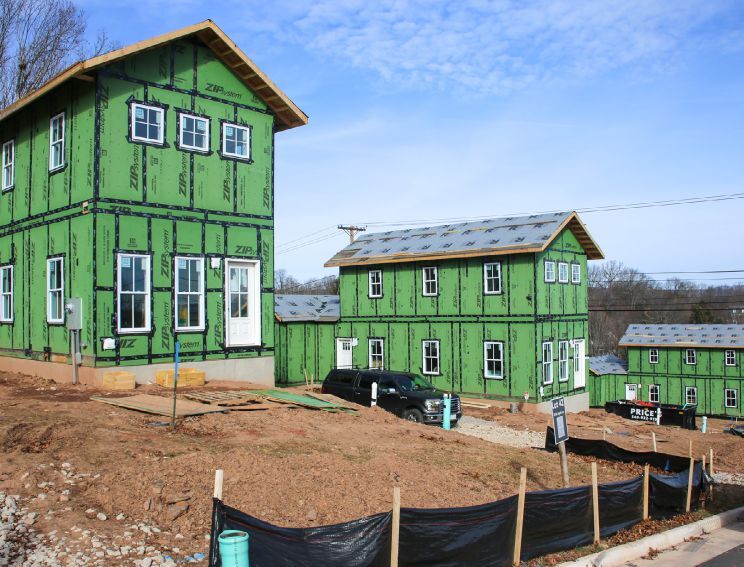
The Stroubles Ridge project is a 46-lot Community Land Trust (CLT) development in Blacksburg, Virginia, executed under the name New River Home Trust. The CLT is operated by Community Housing Partners (CHP), a 501(c) (3) nonprofit founded in 1975 to provide affordable, sustainable and healthy housing throughout the Mid-Atlantic and Southeast.
Currently under development, Stroubles Ridge will offer thoughtfully designed, affordable homes for residents who want to live in the Blacksburg area, but are increasingly priced out of the market.
The CLT model is CHP’s pathway to delivering permanently affordable housing. The organization acquires land and holds it in trust, separating land ownership — retained by the CLT — from ownership of the homes, which are sold to residents. By removing land from market speculation, the model ensures long-term affordability for low- to moderate-income households.
Blacksburg has experienced dramatic growth in recent years, largely driven by Virginia Tech University. As a result, housing prices have climbed beyond the reach of many local residents. According to Realtor.com’s housing report, as of December 2025 the median home sale price in Blacksburg was $488,750, with median rents at $1,900 per month.
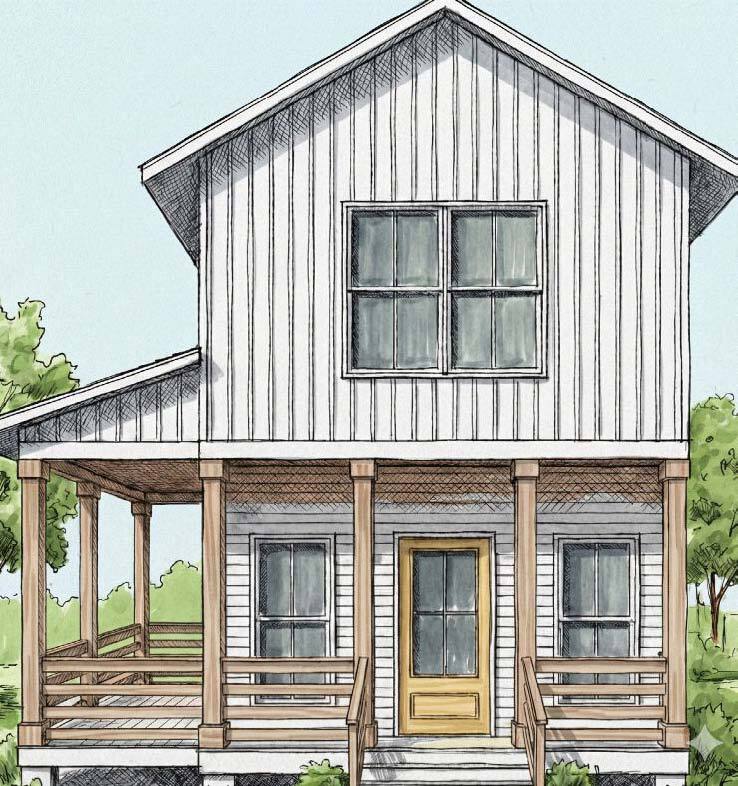
Stroubles Ridge will feature single-family homes, with duplexes possible in future phases. The homes are designed for comfort, sustainability, and multigenerational affordability.
The project became possible through collaboration between CHP, the Town of Blacksburg, and Montgomery County, Virginia.
Lower Capital Costs
Jake Powell, Director of Homeownership, and Michael George, Project Manager and Principal Broker for CHP, are part of a three-person team leading the initiative. For Stroubles Ridge, they selected offsite modular construction supplied by Virginia Building Solutions (VBS) of Rocky Mount, Virginia and manufacturing by Excel Homes of Liverpool, Pennsylvania.
CHP has used modular construction for more than 10 years, but previously limited it to individual infill homes. Stroubles Ridge marks its first modular subdivision. George also serves as the project’s licensed general contractor.
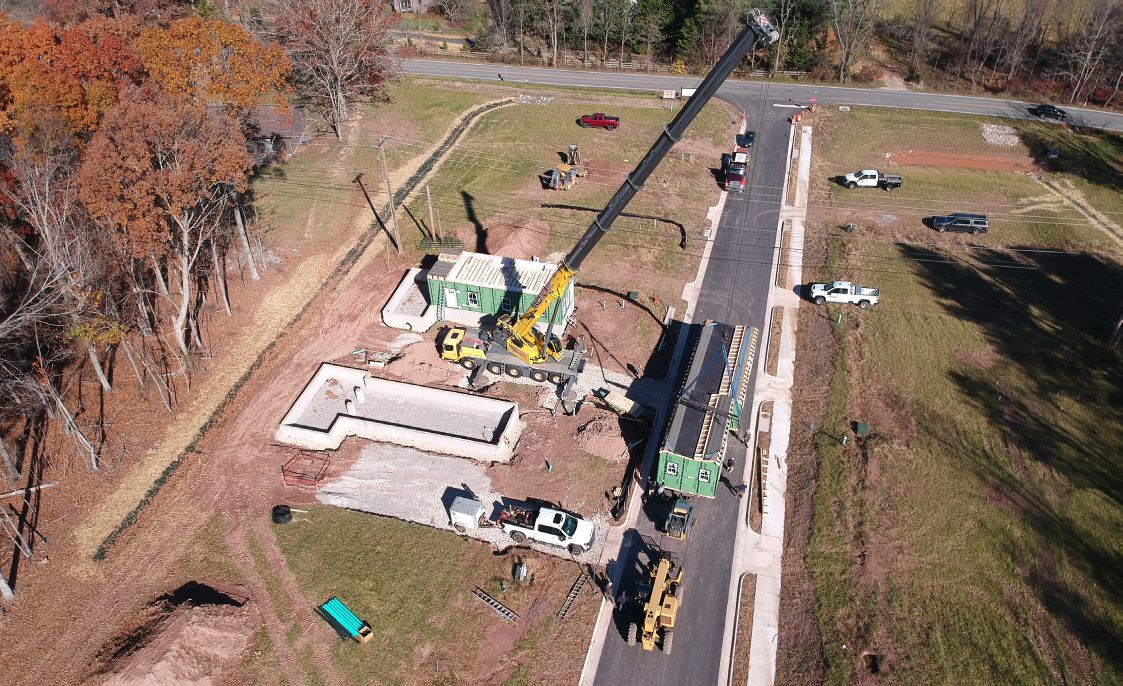
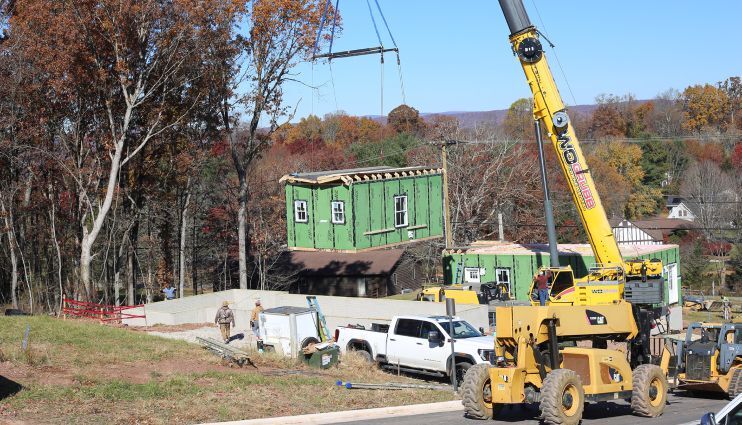
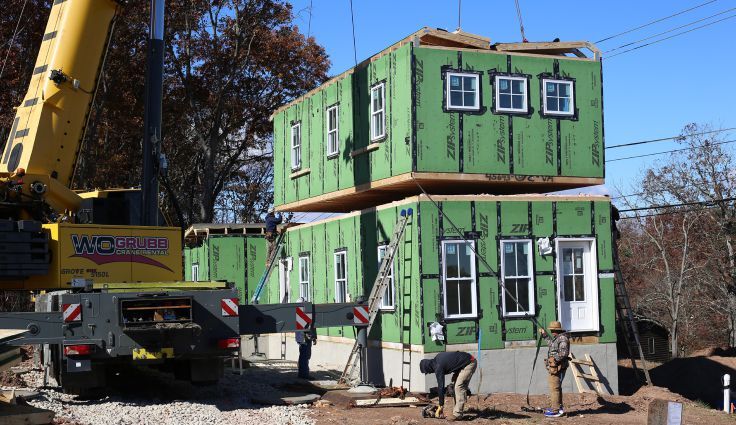
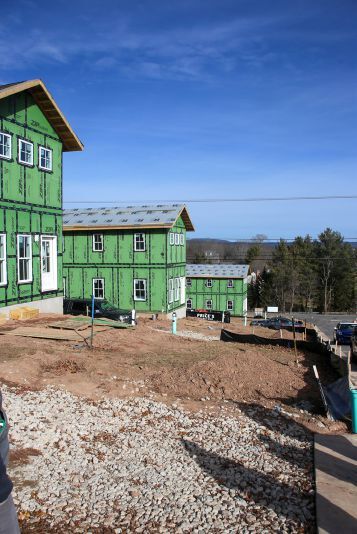
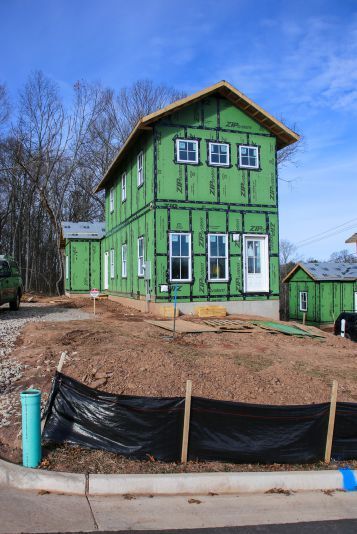
To date, three homes have been installed, with four more scheduled for delivery. The 1,550 sq. ft. Homes feature three bedrooms and two-and-a-half baths. Each home consists of three 15 ft.-wide modules delivered from Pennsylvania and set on conditioned crawl spaces.
According to Powell, modular construction enables scale — critical for securing federal and state funding.
“Instead of building two homes per year, we can build twenty with roughly the same fixed cost base,” Powell explains. “We’re competing for federal, state and local dollars, grants and reduced-interest construction loans. To deliver a home with a suppressed sales price, we have to reduce our capital costs. Scale makes us more competitive.”
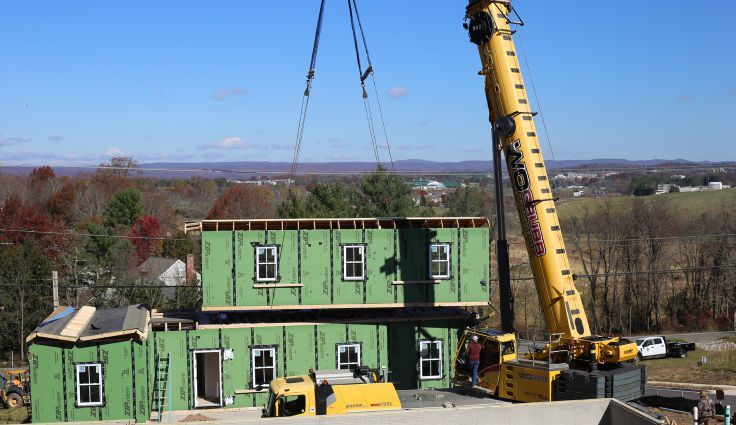
Powell adds that the development strengthens CHP’s position in capital markets and creates a replicable model. “Offsite construction is one piece of that — but it’s a big one.” T
The project utilizes Community Development Block Grant (CDBG) funding. The grant is distributed by the US Department of Housing and Urban Development (HUD), through its Richmond, Virginia office for infrastructure. Currently, there are no Low-Income Housing Tax Credits available for single-family housing, Powell notes.
Home pricing is based on HUD’s Area Median Income (AMI) index for Montgomery County. The current AMI is $87,700. CHP serves households earning 60% to 80% of AMI and allows homeownership opportunities beginning at 60% of AMI.
Performance Ratings
All homes will be built to meet Net Zero requirements. They include nine-foot ceilings, open floor plans, 50-year architectural shingles, LP SmartSide exteriors and ENERGY STAR appliances. Energy performance specifications include R-20 insulated crawlspace walls, R-49 roof insulation with spray foam and R-21 exterior wall insulation.
The homes also incorporate heat pump water heaters, energy recovery ventilation systems, whole-house dehumidification systems and high-efficiency heat pumps. The solar-ready electrical panels will be able to accommodate future electric vehicle (EV) chargers.
As for air sealing, the homes are designed to earn a blower door rating of 2.25 air changes per hour at standard 50 Pascal test pressure (ACH50) — approximately 50% better than current code requirements. Green ZIP System sheathing enhances air sealing and moisture protection.
Project Constraints
To comply with CDBG requirements, CHP must finish 20 homes by the end of 2027.
“There’s no way we could complete twenty homes on that timeline using traditional stick-built methods,” George says. “While we were developing infrastructure, the homes were being built in the factory. The overlapped processes significantly reduced our timeline.”
George adds that working with a single modular partner delivering approximately 80% of the finished product on a predictable schedule greatly reduces staff burden. Because CHP outsources all construction labor, site-built methods require substantially more management time.
“For our customers, that means more opportunities to purchase,” he says.
Affordable housing also operates under stricter financial constraints than for-profit development. “In a market-rate build, delays can sometimes be offset by appreciation,” George explains. “In affordable housing, missing deadlines can mean losing funding. There’s no safety net.”
Powell hesitates to cite specific buyer demographics. Instead, he emphasizes that eligibility is income-based, not age-based. Recent homebuyers have included teachers, service workers, maintenance staff and even a 79-year-old first-time homebuyer who had been priced out of her apartment.
Working With the Factory
CHP credits Virginia Building Solutions with being a critical partner. John Garrett, owner of VBS, says CHP benefited from the company’s purchasing volume and industry relationships.
“Because of our size and volume, CHP was able to purchase homes at equal or better pricing than going directly to the manufacturer,” Garrett says.
VBS also assisted with engineering, logistics and design adaptation to meet Net Zero standards on narrow lots while maintaining affordability targets.
Frank Hodges, General Manager of VBS’s Rocky Mount office and a former engineering manager with 40 years of experience, worked closely with George to maximize factory completion and meet strict energy mandates. He notes that a key benefit VBS provided was translating CHP’s vision into specifications the manufacturer could efficiently execute.
Additionally, as a local company, VBS has actively helped secure subcontractors and regional resources to assist CHP in the completion of the homes.
Garrett believes Stroubles Ridge could serve as a replicable model for other CLTs, developers and traditional builders. “It simply makes economic sense,” he says. “In the case of Stroubles Ridge, the homes were already built the day permits were issued.”
Reed Dillon is a content brand specialist, marketing consultant and freelance writer that focuses on offsite and new construction. He is the owner of Creative Brand Content in Moneta, Virginia. Contact: [email protected]