


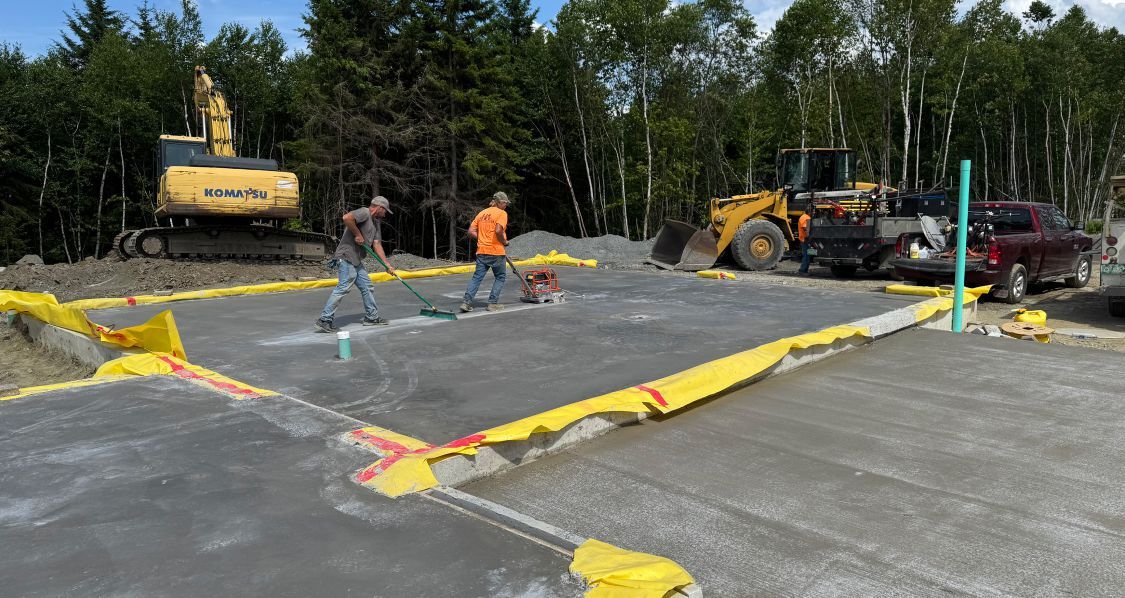
A precise foundation is critical to avoiding delays and rework in prefab projects.
• Offsite construction demands precise foundations because prefabricated walls cannot adapt to dimensional or flatness deviations.
• Common issues include undersized slabs, out-of-square pop-outs, poor levelness and plumbing misplacements that disrupt installation.
• Using Total Stations, Dusty Robotics and pre-pour verification enables corrections early, preventing downstream structural and performance issues.
For builders unfamiliar with prefab, it’s important to understand how the details of a foundation can affect the installation of offsite components as well as how to choose a concrete contractor who can do the job right the first time, thus preventing costly delays.
The type of foundation doesn’t matter; what matters is the precision with which it’s built. “Prefab is pretty agnostic regarding the type of foundation,” says Josh Lewis, Chief Operations Officer at Frame Tec in Camp Verde, Arizona, which manufactures sheathed and open wall panels. “The only thing it requires in the foundation is accuracy.”
Sam Edson, Director of Construction Documentation at Bensonwood, a panelized home manufacturer in Walpole, New Hampshire, has been generally satisfied with the quality of concrete work on its residential jobs. “Minor issues show up on most projects, but major foundation problems are less common,” he says. Larger commercial projects are a different story. “That’s where we see the poorest-quality concrete work.”
Foundation Dimensions
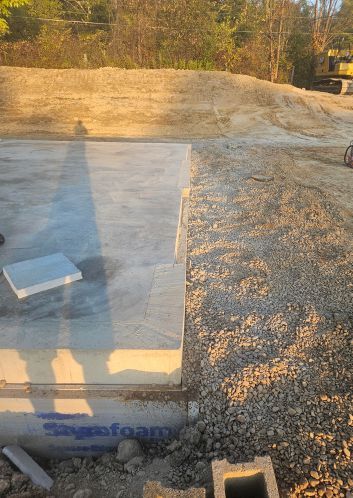
Perhaps surprisingly, Lewis says the most common foundation issue is that (in at least one direction) it’s either too long or too short for the prefabricated walls. “Even with all the technology — like Autodesk Suite and Revit and CAD — we still routinely find dimensional busts and blows due to human error on the drafting side,” he says.
In addition to errors in drafting, there might be additional “problems in the field where, say, one person might measure from the inside of one form to the inside of another and another person might measure from the outside of each form — so we could have an inch and half variance,” Lewis says. He estimates that about one in five slabs have dimensional errors.
Conventional framers can adjust in the field because they have loose lumber and saws. “With panelized systems, the framers typically don’t have extra material on the jobsite to adapt to site conditions,” Lewis explains. And they’re reluctant to start hacking walls apart to make them fit a too short foundation.
Edson says that for Bensonwood, “Modifying a panel is always the worst-case scenario because insulation and air sealing are done in the shop. Fixing the foundation or adjusting the wall overhang is always preferable.”
He says they occasionally encounter foundations that are significantly undersized. “We had one last year that was off by a foot, and it required extreme measures to make the building work.” The problem is that “if the foundation is too small, the exterior walls may not bear properly,” Edson explains. The only feasible solution may be “to add structure, such as a steel bracket around the whole perimeter of the building to support the walls.”
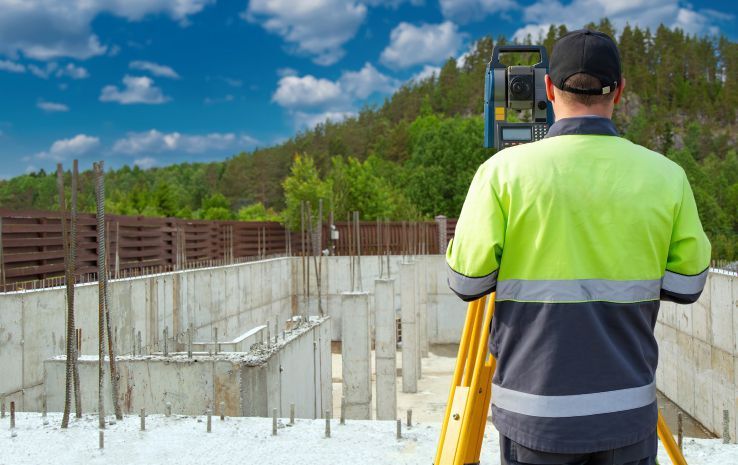
After repeatedly encountering this kind of problem, Bensonwood now checks foundations before manufacturing starts, especially “for complicated foundations like walkouts,” Edson says. “It’s far better to adjust in the shop than to fix problems on-site.” The tool they use is a Total Station, an electronic surveying device that uses microwaves and infrared signals to take accurate measurements.
Squareness Problems and Downstream Effects
Foundation squareness is also a recurring issue. Lewis estimates that three in 10 house foundations have corners out of square. “Usually, it’s not the main corners. It’s more often the small architectural popouts, so they’re not as impactful,” he says.
Though panels will still fit within modest tolerances — a quarter of an inch out, say — problems can appear with things like flooring and cabinets. “A grout line might go from half an inch at one end to an inch and a half at the other, inside five feet. So, it really sacrifices quality,” Lewis says.
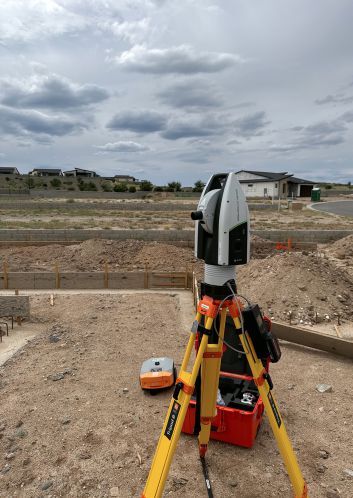
Edson also finds a lot of these issues. “Every building is a little out of square, but once you’re more than about an inch out, real problems begin,” he says. That’s why Bensonwood’s team takes measurements on-site and brings them into the 3D model. “It lets us see where things are out of square so we can orient the building correctly.”
Flatness and Levelness
As Edson puts it, “Level and flat are two different things, but both qualities matter for installing panels correctly.” A very flat foundation can be tilted so it’s not level from one side to the other. An overall level foundation can have bumps and dips so it’s not flat. Or a foundation can have both issues.
Lewis says that some variation in flatness is manageable, particularly when using open wall panels.Open panels can conform to marginal slab inconsistencies. A crew can stand the wall, push it to conform and then apply sheathing afterward. But if sheathing is added in the factory, the panel becomes rigid. “If the slab has a hump in it, the wall’s going to rock slightly,” he says. Factory-sheathed walls can’t be pushed to conform. As a result, flatness becomes essential for closed panels, especially for shear walls.
Variation in foundation flatness can also compromise energy performance. Ripples in the slab can prevent a tight bottom-plate seal, creating pathways for air infiltration. Lewis notes that “many builders use closed-cell foam under the bottom plate to seal any gaps,” but he’s found that foam degrades within three or four years. Instead, FrameTec uses rolls of thick caulking tape, “which is similar to the products used in RV manufacturing, because it conforms well and handles temperature variation.”
Lewis says that if the slab has a significant hump, they sometimes have no choice but to modify the panel, cut it down and rebuild it. “That’s extremely time-consuming,” he notes.
Tilt is a less frequent problem than waves in the foundation. In most cases, Lewis expects levelness within three-sixteenths of an inch. “We can deal with that all day,” he says. But large variations are a problem. He says, “If you have slabs an inch out of level inside 20 feet, then obviously that causes bigger issues.”
If a foundation is significantly out of level, Edson says, “We end up shimming a corner, which creates a tapered gap under the panel.” He adds, “That makes air sealing and insulation much more difficult, it becomes harder to achieve the thermal performance our clients expect, especially for standards like Passive House. And it adds extra work for the crew.”
Penetration Errors
Penetration mistakes create some of the most significant delays. According to Lewis, these problems are common across the industry. He notes that on most jobsites, it is easy to find “pipes falling outside wall lines, which creates a tremendous amount of re-work and frustration.” He estimates that around eight in ten slabs have at least one penetration error.
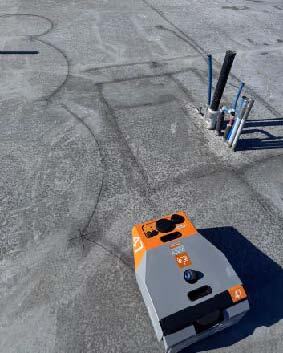
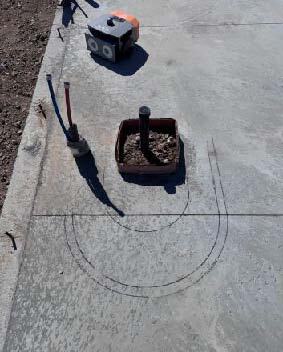
Edson agrees. “Plumbing penetrations in interior walls are often off by a few inches. We place the wall where it belongs, and if the pipe isn’t aligned, the general contractor needs to address it later.” Time and money are wasted with re-work.
To address this, FrameTec now performs pre-slab checks after plumbing rough-ins. Using Dusty Robotics’ field printer, the FrameTec team verifies that pipes are positioned correctly. Quality control that used to take hours now takes roughly 40 minutes, including the setup necessary for the robot to work. “We’ve eliminated almost all the issues with penetrations,” Lewis says.
Other Errors: Idiosyncratic Detailing
When Bensonwood is trying to meet a certain level of performance, such as Passive House, they ask the foundation contractor for some special detailing. Edson explains, “We require the vapor barrier to extend out from under the slab flapping out over the foundation wall so we can tape to it after erecting the walls. If it isn’t left long enough, we can’t achieve continuous air and vapor control around the envelope.”
A second detail the company requests is that “exterior [foundation] insulation should be installed so it ends below the top of the foundation wall. When insulation is installed too high, it interferes with proper sealing. It’s in our way.” Nevertheless, foundation contractors don’t always follow these instructions.
Another detail that foundation contractors aren’t used to is that Bensonwood almost always asks that no anchor bolts be embedded in the concrete “because our wall panels have their own fastening system. Concrete contractors often add them anyway, and we have to grind them off before installation,” Edson says.
A final idiosyncratic detail that Bensonwood requests: “Our door buck detail requires a small cutout in the foundation so the door framing can sit properly. Even though we call it out multiple times in the drawings, it still gets missed on some projects.”
How To Improve Accuracy
Lewis has seen major improvements among the concrete crews he works with, partly because they simply hadn’t focused on the necessary tolerances before offsite systems demanded it.
The Dusty robot plays an important role in that shift. “It gives us a slab levelness measurement as it traverses the project site,” he says. FrameTec shares this data with concrete contractors and explains the impact of variation. “You can’t manage what you don’t measure,” Lewis says.
When FrameTec first started, “we were getting half to three-quarter inch slab variances in flatness, which was just atrocious,” Lewis says. But once contractors understood how slab flatness affected not just panel crews but also cabinet installers and finish trades, they addressed the issues. “They’re more than capable of operating within those tolerances,” he adds. “They just need to be told that we need to achieve those results.”
FrameTec also uses the Dusty robot for pre-pour verification on concrete forms. “We can visualize and verify that the foundation matches our model,” he says. If a form is off by an inch and a half, the team can immediately tell the concrete contractor to move it “instead of waiting until after all that expensive concrete is poured and hard to manipulate,” Lewis says. These pre-pour checks take minutes, not hours. “It’s a five minute job to move the form boards,” Lewis says. Addressing errors as soon as the forms have been placed prevents weeks of downstream complications and avoids remobilizing crews.
Lewis says using Dusty, combined with communicating higher expectations, has significantly reduced slab and penetration errors and increased accuracy on their projects.
Choosing a Concrete Contractor
For builders selecting a foundation contractor for prefab projects, Lewis recommends focusing on communication, attention to detail and willingness to engage in early verification. He says the most effective partners are those who respond well to measurement data and understand the downstream effects of slab variation. “At the end of the day, every tradesman worth his salt wants to do a good job,” he says. “We just have to provide them with the information.”.
Edson agrees that foundation accuracy isn’t difficult to achieve. “A flat, level and dimensionally accurate foundation doesn’t require special steps. It just requires a careful, conscientious concrete contractor who follows standard good practices.”
Compared to stick-building, levelness flatness, squareness, dimensions and penetrations all matter more when components are pre-built and delivered ready for rapid installation. With tools such as the Dusty robot, closer coordination with concrete and plumbing trades, and better communication, problems can be prevented long before panels arrive.
“Accuracy at the foundation level influences every other trade that follows,” Lewis says. “It’s important to get it right.”
Zena Ryder writes about construction and robotics for businesses, magazines, and websites. Find her at zenafreelancewriter.com.