
A recruiter for the modular industry shares research on what’s working and what’s not when it comes to attracting and retaining professional-level staff.
• Modular companies looking for talent in a competitive market need to adjust their hiring processes.
• Successful firms hire for transferable skills, make quick hiring decisions and then train workers for modular-specific requirements.
• Retention depends more on growth opportunities and leadership confidence than on salary increases or counteroffers.
The modular industry is full of opportunity. Strong pipelines, sustained investment and an increasing shift towards faster, more controlled building environments have positioned the sector for significant growth as projects continue to scale.
But if you speak to anyone responsible for running or growing a modular business, you will quickly understand that the main talking point isn’t demand — it’s people. Although the industry has moved forward rapidly in how it builds, it has not evolved at the same pace in how it hires and retains the talent required to deliver that growth, a gap that is becoming increasingly difficult to ignore.
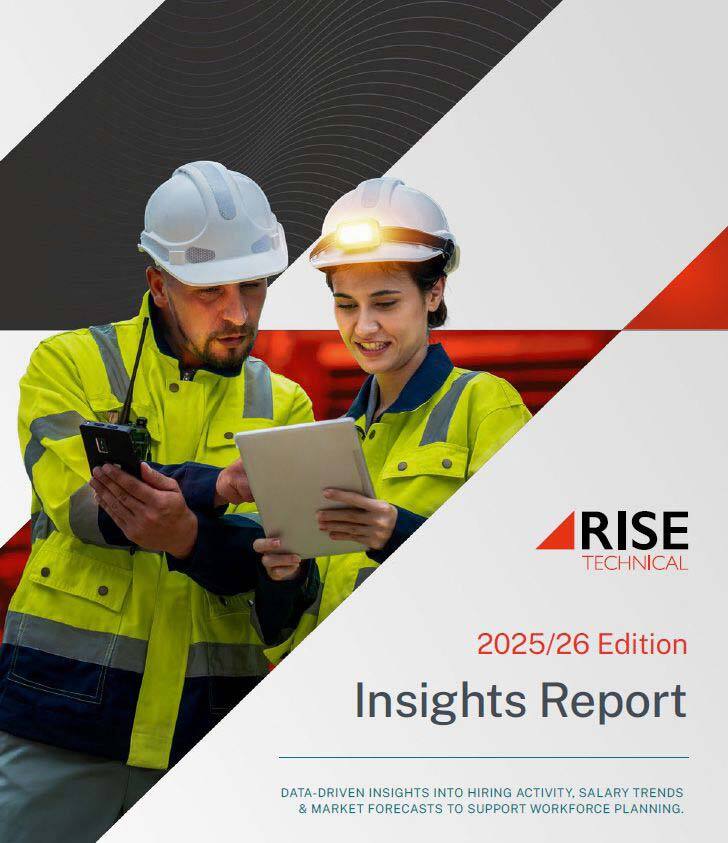
The company I work for, Rise Technical, is a global talent solutions partner specializing in Engineering, Construction, Technology and Energy recruitment. We recently published a hiring “Insights Report,” aimed at providing businesses with a new perspective on the current hiring landscape, and actionable data to handle it. The report has direct implications for modular construction.
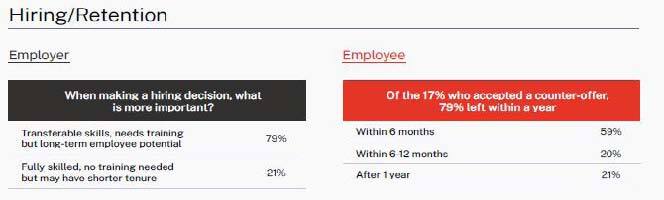
One interesting trend we identified is that a clear majority of employers in this industry are now prioritizing transferable skills and long-term potential over fully trained candidates. That shift is not because expectations have changed, but because the market has forced employers’ hands. In simple terms, there are not enough individuals with direct modular experience to meet the level of demand that currently exists.
However, while a majority of companies have made the necessary pivot, some have yet to catch up with reality. The hiring strategies of these companies remain built around finding workers with specific skills.
Modular-Specific Challenges
The search for qualified workers is especially difficult for modular companies because of the nature of the industry. Modular does not sit neatly within a single discipline; it operates at the intersection of construction, manufacturing, engineering and operations, requiring a blend of skills that are rarely found in one place. The individuals who succeed in this environment are not defined by one background, but by their ability to move between these areas, understanding both structured production processes and the realities of project delivery.
This creates a far more complex hiring landscape than many modular companies initially anticipate. They are not competing within a single talent pool, but across several pools, each with its own pressures and constraints. For instance a modular builder looking to hire a Project Manager isn’t just competing with other modular builders, but with traditional GCs and developers. The same goes for modular manufacturers: with the high level of automation that’s coming into this and other industries, modular manufacturers may find themselves competing with companies like Tesla to recruit manufacturing staff.
Given that the overlap between skillsets is limited, the number of candidates who genuinely meet every requirement for a specific position is small. It is this dynamic that makes hiring in modular feel disproportionately difficult compared to other areas of the built environment.
Despite this reality, we find that many modular businesses are still approaching recruitment with a more traditional mindset. There remains a strong preference for candidates who can step directly into a role with minimal onboarding. That preference is understandable, but it’s often counterproductive in a market where such individuals are scarce, are heavily competed for and are rarely actively seeking new opportunities.
The result is familiar to most hiring managers. Hiring processes take more time than employers would like, the same small group of candidates are repeatedly approached and roles remain open for longer than they should. This is reflected in the wider market, where 69% of employers report a lack of skilled candidates as their biggest hiring challenge.
In contrast, the businesses making consistent progress are those that have adjusted their expectations. Rather than focusing solely on direct modular experience, they identify individuals with the underlying capability to succeed and, once those individuals are on board, invest in helping them develop the specific knowledge they need for the job. They draw talent from manufacturing, engineering, or traditional construction, and then build modular expertise internally.
It is a very deliberate approach that requires more structure and intent than traditional hiring practices. But it reflects the reality of the talent market far more accurately than waiting for a limited pool of “ready-made” candidates to appear.
Retaining Employees
If hiring presents one set of challenges, retention presents another.
Workforce mobility is increasing, and the modular sector is not immune to its effects. According to our “Technical Hiring Insights Report,” 79% of industry professionals are actively considering a move within the next 12 months, creating a more fluid and competitive environment than many businesses are used to operating in.
The reasons behind this growing mobility are often misunderstood. While salary is an obvious factor, it is rarely the primary driver. More often, a professional’s decision to look for another position is linked to professional growth opportunities and confidence in company leadership. This creates a clear gap between what employers believe they are offering and what employees are looking for.
For instance, a business may believe a 10% salary increase is enough to retain a high-performing Project Manager, while the individual is actually leaving because they cannot see a clear pathway into senior leadership, or because they feel disconnected from the long-term direction of the company. Equally, many professionals will accept a similar salary, or even a slight reduction, if a new opportunity offers stronger growth potential, more responsibility and confidence in the new company’s leadership team.
Many organizations continue to rely on reactive retention measures, such as counteroffers or late-stage salary increases, but these approaches rarely deliver long-term results. The data shows that most candidates who accept a counteroffer still leave within 12 months, reinforcing the point that if the underlying issue has not changed, the outcome usually does not either.
For businesses operating in a sector where delivery is closely tied to team consistency, this level of turnover has a direct and lasting impact on performance.
Candidates Expect Quick Decisions
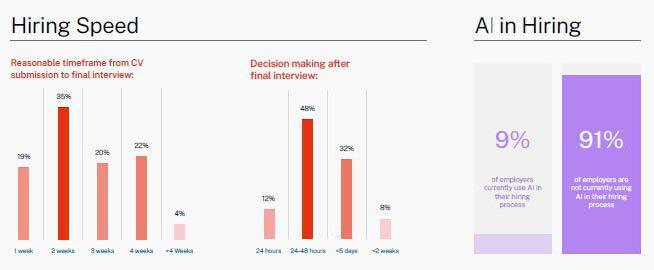
Hiring speed has emerged as an increasingly important factor for today’s job candidates. Expectations have shifted, and most professionals now look for a streamlined process and a timely decision — often within days after the final interview.
In practice, however, many organizations continue to operate with extended timelines, driven by multiple stages and internal delays. This creates a clear disadvantage for those organizations. In a market where strong candidates are often engaged in multiple hiring processes at once, delays do not simply extend hiring timelines, they result in lost hires. The businesses that consistently secure talent are not always those offering the most, but those that demonstrate clarity, responsiveness and decisiveness.
Maintaining momentum has become just as important as making the right decision.
Hiring Best Practices
Fortunately, we’re seeing clear signs of change. A growing number of modular businesses are taking a more pragmatic and forward-looking approach to hiring, widening their search rather than narrowing it and actively engaging with talent from adjacent sectors.
The focus is shifting from finding people with direct experience to finding those with underlying capability. It’s a recognition that while modular expertise can be developed, core competencies such as process understanding, operational thinking and delivery capability are transferable. It also reflects a broader acceptance that long-term growth will depend on building talent internally, rather than relying solely on a limited external market.
At a broader level, the businesses performing most effectively in the hiring game are not necessarily those with the most complex strategies, but those that are aligned with the realities of the market. They understand that talent is limited and they adjust their approach accordingly. They move with clarity and pace when the right individuals are identified, invest in development and address retention early rather than reactively.
Individually, these changes may appear straightforward. Collectively, they represent a meaningful shift in how the industry approaches talent.
Modular is often discussed in terms of how it is reshaping construction. However, its long-term success will be defined just as much by how effectively modular businesses adapt to the changing nature of the workforce behind it.
Sam Mount is a Recruitment Director at Rise Technical Recruitment, where he specializes in recruiting talent for modular construction, offsite manufacturing, and ADU companies across the US market. He works closely with modular businesses on leadership hiring, talent strategy, and long-term growth, helping companies attract and retain the people needed to scale successfully.