
Manufacturers that target the right niche still have room to break in.
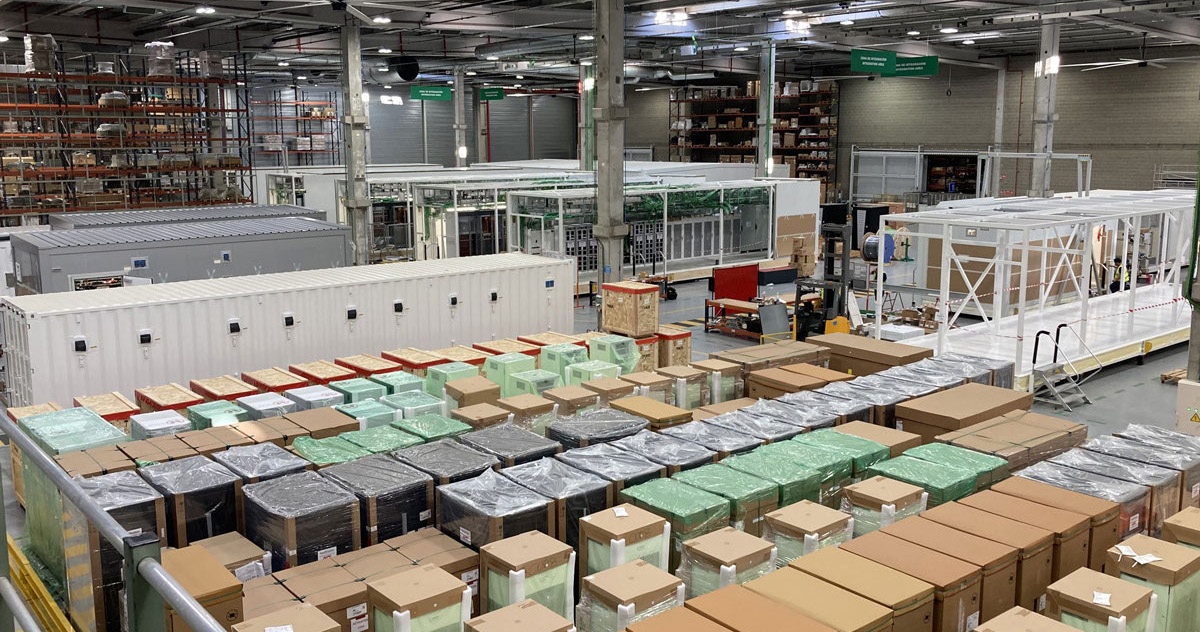
- Exploding data center demand and skilled-trade shortages are pushing more construction into factories, where modules can be built, tested and deployed faster.
- Although the biggest hyperscale opportunities are locked up through established relationships, there’s still opportunity.
- New entrants should look downstream to specialized customers and emerging niches where demand remains substantial and expertise is easier to develop.
Demand for data centers has exploded, and owners are increasingly turning to modular construction. Many manufacturers watching from the sidelines would like to enter this market, the potential of which is measured in the trillions of dollars. But getting in isn’t simple. We talked with two people who work in this space about why modular is a good fit for the data center market, and what it would actually take for a manufacturer to break in.
Why This Market Is Moving Offsite
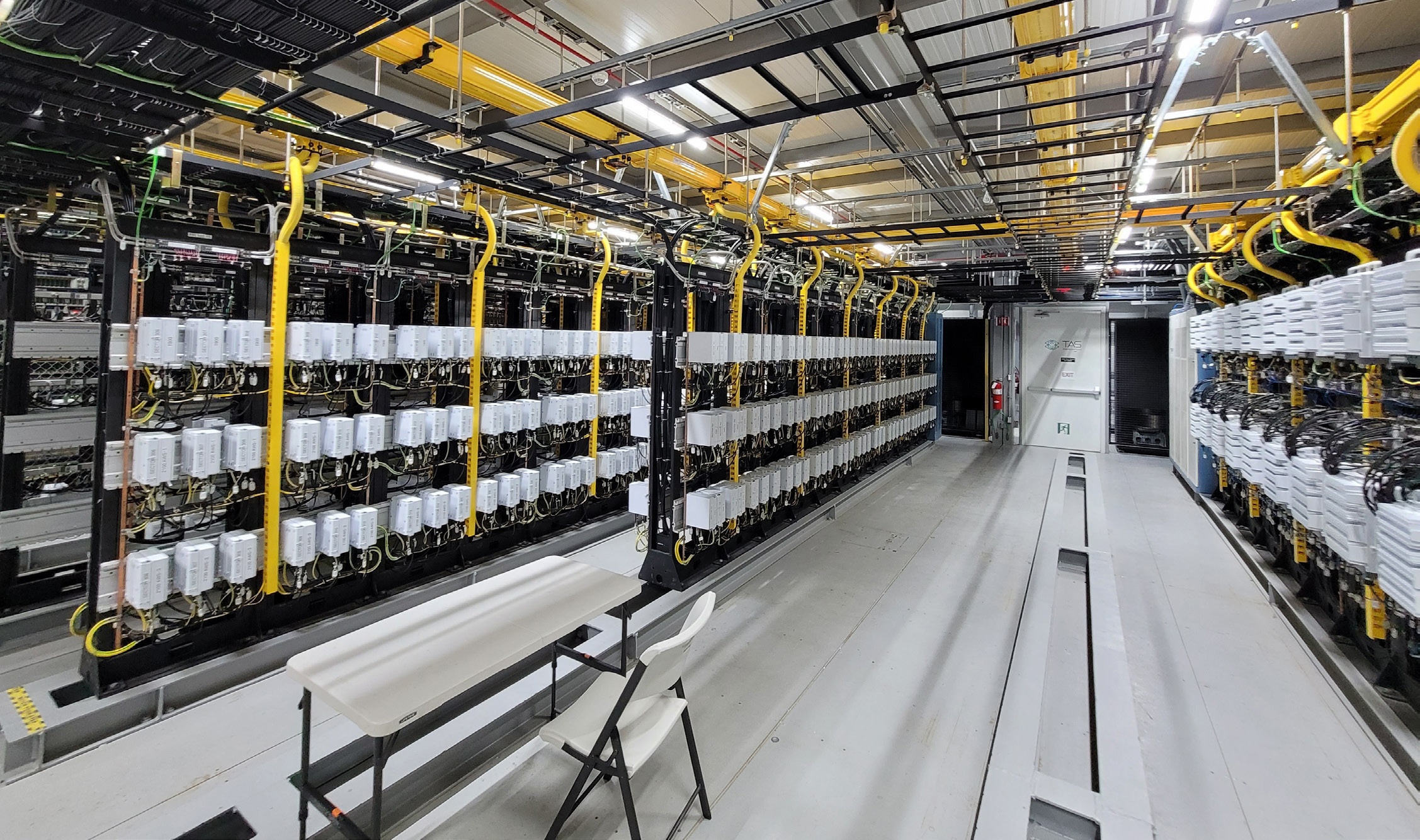
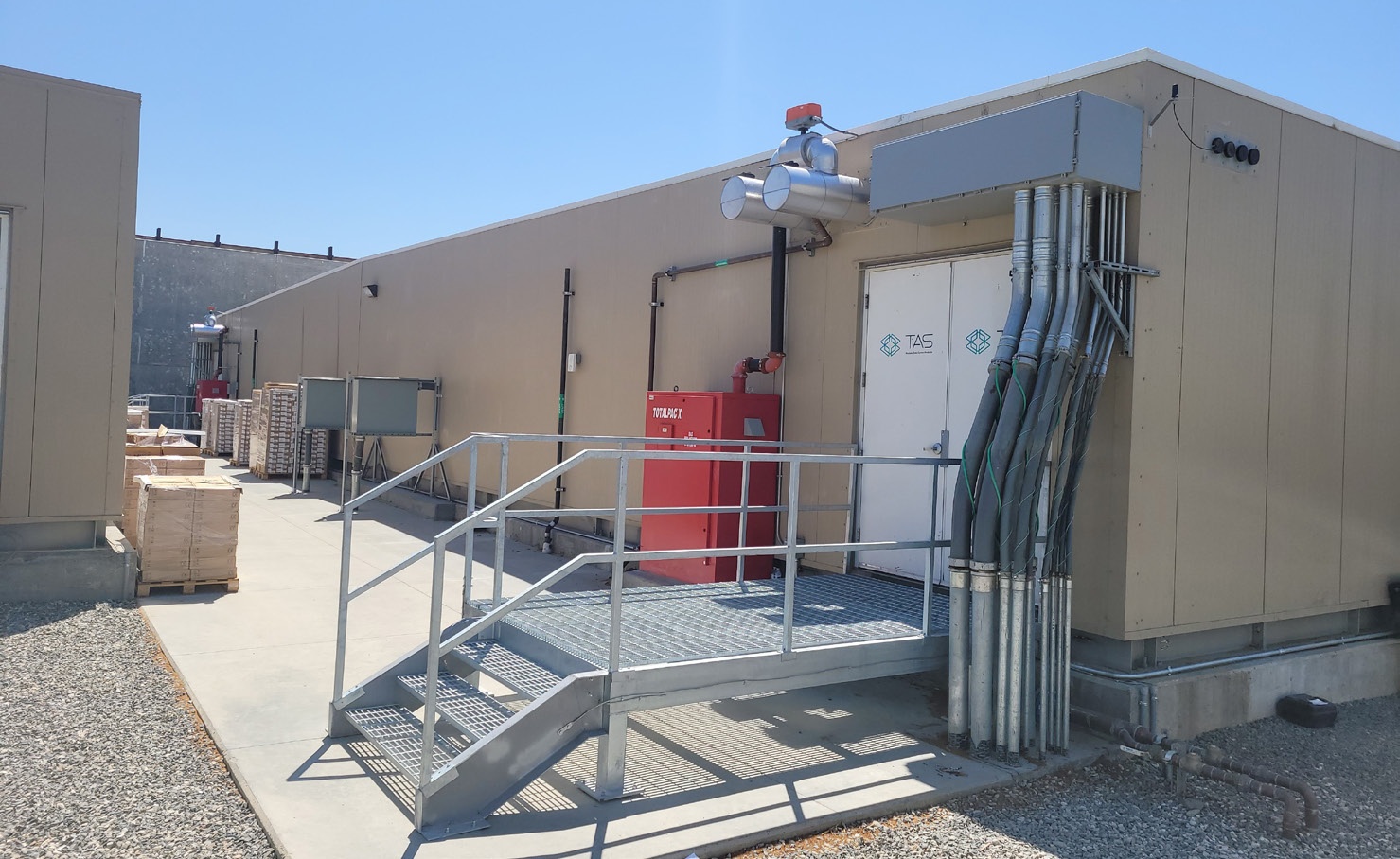
Jon Benson is Director of Modular Innovation at TAS, a Houston, Texas-based modular design, engineering and manufacturing company. The company has over 1.5 million sq. ft. of manufacturing space across multiple facilities. TAS has built modular systems for the power market since the early 2000s and has been manufacturing data centers for two decades.
Benson is seeing a shift toward offsite construction. He says it comes down to two things: speed and scale. Hyperscale clients like Meta, Google, Amazon and Microsoft are no longer building data centers project by project, but instead are planning capacity years in advance, on a programmatic basis. “They’re procuring things that are slated for delivery in two, three, four years. They’re securing that capacity because of the speed and the scale at which they’re building,” Benson says. Conventional construction simply can’t move fast enough, largely because of the shortage of skilled trades.
Steven Carlini is Chief Advocate of AI and Data Centers at Schneider Electric, which is headquartered in Paris, France. Schneider has been in the data center business for four decades and has been prefabricating data center components for 30 years. Carlini says the same skilled-labor shortage Benson describes is pushing more of the work into factories.
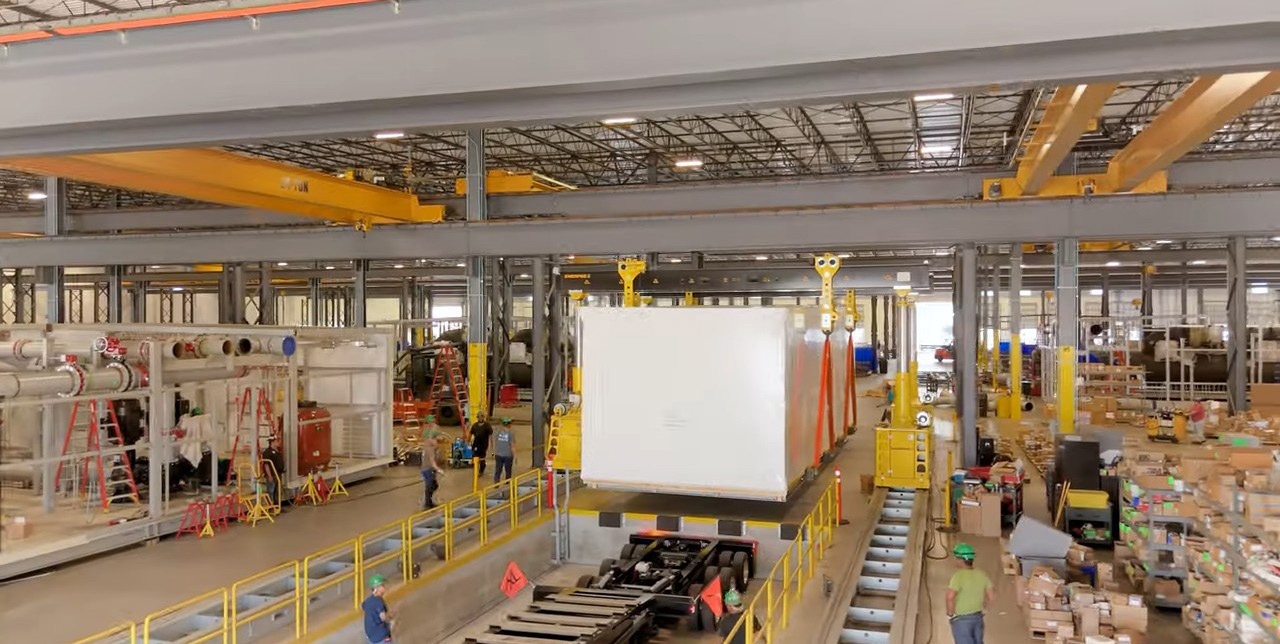
Because electricians — and the more complex mechanical and piping trades — are in short supply, clients have to find another way to get the work done. Moving work into a factory solves two problems at once: manufacturing isn’t subject to the weather, and it lets a company use a smaller core of skilled workers alongside a larger group doing repeatable, less-skilled tasks. And, of course, modular construction’s parallel processes provide an inherent speed advantage.
Large modules arrive on the site ready to connect, and building 100 megawatts of capacity, Benson says, can now happen in eight to ten weeks, instead of requiring months or years. There’s also a lowered safety risk, since fewer people are needed on-site.
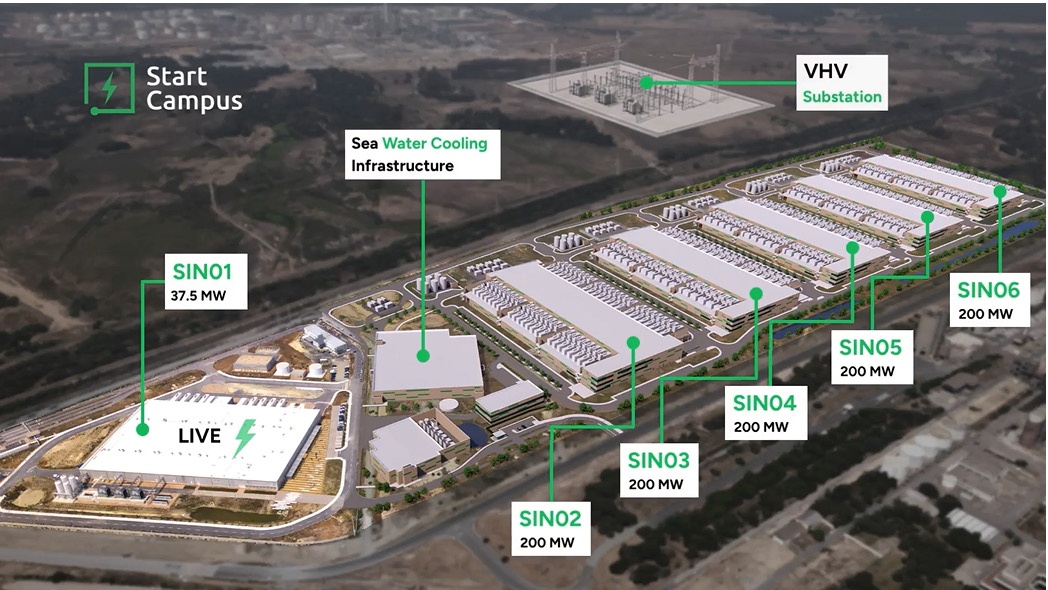
To give an idea of the size of these projects, Carlini mentions a hyperscale client’s 10-gigawatt (GW) campus his company is involved with. It is being built with tens of thousands of modules. “The 5-gigawatt site that Meta’s doing in Louisiana is the size of Manhattan,” he says.
The Advantage of Predictability
Carlini points to predictability as another advantage of prefabrication. Modules are tested before they leave the factory, so performance is known in advance. Supply chain predictability is also important. “A data center can’t operate unless it has all the pieces it needs,” Carlini says. “Assembling it all in the factory eliminates the risk of something being missing, broken, or delayed getting to the site.”
Costs are also predictable, and typically lower than conventional construction — because the shortage of electricians and HVAC contractors drives up the price of on-site labor. However, Carlini notes that the cost advantage depends on location. In a low-cost, low-wage area, building on-site could still be cheaper. In a high-cost area, factory-built makes more financial sense.
The Hard Truth About Hyperscale Clients
If a manufacturer dreams of supplying hyperscale clients like Google, Amazon, Meta, or Microsoft, Benson is blunt: For most companies, that opportunity has gone. “I had this conversation with a consultant just yesterday,” he says. “He was asking me about the market, whether it’s too late for people to get in, and I said yeah, probably, for the most part.”
The reason is timing. The infrastructure going in today was planned three-plus years ago, and major suppliers to the data center market are largely committed through the end of the decade. TAS itself was already working with power-market and, later, hyperscale clients well before the 2022 AI boom, which gave it a head start newcomers won’t have. As Benson puts it, “If you weren’t standing at the dock when the ship was sitting there in 2022, that ship sailed out to sea without you.”
Carlini says the necessary testing is another barrier to entry. Large power and cooling systems are very complex and validating them in the factory requires access to enough power and load to test the equipment. To obtain enough utility power from grid operators, you need to arrange it in advance and, if your data center is classified as a large load (usually 20 megawatts or more), impact studies have to be performed. “Or you could try to build your own low-carbon prime power source on-site, or adjacent, to supplement what comes from the grid,” Carlini says.
For these massive projects, Benson describes a talent hurdle. There’s only a small group of people who understand how to design and deploy these large integrated systems, and they’re already working. “Every time a company is looking to build their modular business or build into this data center space, there’s a list of maybe eight or ten people who can actually do that,” he says. Hiring them away from a competitor will be hard. “They’re probably getting paid a lot of money and they’re being taken care of, so you’d have to make it really enticing for them to leave.”
Where the Real Opportunity Is
Locked-up hyperscale relationships don’t mean the market is closed to newcomers though. Benson describes a hierarchy: Hyperscalers are at the top. Then there are “neoclouds” like OpenAI, Anthropic and CoreWeave (an American AI and cloud-computing company). Then major third-party developers. And below that, there’s a tier of smaller, specialized clients, like banks and healthcare providers who “deal with sensitive information and want to keep it segregated,” Benson says.
The big general contractors don’t always have the bandwidth to serve these clients well. “There are a lot of crumbs falling off the table right now,” Benson says, “and when you’re talking about a trillion dollars of spend on data centers, those crumbs are pretty big.”
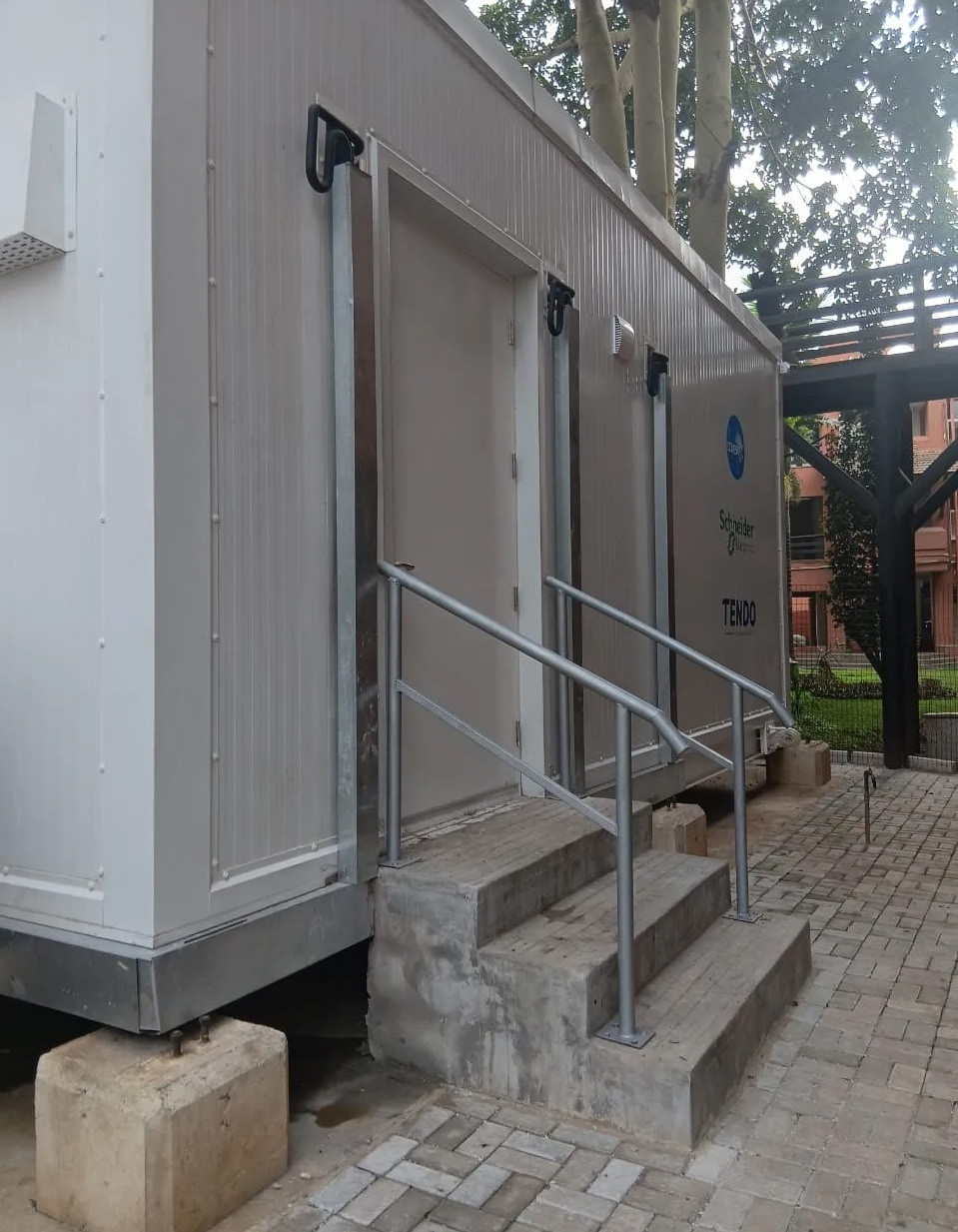
Benson says edge computing is an example of a smaller-scale niche that’s waned in the last few years but is likely to grow again with AI. Edge computing means processing, analyzing and storing data closer to where it is generated — at the edge of the network — rather than sending it to distant data centers. This is important when access to data needs to be close to real-time, such as for the braking systems on self-driving vehicles or control of industrial automation on a distant oil rig.
“[This segment is] more telecommunications-based, but it’s going to come back on a bigger scale.” He estimates that “tens of megawatts” of capacity will be needed. His advice to anyone asking how to get in is to find a niche rather than chasing the hyperscale players. The expertise needed to work in these niches will be easier to find and also to organically grow in-house, Benson says.
Getting in is also about bringing a complete system to the table, not just one component, Carlini says. “You have to line up the ecosystem of different players and figure out your strategic advantage.” Customers increasingly want a single partner who can “ship everything together: the IT, the racks, everything, all in one box. And that involves specialized packaging and shock absorbers,” he says. They want one supplier who can advise them on the IT architecture, the physical infrastructure and the supply chain, rather than assembling that expertise themselves.
Benson also recommends simply spending time in the industry before committing. He suggests attending data center conferences and events, including Data Center Dynamics, 7×24 Exchange, AFCOM and Bisnow’s data center events, to get a sense of the market and the players in it. Costs vary widely, from inexpensive local chapter meetings to five-figure industry events, but as he notes, “everybody’s doing a data center thing now,” so opportunities to learn the landscape aren’t hard to find.
Zena Ryder is a copywriter and content strategist. She writes for magazines and companies, and also helps B2B service business owners and consultants turn their expertise into content that converts traffic and followers into clients. Find her at zenafreelancewriter.com.