
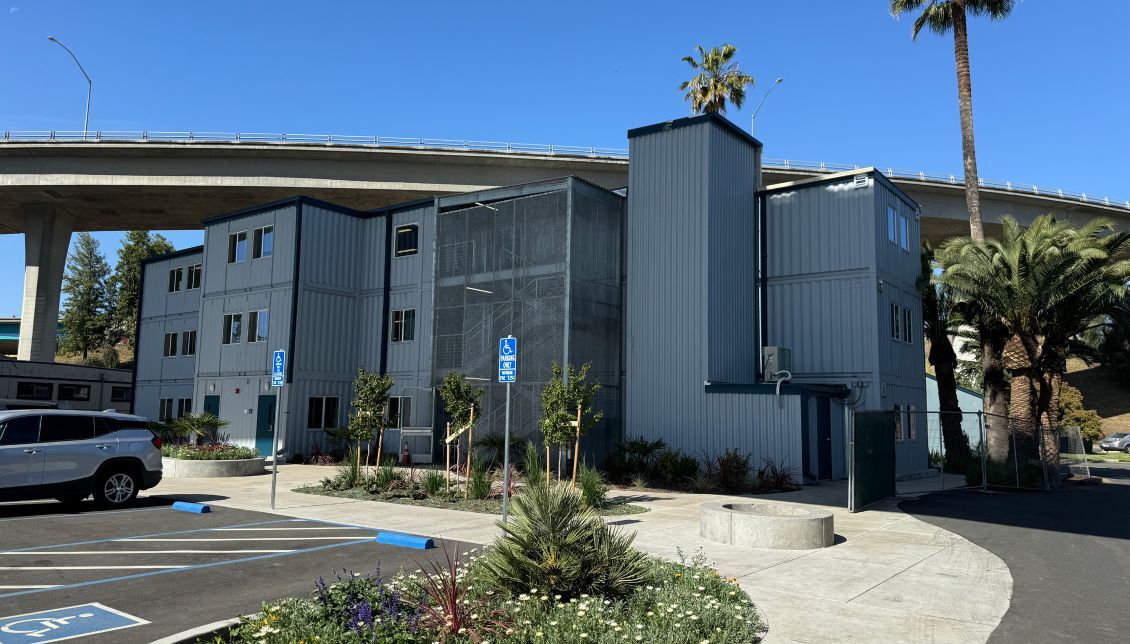
How container conversion firms can turn nonprofit projects into stable, repeatable pipelines.
• Container construction aligns with nonprofit needs for fast delivery, cost control and environmental responsibility.
• Grant funding shapes timelines, risks and cash flow, requiring builders to adapt contracts and expectations.
• Profitable repeat work emerges through referrals, trust and demonstrated success within nonprofit networks.
Container conversions are a good fit for nonprofit, or charity, organizations. That’s the case whether the buildings are used for housing or for other purposes, according to Rory Rubin, CEO of S. I. Container Builds, which performs container conversions and is based in Buffalo Grove, a suburb of Chicago, Illinois.
Rubin says that nonprofit organizations generally turn to container-based modular construction because it tends to align with their budget constraints, their need for speed and their interest in environmentally responsible building practices. These organizations are often more willing than for-profit developers to explore alternatives to traditional construction.
David Renard, President of RPM Team, which is based in Salinas, California, also finds a natural affinity between charities and converted containers. RPM does architecture, engineering and project management, with a focus on “pre-engineered buildings, prefab products and modular buildings — specializing in applying those products to housing,” he says. They work with a few different manufacturers.
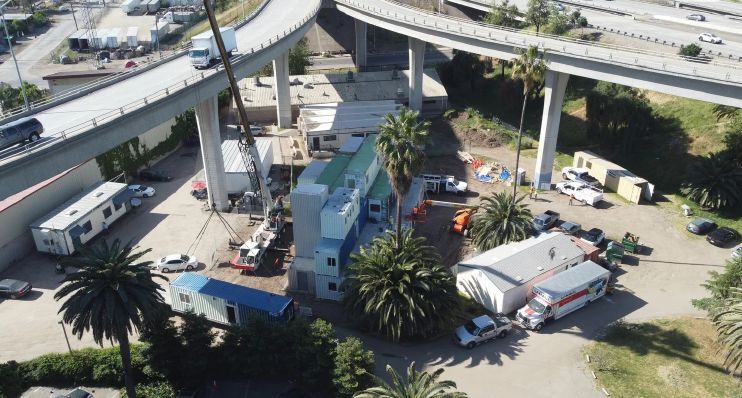
Connecting Containers and Nonprofits
Rubin says nonprofits often find her firm through online searches. They typically already have the impression that, when compared with conventional construction, shipping containers are a more sustainable option. “So, they do a Google search for container-based builders and that’s how they find us.”
She recommends that container conversion companies pay attention to their website SEO [search engine optimization]. For instance, a company that hopes to attract leads in this sector might want to have articles or blog posts on its website that showcase various types of nonprofit projects the company has completed.
In addition, says Rubin, a priority with nonprofit decision-makers is the need to stretch every dollar. “They need to not overspend and need to know that we’re able to work within their budget,” she explains. “We’re more amenable to making those numbers work than perhaps a traditional builder would be.”
Renard says that nonprofits track NOFAs — Notices of Funding Available. These are issued by municipal, state, or federal government to alert organizations about the availability of loans or grants for various projects or programs. He often hears from potential clients when they identify available funding that aligns with their mission.
RPM Team also stays in touch with potential clients via an email newsletter. “The newsletter provides information about code changes, state statutes, new projects and lessons learned. We try to be educational, sharing what we learned so others can apply it to their next project, even if we’re not involved,” says Renard. Of course, he hopes this effort will make them top-of-mind when an organization is considering its next construction project.
Successful projects lead to good relationships, as well as to referrals. Rubin finds that nonprofit directors tend to talk with other directors, resulting in new projects. “Word of mouth really is the best form of marketing,” she says.
Charities also often work closely with community partners and fellow service providers in their region. For instance, the directors of a mental health charity based in Miami, Fla. likely know the directors of the same type of organization in Fort Lauderdale. Referrals can spread rapidly after a single successful project.
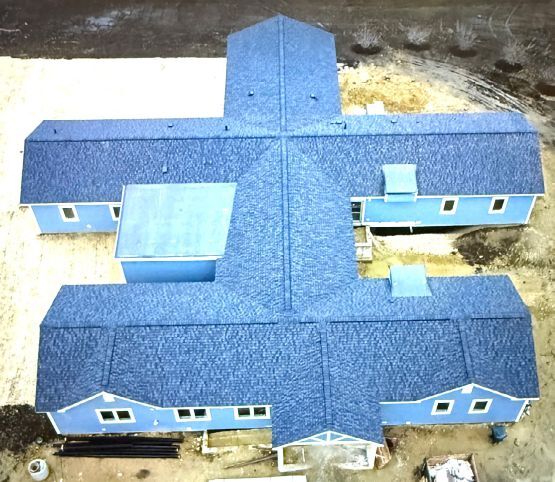
Rubin mentions a project which, at the time of writing, is almost ready to open. It’s a large supportive housing project in Illinois for girls who have survived human trafficking. S. I. Container Builds worked with Shelter Youth and Family Services, a nonprofit that provides support and shelter for vulnerable children and their families, as well as with HODC [Housing Opportunity Development Corporation], a nonprofit developer of affordable housing, primarily in Chicago’s northern suburbs. Rubin believes these partnerships will lead to more work. “The executive director of [HODC] will likely talk in her circles about our company, and how we’ve done a great job, and how the building blends into the community — and by the way, they’re faster and less expensive.”
She says this pattern has shaped her company’s pipeline. “One thing has led to another,” she says. “Good people know good people.”
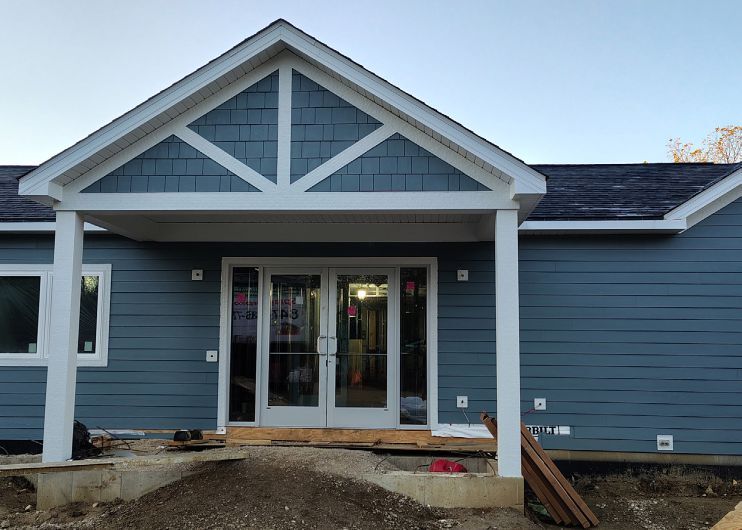
Financial Realities
Rubin’s involvement with nonprofits is informed in part by her earlier career in clinical social work. This background gives her familiarity with nonprofit operations and mission driven priorities. She knows that successfully operated organizations are “run exactly like any other business, including management of cash flow.”
Challenges can arise when funding comes from grants, rather than private donations, though. The project to house trafficked girls that Rubin worked on “was fully funded by a grant, and the grant was sponsored by DCFS [Department of Child and Family Services], which is an Illinois state-run program. It took two years before the money could be accessed.” Grants involve long timelines: writing the application, waiting for approval and waiting again for the release of funds. This can make project timelines longer, but it doesn’t necessarily make them riskier, if planned correctly, she says.
S. I. Container Builds typically provides a 5% to 10% discount for nonprofits. The firm also adds value through guidance and experience when clients are still clarifying aspects of their projects.
Rubin recommends that container builders verify that the organization has sufficient funding before committing to a project. “The modular construction process moves quickly, so [the organization] needs almost all the money up front.” No project will start until budgets are set and clients have their capital stack in order. “The difference between traditional construction and modular construction is that we contract for more money up-front because our build times are much faster,” she says.
RPM Team has a different approach to the risks involved with funding. They don’t insist on the money being available up-front. Instead, they work pro bono with nonprofits “to help them conceptualize and create drawings. We can quickly convert needs, wishes and desires into concepts and turnkey estimates. Nonprofits need to provide budgets [when they apply for grants], but it’s impossible to produce one without understanding program requirements and conceptualizing floor plans and elevations.”
RPM Team does this pro bono work, despite the substantial risk that the client won’t get the funds, which is most of the time. “They only win the grant about 15% of the time.”
Renard says it’s part of his company’s mission to “give back” in this way by doing this work for free, but it’s financially viable because they also do lots of reliably lucrative work. “This side of the business improves people’s lives. We’re not investor-led, so we can choose to pursue these projects. Our government and military work is profitable, and that allows us to make these mission-focused decisions.”
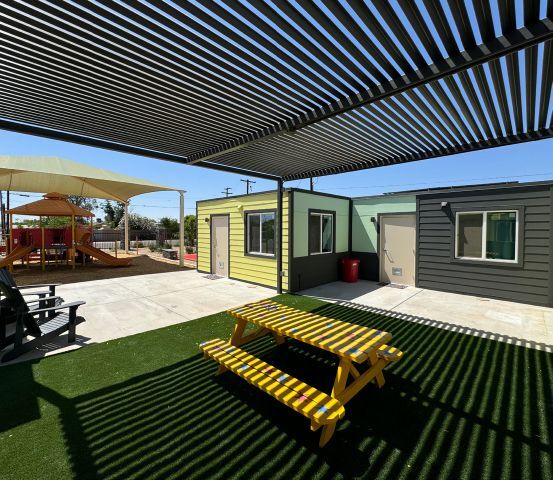
Red Flags
Rubin stresses that not every nonprofit organization is immediately ready for a construction project. “They might lack funding, staff, or development experience,” she says. In these cases, she outlines the next steps they need to complete before a partnership can move forward.
“They need to get clear on exactly what they want to do,” she says. “By the time they come to me, they’re usually clear on the size and type of population they serve, but they need to evaluate the options for land — both cost and location — and to also think about the type of building they need. Is it a group home, a multifamily village? And they need to do some research on how much that might cost.”
Sometimes, she says, nonprofit leaders think it’ll be easy to build a $6 million building, but anyone in the construction business knows that’s not the case, and the organization needs someone on their team who understands construction. Rubin says that some satisfy this requirement by hiring an experienced developer.
Renard echoes this challenge. “People in this sector bring incredible insight about safety, trauma and resident needs. But usually, they need more education and handholding, especially around timelines, permitting and engineering phases.” Frequent turnover in personnel means that the education needs to be repeated. “We had one project where the board changed four times over the course of the project. The organization eventually dissolved, and the city had to declare an emergency and take over.”
Communication Is Essential to Success
Rubin says the strongest indicator of a successful project is good communication. Delays, surprises and complications are manageable when all parties stay engaged. She says the nonprofit projects she has completed have involved high levels of cooperation, empathy and shared purpose. When communication remains strong, “people are happy, the project gets done and residents move in,” she says.
At the time of writing (November 2025), S. I. Container Builds was finishing the group home for trafficked girls mentioned above.
“On that project, there were ups and downs,” Rubin says. “For example, we didn’t realize the site was in a wetlands area and we had to deal with that. But a project goes well when everyone’s communicating. Even when stuff is challenging, we’re all still in it together.”
In contrast, projects break down when someone becomes upset, stops communicating, or prevents collaborative problem-solving. “I think it is paramount to have weekly calls with clients and set a precedent for good communication throughout the project, ensuring that when issues come up, they can be openly and quickly resolved,” she says.
An Opportunity for Container Conversion Companies
The speed of container conversions makes them an especially good fit for organizations using public money in the form of grants. “Sometimes, these funds have to be spent in a year. So, the speed of a project is important,” Renard says. “For those focused on sheltering the homeless, there’s another form of urgency: the approaching winter.”
Rubin says that nonprofit demand for supportive housing and other community facilities is high. Many organizations serve populations experiencing homelessness, involvement with the penal system, developmental challenges, addiction, or other needs requiring stable housing. She believes container builders are well positioned to participate in this demand, provided they understand the funding cycles, planning requirements and collaborative approach required.
“I think more people need to dig in and do it,” she says. “I think people are afraid because they don’t think they’ll make money, but that’s not true. It doesn’t work like that. You can plan your project, so you make money. You’re still running a business.”
Although some builders assume working in this sector won’t be profitable, Rubin says this is a misconception. “Often, people think nonprofits don’t make money. But a good, strong nonprofit operates like a business: making money, managing budgets and paying their staff, just like they’re supposed to.”
The crucial difference is that, in a nonprofit organization, any money the organization makes after covering costs is reinvested in the organization, rather than going to shareholders or owners. “I’m sure there are nonprofits struggling to make ends meet — but there are for-profit businesses struggling to make ends meet too.”
Renard says, “We work with many manufacturers who are understandably business focused.” But he says that working with charities seems to have a positive effect. “The mission rubs off on them. You see fewer change orders and more flexibility because everyone grows a heart.”
Zena Ryder writes about construction and robotics for businesses, magazines, and websites. Find her at zenafreelancewriter.com.