

MIT researchers say modular companies can accelerate post-disaster rebuilds by helping, today, to improve the bureaucratic systems that slow things down.
• Disaster recovery stalls in permitting, approvals and coordination long before construction crews begin rebuilding homes.
• Modular companies can accelerate recovery by sharing workflows, standardizing designs and supporting permitting innovation.
• Industry collaboration with researchers today can produce faster, more resilient rebuilding after tomorrow’s disasters.
As communities across the US rebuild from devastating wildfires, hurricanes, floods and tornadoes, something has become clear. The physical rebuilding of homes isn’t the hardest part of disaster recovery; the hardest part is getting to the point where the rebuilding can actually begin.
Families can sometimes spend months navigating insurance claims, financing, debris removal, engineering reviews, permitting, zoning approvals and contractor availability. By the time construction crews arrive, many homeowners have already spent a year, or more, waiting.
Recognizing this growing challenge, universities across the country are shifting their research beyond stronger buildings and better materials. Academic institutions are increasingly studying disaster recovery as an interconnected system; one that includes supply chains, permitting, housing policy, digital technology, insurance, workforce development and industrialized construction. More importantly, they’re asking industry to help shape future solutions.
A New Generation of Disaster Research
Historically, disaster recovery research has focused on structural engineering: How can buildings better withstand earthquakes? How can homes survive stronger hurricanes? How can communities become more resilient against wildfire?
Those questions remain critical and universities such as Stanford University, Colorado State University and the University of Florida continue leading important research into wildfire science, resilient building design, climate adaptation and community resilience. But another topic continues to resurface after natural disasters.
Researchers are increasingly discovering that many of the largest delays occur long before construction begins. That’s where institutions like the Massachusetts Institute of Technology (MIT) are helping shift the conversation.
Through MIT’s Humanitarian Supply Chain Lab, researchers are studying post-disaster recovery as a complex system rather than a collection of independent tasks. Instead of asking only how homes should be built, they’re asking how communities can recover faster without sacrificing quality, resilience, or public safety.
Looking Beyond Construction
One of the newest examples comes from MIT graduate Megan Finnigan, whose master’s thesis examined arguably one of the least-studied parts of disaster recovery, residential permitting.
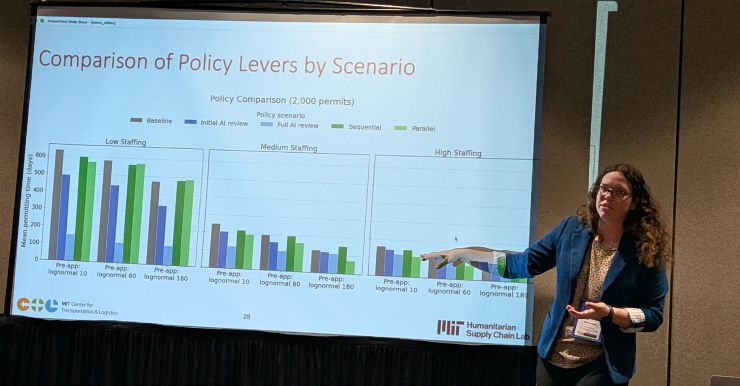
Using discrete event simulation that models a system as a chronological sequence of distinct events, Finnigan mapped each step homeowners encounter after submitting building plans — from planning reviews and fire department approvals, to engineering revisions and staffing constraints — to better understand where recovery slows down. Rather than treating permitting as a single administrative hurdle, the research examined how dozens of interconnected decisions influence the speed of rebuilding.
The results reinforce something many builders have experienced for years. Companies are often ready to manufacture and build before the system is.
The research found that policy interventions such as expedited permitting pathways could reduce permitting timelines by approximately 30% to 40% across many scenarios. Parallel departmental reviews could further shorten recovery timelines (with proper staffing), while AIassisted plan review could offer some time savings, but only for jurisdictions facing significant personnel shortages.
“Process mapping and simulation offer jurisdictions tools to understand how the various parts of the permitting process interact, allowing them to target interventions more strategically and communicate more effectively with residents who are eager to rebuild,” says Finnigan.
Industrialized Construction
Another noticeable shift in academic research is the growing attention given to industrialized construction. Universities are no longer evaluating modular and offsite construction solely as alternative building methods. Instead, researchers are studying how factory-built housing can improve supply chain resilience, reduce quality variability, create more permanent post-disaster housing and support communities rebuilding at scale.
MIT researchers have been exploring this topic since 2019, examining how offsite construction can transition from providing temporary emergency shelter to delivering permanent, code-compliant homes that strengthen long-term community resilience. Their work has expanded through federal roundtables bringing together emergency management officials, builders, manufacturers, insurers and researchers to identify where industrialized construction can improve disaster recovery. And this type of collaboration is essential for identifying solutions.
What Researchers Need From Industry
One of the biggest misconceptions about academic research is that universities already have the data they need or at least have easy access to it. In reality researchers often struggle to access the operational information necessary to validate their models.
Jarrod Goentzel, Principal Research Scientist at MIT’s Humanitarian Supply Chain Lab, explained that researchers are actively seeking jurisdictions willing to share historical permitting information — not to criticize past performance, but to better understand what actually happened, what the needs are and to explore how different policies might improve future recovery.
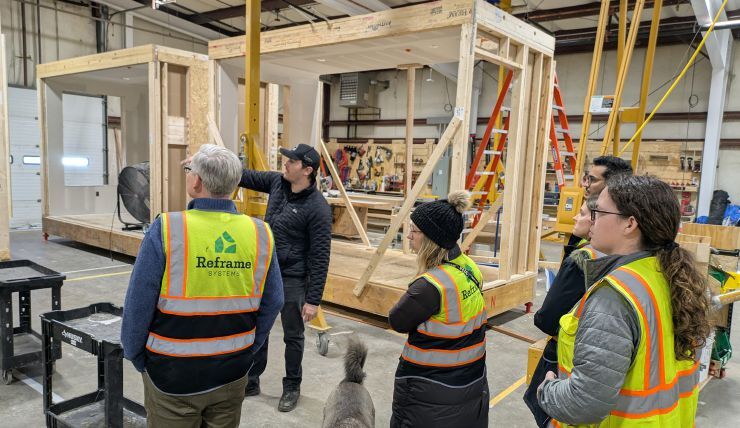
“The goal isn’t to go back and criticize what happened. It’s to simulate what actually happened so we can explore what different interventions might have accomplished and help jurisdictions prepare for the next disaster,” says Goentzel.
Simulation models, he explains, allow communities to safely test new ideas before implementing them during the next disaster. Rather than experimenting in the middle of an emergency, jurisdictions can evaluate different staffing models, permitting strategies, AI applications and review processes in advance. Unfortunately, consistent data remains surprisingly scarce.
Each jurisdiction tracks the rebuilding a little differently. Some maintain detailed permitting records, while others capture only portions of the process. Without standardized datasets, comparing recovery efforts, or measuring which innovations truly improve outcomes, becomes extremely difficult.
Where Collaboration Makes the Difference
The opportunity for industry extends beyond simply supplying products. Researchers are looking for collaboration from builders who understand real-world workflows, modular manufacturers capable of demonstrating scalable production, architects developing repeatable home designs, software companies exploring digital permitting tools, insurers interested in resilient rebuilding and local governments willing to pilot new approaches.
ReMo Homes, a modular manufacturer based in Gardena, California, has developed housing plans that have been pre-approved by the state of California. and is now officially listed in Los Angeles County’s Standard Plan Catalog for wildfire rebuilds — becoming the first modular home company to achieve this designation.
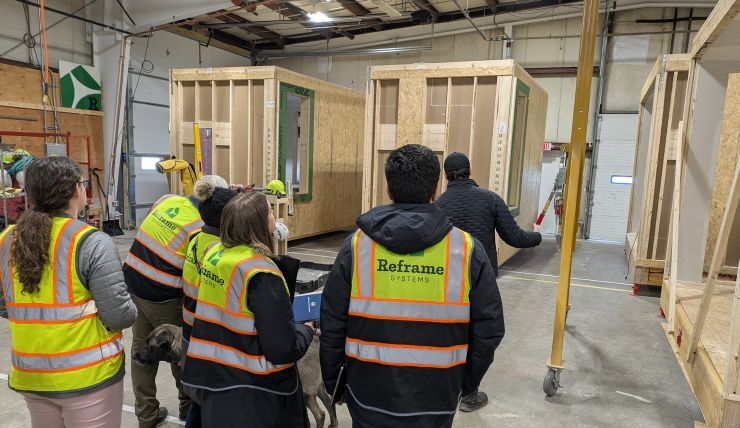
“This approval removes uncertainty at the plan-review stage and allows homeowners to move forward with greater speed and clarity,” says Vamsi Kumar Kotla, CEO of ReMo Homes.
Several other ideas have emerged from current research including self-certification programs for qualified design professionals, bundled permitting, AI-assisted administrative reviews and one-stop recovery centers. All will require active participation from both the public and private sectors before they can become common practice.
For industrialized construction companies, this presents an opportunity to contribute expertise that extends beyond manufacturing. Offsite builders already understand standardization, repeatability, quality control, digital workflows and production planning, which represent the systems thinking that researchers are trying to incorporate into disaster recovery.
“We need to formalize and standardize the innovation that’s already happening so everyone can benefit from it,” says Goentzel.
Building the System Before the Next Disaster
Resilience must begin long before the next emergency. Preparing communities for disaster is no longer limited to stronger materials or better building codes. It requires modernizing permitting systems, improving data collection, embracing digital tools where appropriate, coordinating supply chains, strengthening workforce capacity and designing recovery processes that can scale when thousands of families need help simultaneously.
Academic institutions are developing the research, simulation tools and policy frameworks to support that transformation. Industry brings practical experience. Together, those two perspectives can move disaster recovery beyond reaction and closer towards building recovery systems that are faster, smarter and more resilient from the very beginning.
As climate-related disasters become more frequent and more destructive, the next breakthrough may not be a new construction product or a revolutionary building system. It may be something even more powerful — a recovery process designed collaboratively by researchers, public agencies and the builders and manufacturers who rebuild America’s communities.
Heather Wallace is a freelance writer and industry engagement specialist with over two decades of experience in various areas of the building industry. She has covered topics on construction, technology, workforce development, green building, and sustainable living.