

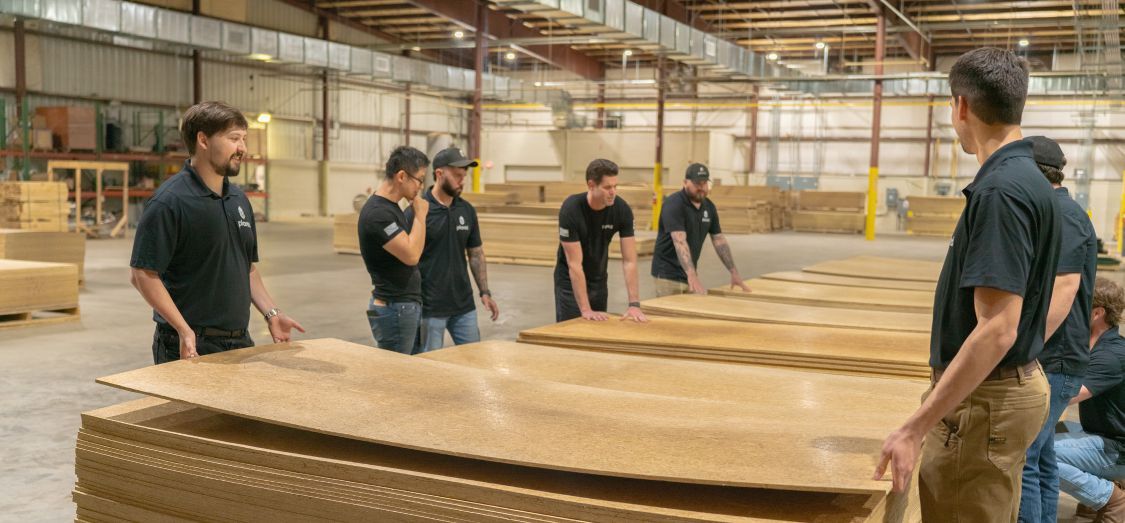
New Structural Panels Without the Learning Curve
Grass-based sheathing delivers durability, stable supply and lower emissions, and should mesh seamlessly into current building and manufacturing practices.
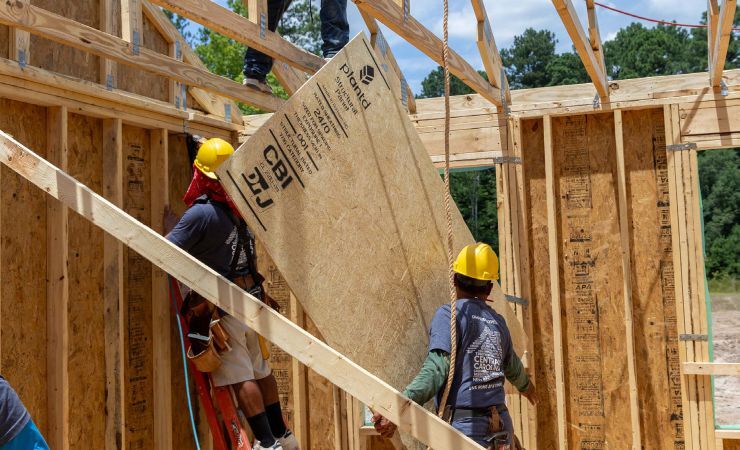
• Designed as a true OSB substitute, Plantd panels require no changes to codes, fastening, or workflows — removing adoption friction for builders.
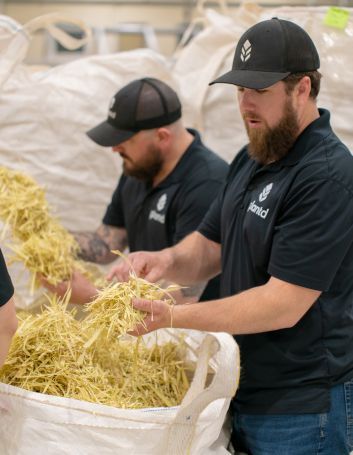
• They’re made from grass feedstock harvested multiple times yearly. This enables stable pricing and rapid replenishment compared to timber-based panels.
• Modular upsides include the option of pre-cut panels, reduced waste and localized production, with lower transport costs.
For decades, the construction industry has been asking the same question, “Which material is most sustainable: wood, concrete, steel?” Each has its advocates, yet real innovation has remained relatively elusive. A new contender is shifting the conversation with a “carbon-negative” structural panel made from fast-growing grass. It’s designed not to change how we build, but to outperform what we already use and challenge the status quo without asking the industry to reinvent itself.
The company says the panels are a great fit for modular as well as for site-built construction methods.
Better Than OSB
Plantd, a construction material wholesaler based in Oxford, North Carolina, has created a structural engineered panel made from a fast-growing grass biomass that is not affected by moisture the way OSB and plywood are.
“What many people don’t know is if you fully saturate timber-based OSB with water, let it dry out and then test it structurally, you’re going to lose 70% of the strength,” says Nathan Silvernail, CEO of Plantd. “Our [boards] don’t do that. Ours only lose 1% of their strength. So, when it’s sitting out on a jobsite or in some weather, you’re not going to have any real degradation.”
Silvernail comes from the space industry. A retired SpaceX associate, he designed and built almost every part of SpaceX’s Falcon 9 and played an instrumental part in developing the first recoverable payload fairing — the heat shield that protects a spacecraft payload against the impact of aerodynamic heating during launch through an atmosphere. He also managed and led the teams that built the thermal and environmental control systems, as well as the cargo variant of the crew vehicle.
After “retiring” from SpaceX, Silvernail began thinking about how to use his engineering skills to drive innovation while focusing on his passion surrounding climate change.
“I’m very passionate about the environment,” says Silvernail. “I started to do a lot of research on who’s working on these problems. Who’s working on decarbonizing concrete, steel and lumber in the highest emitters globally.” He didn’t find much.
But Silvernail also understood that the construction industry is slow to change and did not want to try to reinvent how houses were built. Plantd’s approach was to design a product that looked the same, weighed the same and was attached the same way as standard OSB, but that performed better and cost less.
Making the Panels
“We didn’t change anything. We didn’t even change the way that you permit. I can fit into all the molds and then give you a drop-in replacement for that product.”
Additionally, he wanted to create something that had a more stable price and could actually get less expensive.
“I will sacrifice the bottom line to make sure I’m making the right decision sustainably. I tell investors this all the time… my bottom line is not the dollar, it’s carbon. And I think that is ultimately what got me into this.”
Plantd works with local farmers looking to diversify standard tobacco farming, which creates a more competitive business opportunity for them. Much of the equipment used by tobacco farmers is the same equipment used to plant and harvest the biomass used by Plantd.
Through a land lease model, Plantd contracts farmers to redeliver the grass. The farmers are responsible for disking (a tillage practice that prepares soil for crops), mixing and planting and weed killer for the first year. Outside of those tasks, Plantd does all the harvesting themselves.
The panels are currently produced in their North Carolina factory, an old tobacco processing plant. They have plans to create electrified micro-factories that can produce the material right where it is needed.
Waste is also seen as a benefit for Plantd. They’re using their waste to create fertilizer for their biomass and are helping to decarbonize other industries with products they create from waste. They seek to maximize the efficiency of any waste they produce themselves, or that other companies are producing.
“When panels come off the machine, all the waste goes into a pyrolytic reactor that converts it into carbon,” says Silvernail. “That carbon can be used as a plant-based coat for steel manufacturing. It can be mixed with concrete to make less carbon-positive concrete. And at the same time, it will produce a biochar fertilizer that we can sprinkle into our own fields. That fertilizer gives us a 20% increase in our growth rate.”
Biochar is a stable, carbon-rich charcoal produced by heating wood and agricultural waste in low-oxygen environments.
Potential Modular Benefits
As for modular construction, Silvernail sees where there could be benefits for both sides. While visiting a large modular factory, he was able to watch panels being cut and believes his company could help provide efficiency gains for modular manufacturing by doing all the pre-cutting prior to delivery. He could then turn waste from those cuts into a useful product that benefits his company.
And while Plantd has not reached a scale point to begin promising their panels to modular companies, DR Horton, the largest production homebuilder in the US (based in Arlington, Texas), placed an order of 10 million panels over multiple years in 2024, enough panels to build around 90,000 homes. DR Horton has publicly said the appeal of Plantd panels are their sustainable attributes, as well as their ability to structurally perform after moisture contact.
By 2030, Plantd plans to be in their initial phase of scaling, with output equivalent to a medium-sized OSB mill. They should be able to produce up to 10 to 15 million panels per year.
For modular manufacturers, a product like this has the potential to reduce supply chain challenges, lessen quality control issues and improve sustainability scores, whether you care or not. Imagine having your structural panel supplier next door to your factory. Or having almost no supply chain risk for structural panels.
“You could potentially get all of these amazing advantages by condensing the supply chain,” says Silvernail. “And then ultimately, you create this really advanced material right on-site where you’re building.”
The company also recently announced their expansion into the commercial furniture market partnering with Studio TK, a contract furniture company focused on developing social applications, based in Clayton, North Carolina.
“Furniture manufacturers typically juggle multiple engineered wood products like plywood for structural applications, OSB for lower-cost structural uses, MDF or HDF where clean edges and fine detailing matter,” says Nate Brown, Head of Business Development at Plantd. “A single Plantd panel can potentially deliver performance across all those use cases. That simplifies sourcing, reduces supply chain complexity, and does it all with a material that’s innovative, American-made and designed for carbon negativity.”
As far as pricing goes, Silvernail says his goal has always been to be a price driver. In the future he believes they will have low enough costs where competitors would find it difficult to match their prices.
For modular manufacturers, the opportunity isn’t just to adopt a new material, it’s to start planning for how it, or other innovative products, could reshape operations. That means evaluating where a product like this could streamline production, save time and reduce exposure to volatile pricing and long supply chains.
Heather Wallace is a freelance writer and industry engagement specialist with over two decades of experience in various areas of the building industry. She has covered topics on construction, technology, workforce development, green building, and sustainable living.