


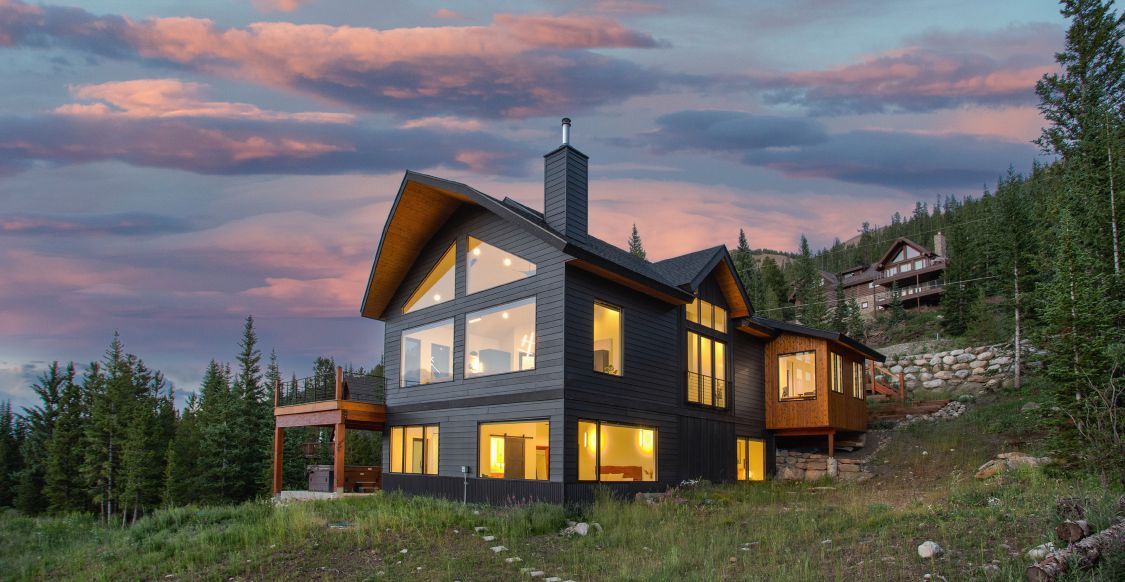
IBS panelists explain how builders can move step-by-step from components, to panels, to modular construction.
• Industry leaders argue that offsite construction expands on tools builders already use.
• Structural components, panelization and modular systems form a continuum of increasing factory production.
• Builders who evaluate total project costs — not just labor and materials — often find significant financial advantages.
At the 2026 International Builders’ Show (IBS) in Orlando, Florida, industry leaders gathered to examine one of the most practical opportunities for industry transformation: offsite construction. While still representing a modest percentage of total construction starts, offsite methods are steadily reshaping how homes are designed, manufactured and assembled.
Depending on whose stats you believe, offsite construction represents either 3% (National Association of Home Builders) or 6.4% (Modular Building Institute) of construction starts in North America. As this magazine has repeatedly pointed out, for this number to grow, traditional builders need to see stories of successful projects, as well as data that backs up those stories. And they need to use components, modules or some other system on at least one of their projects.
During the show, Ken Semler, Founder of Impresa Modular and publisher of Offsite Builder, moderated a panel discussion evaluating the strengths, limitations and fit of modular, panelized and site-built systems. Panelists included Sean Shields, Director of Marketing for the Structural Building Components Association (SBCA), an international trade association representing truss structural building component manufacturers and installers, as well as Mikel Vandegenachte-Ochs, (Owner) and Terri Finnell (Owner and Vice President) of Whisper Creek Homes, a panel manufacturer based in Hamilton, Montana.
The presentation covered structural building components (such as roof trusses, floor trusses and wall panels), panelized systems and modular construction. Audience comments confirmed that many builders and developers are already using some form of offsite construction, whether they realize it or not.
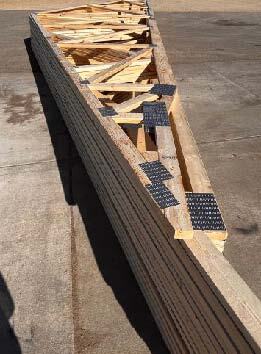
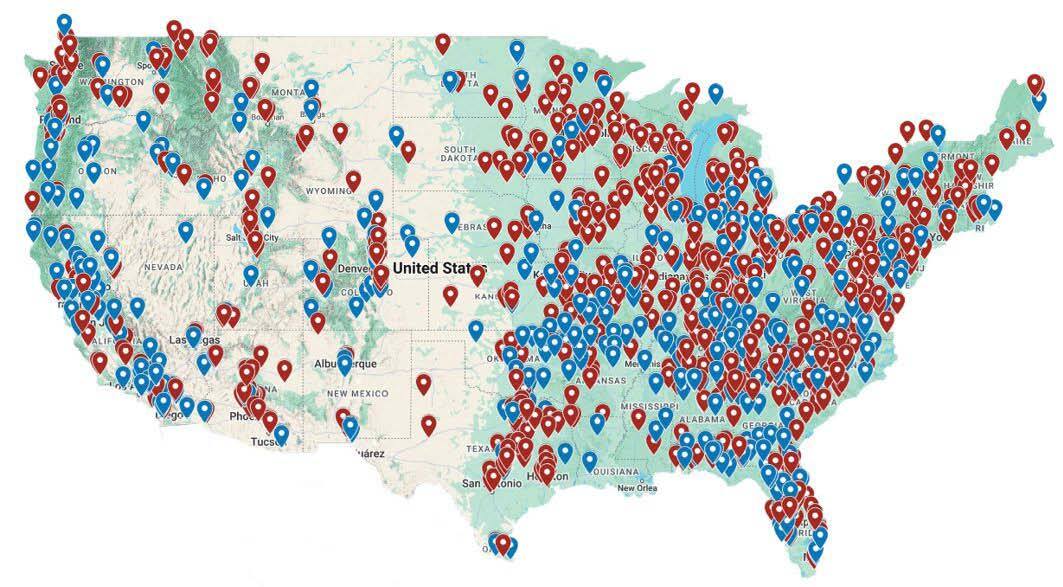
For instance, Shields explained that roof trusses — in widespread use since the 1970s — are an offsite solution. Each truss is individually engineered, precision-cut, assembled in a factory and delivered to the jobsite. With over 1,300 component manufacturing locations across the US, there is virtually no market without access to structural building components — whether that’s roof trusses, wall panels, or floor trusses. The problem, says Shields, is perception: most builders see trusses as a material purchase rather than a mechanized production system replacing traditional on-site labor.
Components like trusses and panels are just the first step on what Semler calls “an offsite continuum.” With each subsequent step, more of the work is done in the factory.
“Bathroom pods would represent an intermediate step,” he says. “The most comprehensive system would be modular, which is a six-sided volumetric box. It has a structural floor, it has the walls, it has the roof. It’s all done in a factory.”
Once builders recognize that they have already adopted offsite in one area, the expansion into wall panels, floor systems, or volumetric assemblies becomes far less intimidating.

Cost Structures Are Different
Another critical insight from the panelists was that mechanization and manufacturing fundamentally change cost structures. Many builders evaluate offsite systems by comparing just two cost points: materials and labor, but the panelists repeatedly stressed that this is an incomplete analysis. Offsite construction impacts numerous downstream cost centers like reduced cycle times, fewer delays, lower land carry costs, faster revenue generation, improved safety, reduced callbacks and more predictable scheduling.
Shields shared his experience working with a homebuilder evaluating how to convert their building plan to an offsite system. They were asked to evaluate 500 similar starts over a six-month period and the results showed that broader impacts and initial upfront premium costs disappeared quickly.
“When you move to an offsite mechanized process, there’s a lot of efficiency that can be worked into [a] structure,” says Shields.
Panelized construction offers a clear example.
Over the past 20+ years Vandegenachte-Ochs and Finnell have participated in commercial projects for Disney and Bass Pro, have built sets for the popular Paramount series Yellowstone and have completed thousands of residential projects. They have collected data from hundreds of builders in their network across the US and Canada who are using factory-built wall systems. They said that 68% of those builders reported saving more than $20 per sq. ft. in combined material and labor, had reduced schedule variability and stronger margins.
They also said that in high-cost labor markets or rural areas where skilled framers are scarce, the use of panelization reduced dependence on hard-to-find labor while increasing output. The result: more homes built per year with the same overhead.
Additional data from Whisper Homes’ builder network:
• 76% were already using offsite construction methods in 51% to 100% of their projects
• 84% report moderately to significantly better margins (they can build faster)
• 88% said their schedules are more predictable
• 71% of them reported that the crew was positive to very positive
• 92% would recommend offsite construction methods to other builders
It’s About Final Cost
The third essential takeaway for builders and developers was that volumetric modular construction extends this logic even further by industrializing most of the building process. Modular homes are built to the International Residential Code (IRC) and numerous third-party inspections occur in the factory.
“You’re getting a code inspection, but you’re also getting a quality inspection,” says Semler.
Modular’s financial advantage is not necessarily found in first cost, but in final cost. As part of this, Semler talked about the “speed dividend” — a project that finishes five months faster avoids interest carrying costs and begins generating operating revenue sooner. In multifamily or build-to-rent developments, this accelerated delivery can dramatically improve pro forma performance, a benefit that developers frequently overlook when evaluating modular pricing. When speed, financing savings and earlier revenue are factored in, projects that may not have “penciled” under traditional construction can become viable.
“Every project that sits unfinished is a day of unpaid interest,” adds Semler.
An Evolutionary Process
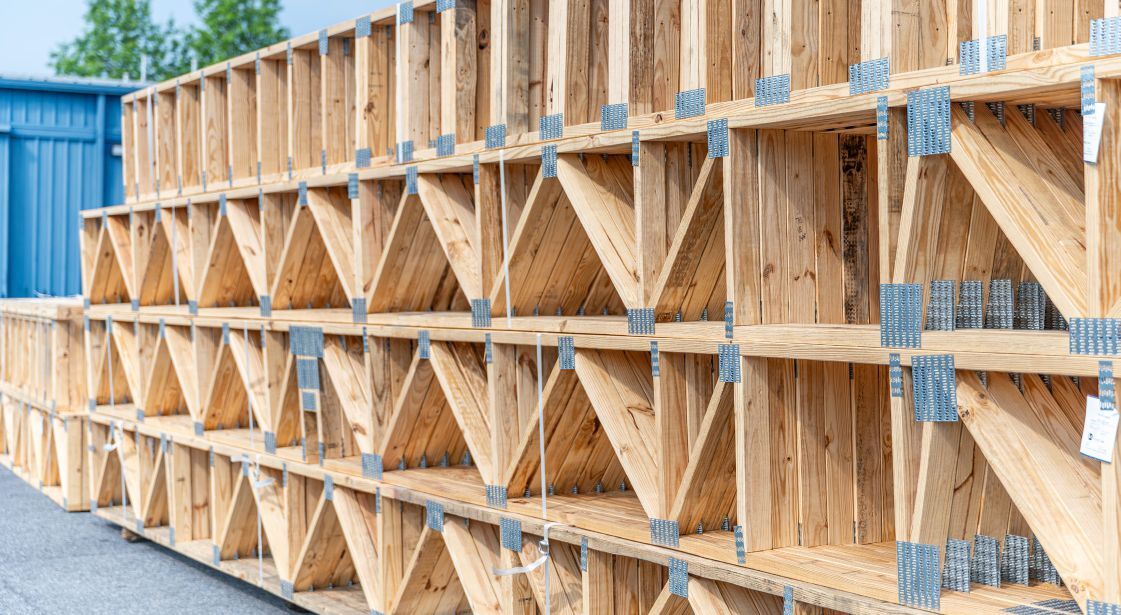
Across all three approaches — structural building components, panelized systems and modular — the panelists emphasized progression rather than disruption. Builders need not jump directly from stick framing to full volumetric modular. They can begin by incorporating panelized walls, optimizing structural layouts with engineered components, or using pods for kitchens and bathrooms.
Over time, crews adapt their work processes, moving from cutting raw materials to assembling prebuilt systems. The business model will evolve from craft-based field construction, sometimes requiring hard-to-find labor, to coordinated manufacturing and installation. In fact, the overarching message of the panel was that offsite construction is not experimental; instead, it’s an evolution of tools and processes, much like the shift from hammers to pneumatic nailers.
And while the US lags other countries in offsite adoption, the infrastructure already exists nationwide. With labor shortages, compressed building seasons, rising carrying costs and growing housing demand, industrialized offsite construction provides a scalable path forward.
Ultimately, offsite construction can help builders build higher-quality homes faster, with less stress and higher profits. Success requires upfront planning, including designs that have been created with the offsite system in mind, but the panelists insisted that data from real-world experience suggests a substantial payoff.
The panel’s discussion made one thing especially clear: offsite construction is not a radical departure from traditional building, but a strategic evolution of it. The industry is not being asked to abandon what it knows, it’s being asked to build on what it already does.
Heather Wallace is a freelance writer and industry engagement specialist with over two decades of experience in various areas of the building industry. She has covered topics on construction, technology, workforce development, green building, and sustainable living.