


Slightly higher upfront costs can pay off through lower utilities, simpler builds and stronger client satisfaction.
- The upfront expenditure for ICF construction is 5% to 20% more than stick framing. Builders find it best to communicate value in terms of utility bill savings, comfort, durability and peace of mind.
- Permitting delays, conservative engineering and homeowner unfamiliarity have slowed adoption, but stricter energy and resiliency codes and insurance incentives could broaden the market.
- At present, this system is pencils out best for basements, crawl spaces and simple, above-grade designs. As an engineered system, it pairs well with modular construction.
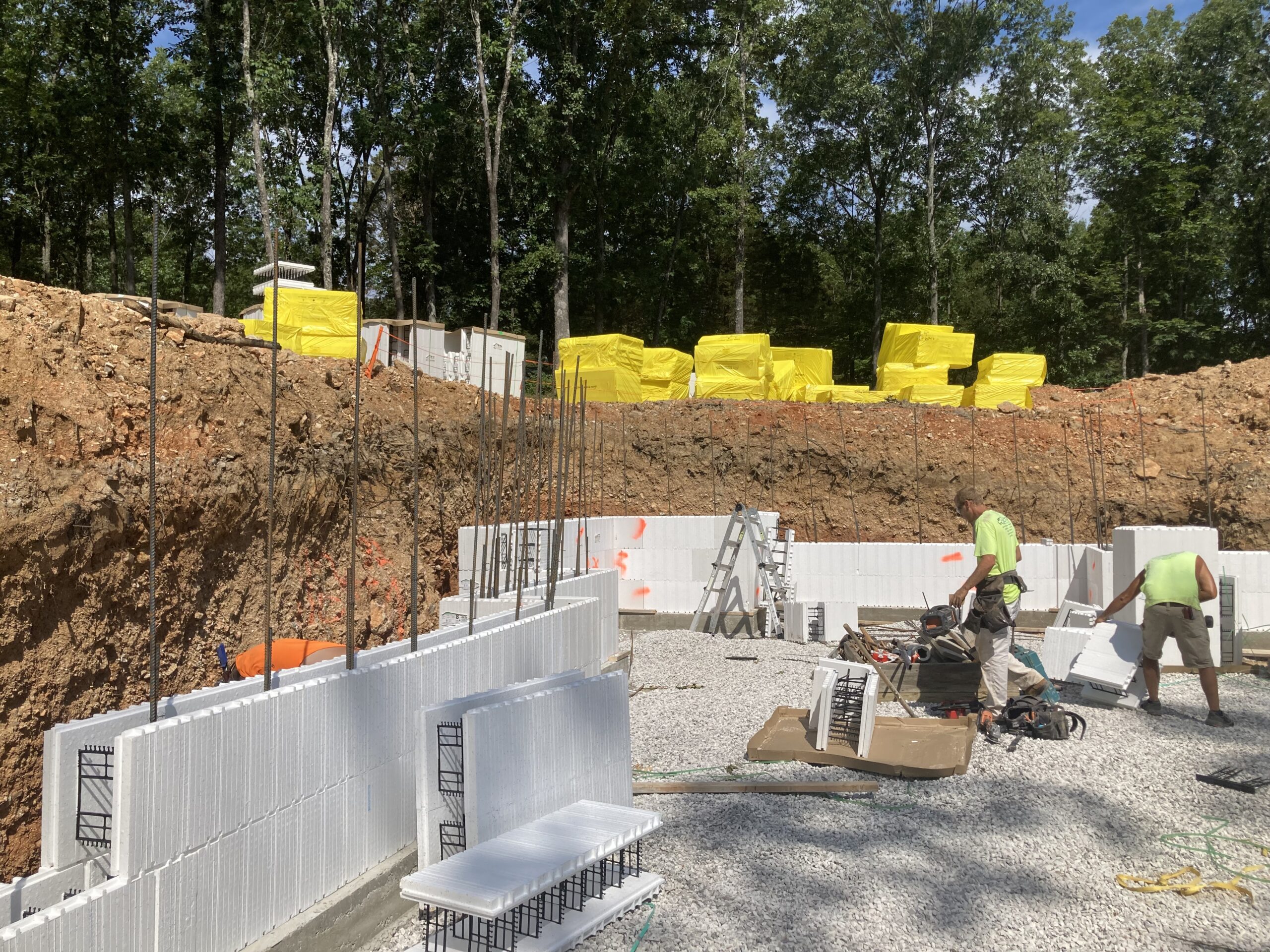
For decades, advocates of insulated concrete forms (ICFs) have promoted them as a significant advancement. The system — rigid foam blocks stacked like oversized Lego bricks and filled with reinforced concrete — offers immediate benefits, such as improved energy efficiency, soundproofing, fire resistance and structural strength.
Builders like Chris Klaasen of Alair Homes in British Columbia, Aaron Hopke of Hopke Craftsmen in St. Louis, Missouri, and Matt Belcher of Enhanced Building Systems in Missouri, swear by the comfort and durability of ICF homes.
However, the percent of builders who use this system remains small. The reasons, as Klaasen, Hopke and Belcher explain, lie less in the performance of the material and more in perceptions, construction culture, permitting and cost.
How Much?
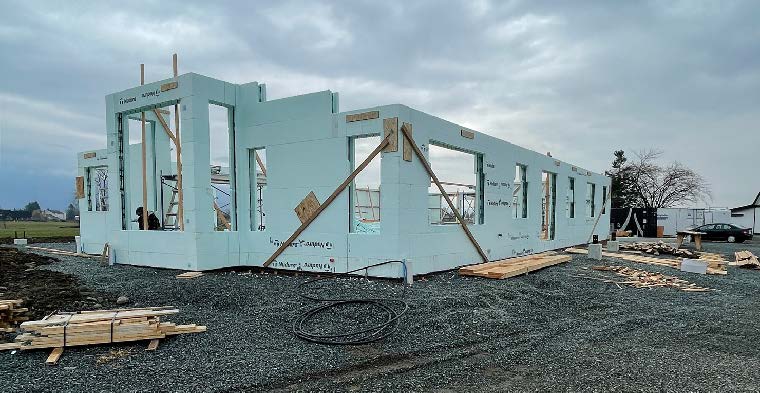
ICF builders are quick to caution against oversimplified comparisons. Klaasen recently built a 3,800 sq. ft. ranch entirely with ICFs. “The overall cost was probably about five percent higher than a conventional stick build,” he notes, while emphasizing that the home was also twice as energy efficient, far more soundproof, and airtight.
He says that, depending on the home design, this efficiency makes possible a 20% to 25% reduction in HVAC sizing.
Hopke cites an even higher premium. In the Missouri market where he builds, he notes that the price tag for an ICF home can be 10% to 20% more than for stick-framing. And while HVAC downsizing and energy recovery ventilation systems help offset some operating expenses, the upfront investment is still significant. “It makes the most sense in larger or higher-end homes where the percentage premium is smaller relative to the total cost,” he says.
Belcher offers an alternative way to frame the numbers. Recently, he showed clients a pie chart of monthly mortgage, utilities and maintenance charges. By cutting the utility portion in half, he argued, the total cost of ownership becomes more appealing. “Their utility bills were less than $100 a month,” Belcher explains, “compared to $300 or more in a similar wood-frame home.”
By shifting the discussion to utility and maintenance savings, he finds most clients are receptive. “We don’t talk about energy efficiency first,” he says. “We talk about their monthly payment.”
Even so, both Klaasen and Hopke admit that the energy savings payback takes a lot of time. Klaasen estimates that it would take 22 years to recover the extra upfront cost if it were only measured against lower utility bills. Hopke adds that because many variables — home size, ceiling heights and window orientation — affect homeowners’ monthly bills, he avoids making firm promises about dollar savings.
Where ICF Makes Sense
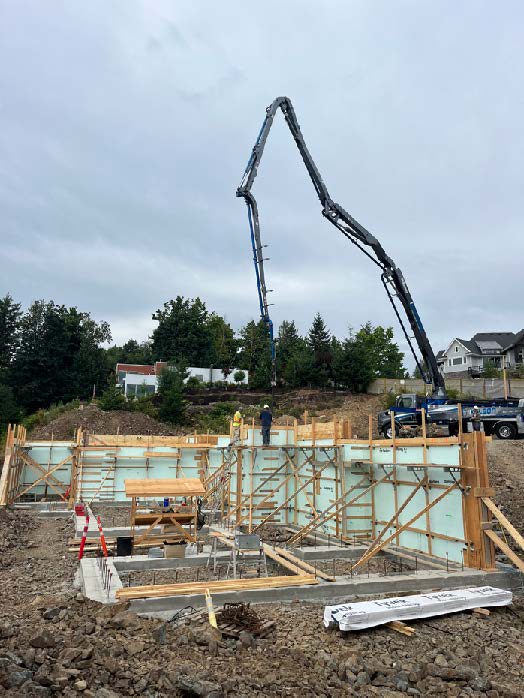
Construction costs depend on how and where ICFs are used. Klaasen notes that for basements and foundations, they can be 5% to 10% less expensive than poured concrete walls, because no formwork must be removed after the pour. “It’s a no-brainer below grade,” he says. “Cheaper, faster, better.”
Belcher finds ICF to be an ideal solution for crawl spaces. “You can set the forms waist-high all the way around, pour them in a day, and you’ve got the perfect insulated crawl space,” he explains.
Some homeowners are willing to pay more for ICFs because they expect to get a safer home. One of Hopke’s clients relocated to Missouri from the wildfire-prone West Coast and chose ICF specifically for their storm- and fire-resistance. “They wanted energy efficiency, but above all, they wanted peace of mind.” Belcher, who builds in tornado-prone Missouri, also emphasizes the resilience of ICFs in extreme weather conditions.
Above grade, ICF is most cost-effective for homes with simple geometries — mid-market custom homes with straightforward floor plans can integrate ICF effectively. “It’s not just for luxury builds,” Klaasen says. “In fact, it often makes more sense in simpler homes.” Budget is more of an issue with complex, modern home designs that include extensive glazing.
The Learning Curve
If the budget is one obstacle, builder familiarity is another. Wood framing has been the industry standard for over a century, with deeply entrenched crews and trades. Switching to ICF requires planning and the adoption of new techniques.
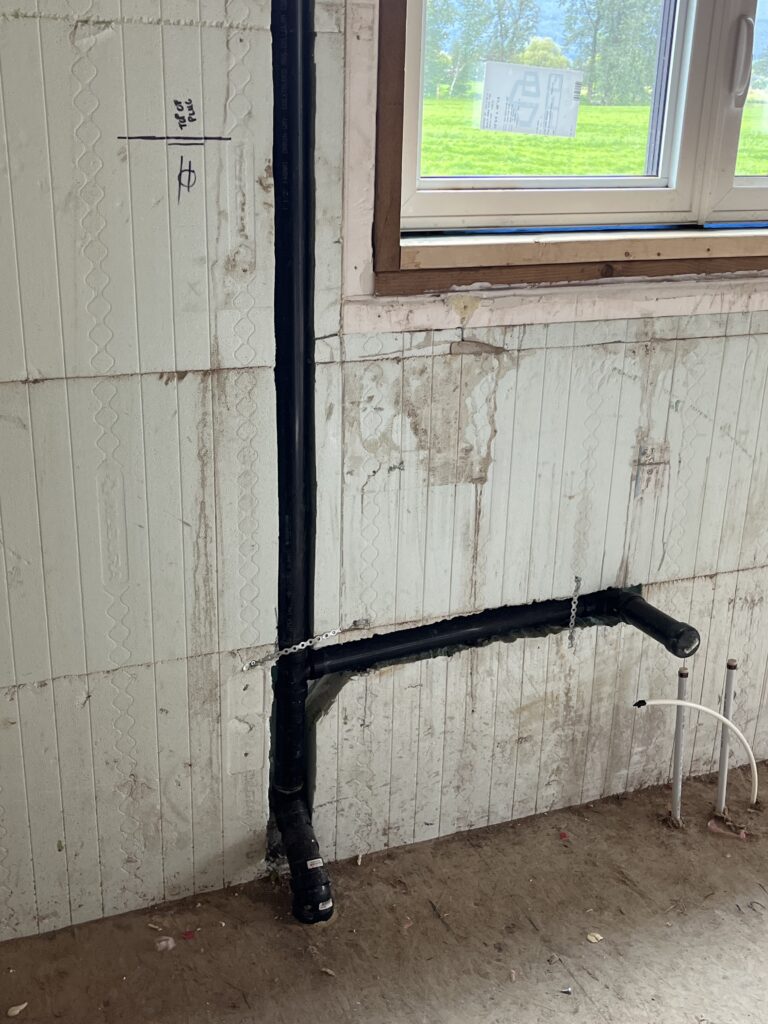
“Your cabinet guy is used to screwing into studs,” says Klaasen. “With ICF, you need to pre-plan and install plywood backing where cabinetry or trim will go. Once you do that, however, it becomes familiar again.” He has found that one project is often enough to make a crew comfortable with ICFs, but adds that pre-construction planning is essential to avoid headaches with penetrations, hose bibs, or electrical outlets.
Belcher and Hopke also stress the importance of proactive planning with trades. Hopke notes that early collaboration on penetrations, sleeves and HVAC adjustments can reduce resistance from subcontractors who may initially hesitate to work on ICF projects.
Trade issues can affect scheduling, as well. Hopke says that, in his market, ICF extends project timelines by about a month compared to stick framing, especially for above-grade walls. “We just can’t compete timewise with stood-up wood walls,” he says, reflecting the long experience that local union crews have with traditional foundation and framing systems.
Client Objections
When clients object to the price of ICFs, Klaasen is frank with them. “I tell them: ‘If the benefits aren’t worth the premium, it’s probably not the right fit for you.’”
At the same time, being known as an ICF builder will attract clients who have pre-qualified themselves. Hopke says that while monthly savings and insurance incentives are great, most of his clients arrive convinced of ICF’s value. “They’ve done their research before they call us,” he says.
For clients worried about future renovations, Klaasen argues that ICF may be easier to modify. “We just cut a hole in the wall with a concrete saw. There’s no reframing to do.”
Still, builders acknowledge that many homeowners are simply unfamiliar with ICF. “The vast majority of clients don’t really know what it is,” Klaasen admits. “It’s primarily an education issue.”
Market Share Challenges

The persistence of stick framing is as much a cultural phenomenon as it is an economic one. Klaasen describes ICF as a paradigm shift. “Most builders have their [production] system down pat, and ICF requires rebuilding that system. If you’ve always built one way and it works, why change?”
Hopke names additional hurdles, including permitting delays and overly stringent engineering requirements. In the St. Louis area, he says, ICF projects often face extended approval timelines because building officials are unfamiliar with the system. “It can take six months just to get plans approved,” he notes. Overly conservative engineering requirements, especially for rebar, can further inflate costs.
Belcher, who also sits on code development committees, views energy codes and insurance markets as potential catalysts for change. As stricter energy and resiliency standards become widespread, ICF’s inherent performance will be more difficult to overlook.
He estimates that the current national market penetration of ICF is about 5%. He expects it could double in five years as codes evolve and insurers recognize the storm resilience of concrete walls.
Concrete Comfort
For many, the case for ICF may ultimately be a personal one. For instance, Klaasen has lived in an ICF home of his own for six years. “It’s by far the most comfortable home we’ve ever lived in,” he says. “Cheaper to heat and cool, quiet, just super comfortable.”
Hopke, whose father was an early adopter of ICF in Missouri more than 25 years ago, continues to view it as a lifestyle choice. “The storm protection is a big thing in our area,” he says. For many of his clients, energy efficiency is a bonus; the real value is the peace of mind it brings.
Belcher notes that empty-nest clients tend to prefer ICF’s durability and low maintenance. A recently completed home in rural Missouri has utility bills of barely over $100 a month and a downsized HVAC system that operates effortlessly, even during humid summers.
While ICF construction might never dominate the mainstream market, its niche is expanding. For basements and foundations, it is already a competitive choice. For full above-grade builds, it’s a great choice for clients willing to pay a premium for a quieter, stronger and more energy-efficient home.

The challenges are less about the material and more about changing habits and perceptions. Builders like Klaasen, Hopke and Belcher see it as their role to educate both clients and crews. As Klaasen put it: “Once you’ve done one, the fear is gone.” That applies to other professionals as well. Says Hopke: “Get the architect, engineer and builder talking early. Over-engineering and late collaboration can kill a project before it starts.”
Jim Mahannah is a freelance B2B technology writer specializing in construction, energy, water/wastewater treatment, and cleantech. He is an engineer, and his work experience includes construction project estimating and management in addition to founding and operating a structural components fabrication company supplying residential and commercial building projects.