
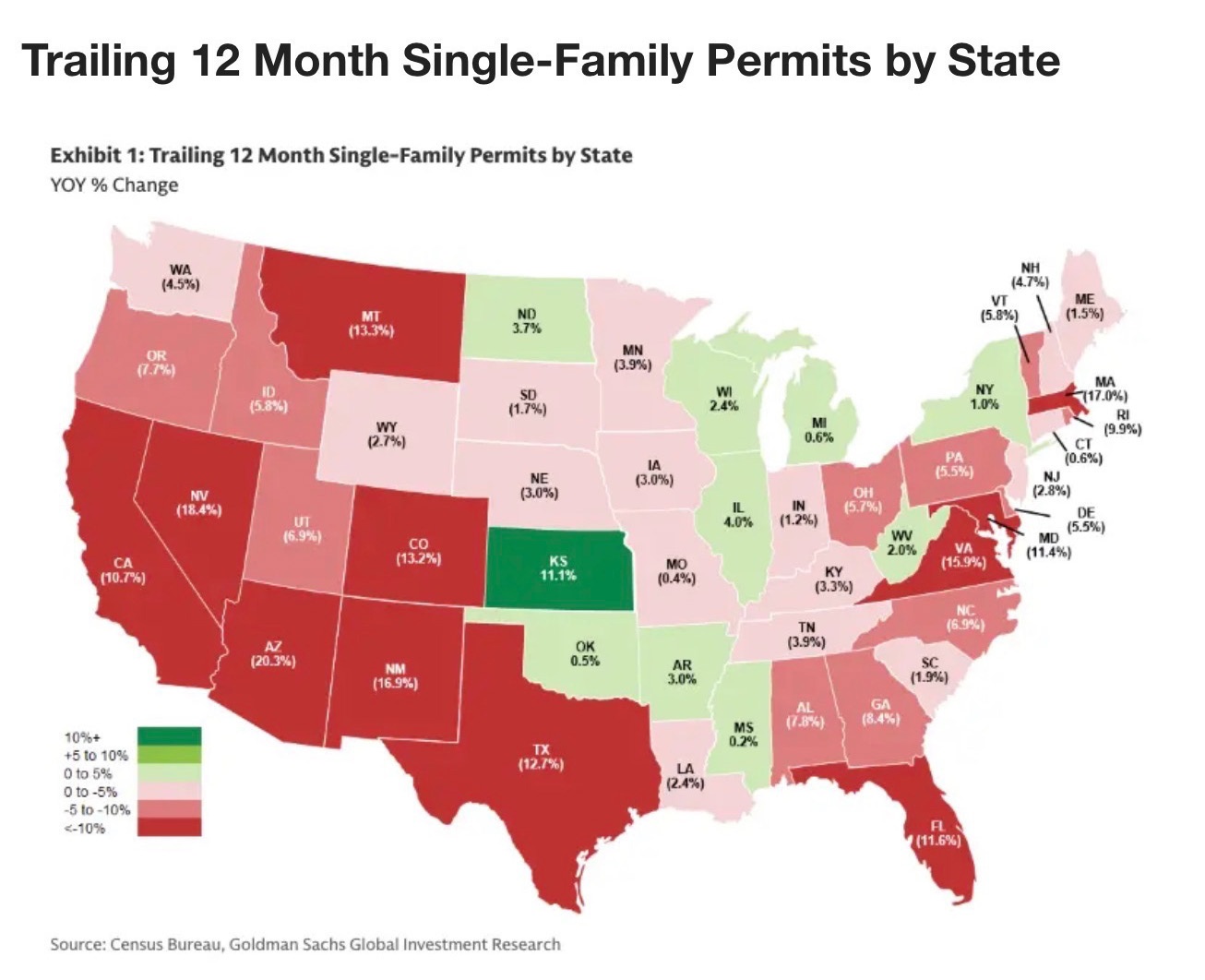
This state’s tax credits, grants and infrastructure reimbursements are helping modular builders deliver homes in markets where development costs can stall construction.
- Rural housing often costs more to develop than local markets can support. Kansas has developed a model for addressing that gap with complementary incentives for infrastructure, project equity and development costs.
- Advanced Systems Homes is using those incentives to deliver modular homes and apartments, lowering buyers’ upfront costs while maintaining viable projects.
- Offsite construction helps communities overcome limited builder and labor availability; industry participation in legislation and local planning helps ensure access to these programs.
Rural communities across America continue to struggle with population loss, aging residents and economic change. Another challenge is providing quality housing for those who choose to stay. Kansas has become a model in addressing that need through incentives and grant programs that encourage residential development in underserved communities.
With the help of housing consultant Ross Vogel of Heartland Housing Partners, Darin Lubbering, Co-Owner of Advanced Systems Homes (ASH) — a modular home manufacturer and builder in Chanute, Kansas — has been involved in four housing developments using these programs.
Together, the incentives help overcome one of rural development’s biggest obstacles: the high upfront cost of land acquisition and infrastructure.
Financing Initiatives
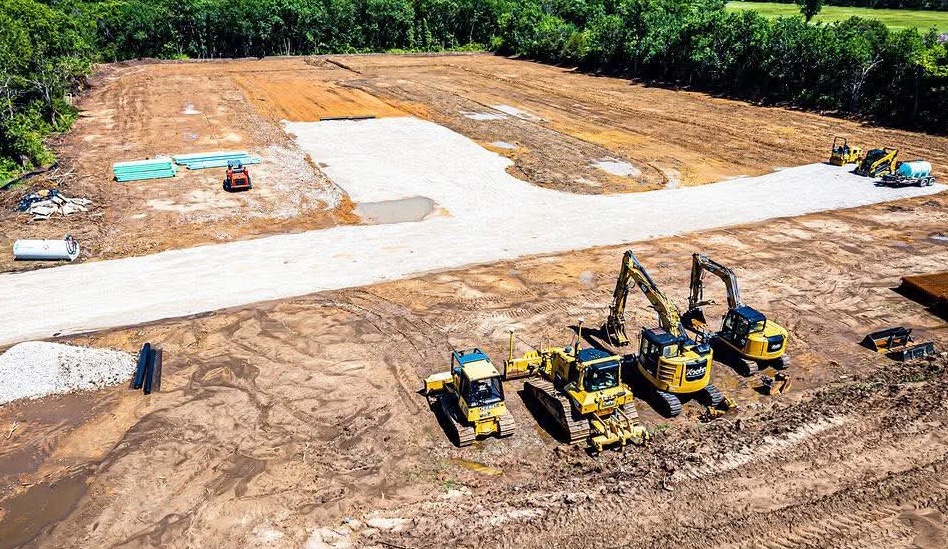
The Reinvestment Housing Incentive District (RHID) allows future increases in property tax revenue from a housing development to reimburse eligible infrastructure costs, including streets, utilities and site preparation. Before a project qualifies, the local community must document its housing shortage through a needs analysis approved by the Kansas Department of Commerce.
By reimbursing infrastructure costs over time, RHID makes projects financially feasible and allows developers to offer homes at prices local markets can support.
“RHID provides the vehicle for these projects to be realized,” Vogel says. “Without it, they either wouldn’t happen at all or would be significantly smaller in scale.”
Another key incentive is the Kansas Housing Investor Tax Credit (KHITC), which provides about $13 million annually in state tax credits for housing developments in underserved markets. Developers compete for the credits, which can offset their own state tax liability or be sold to investors to generate project equity. The program is administered by the Kansas Housing Resources Corporation, the state’s housing agency responsible for overseeing housing programs and allocating these resources.
The credits typically sell for $0.91 to $0.96 and provide roughly $30,000 to $35,000 per home, depending on county population. For many rural projects, that equity closes the gap between development costs and what the local housing market can support.
The Moderate Income Housing (MIH) program provides direct state grants to qualifying developments. Awarded through local municipalities, the grants reduce development costs without requiring repayment. Funding has ranged from $8 million to $15 million annually in recent years.
Used together, RHID, KHITC and MIH create a financing package that helps cover infrastructure costs, generate equity and fill remaining funding gaps. The result is housing that is both financially feasible for developers and more affordable for buyers.
On-The-Ground Experience
Advanced Systems Homes (ASH), which manufactures and turnkey-builds modular homes throughout southern and central Kansas, has successfully used these programs as both a builder and developer.
Lubbering believed that, given the required timelines and ASH’s ability to control its processes through building-system construction, these state programs were especially applicable to the company. He also believes that supporting his local community, combined with the incentives, could expand housing opportunities and help slow population decline in his rural community of Chanute.
His first project involved the 35-lot Osa Martin subdivision in Chanute. After purchasing the remaining 17 lots from the stalled development, which began in 2003, he developed floor plans and built homes on 14 of those lots using MIH grant funding and KHITC reimbursement funds. Six homes were pre-sold before construction even began. “No homes were speculative,” says Lubbering. Construction of all 14 homes was completed within an 18-month period.
By combining MIH grants with KHITC housing tax credits, ASH returned 98% of the state funding it received to homebuyers by eliminating the traditional 20% down payment. As a result, buyers gained $50,000 in immediate equity while the company maintained its profit margins.
From 2024 through 2025 and continuing today, ASH has also been working with First Step Homes, supplying eight single-family homes for a development in Neodesha, Kansas, and five additional homes in Independence, Kansas. Both projects are utilizing KHITC tax credits to create the funding needed for development.
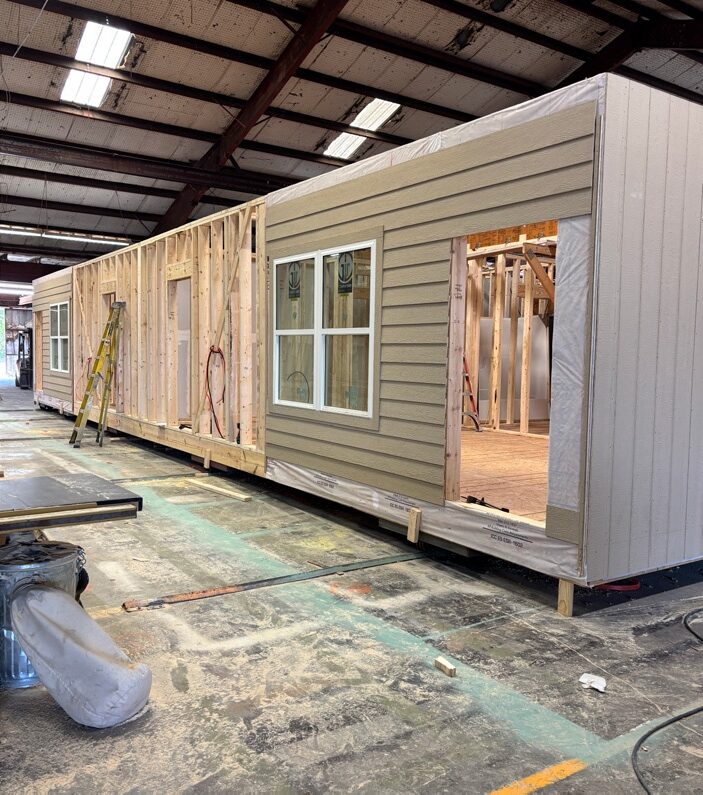
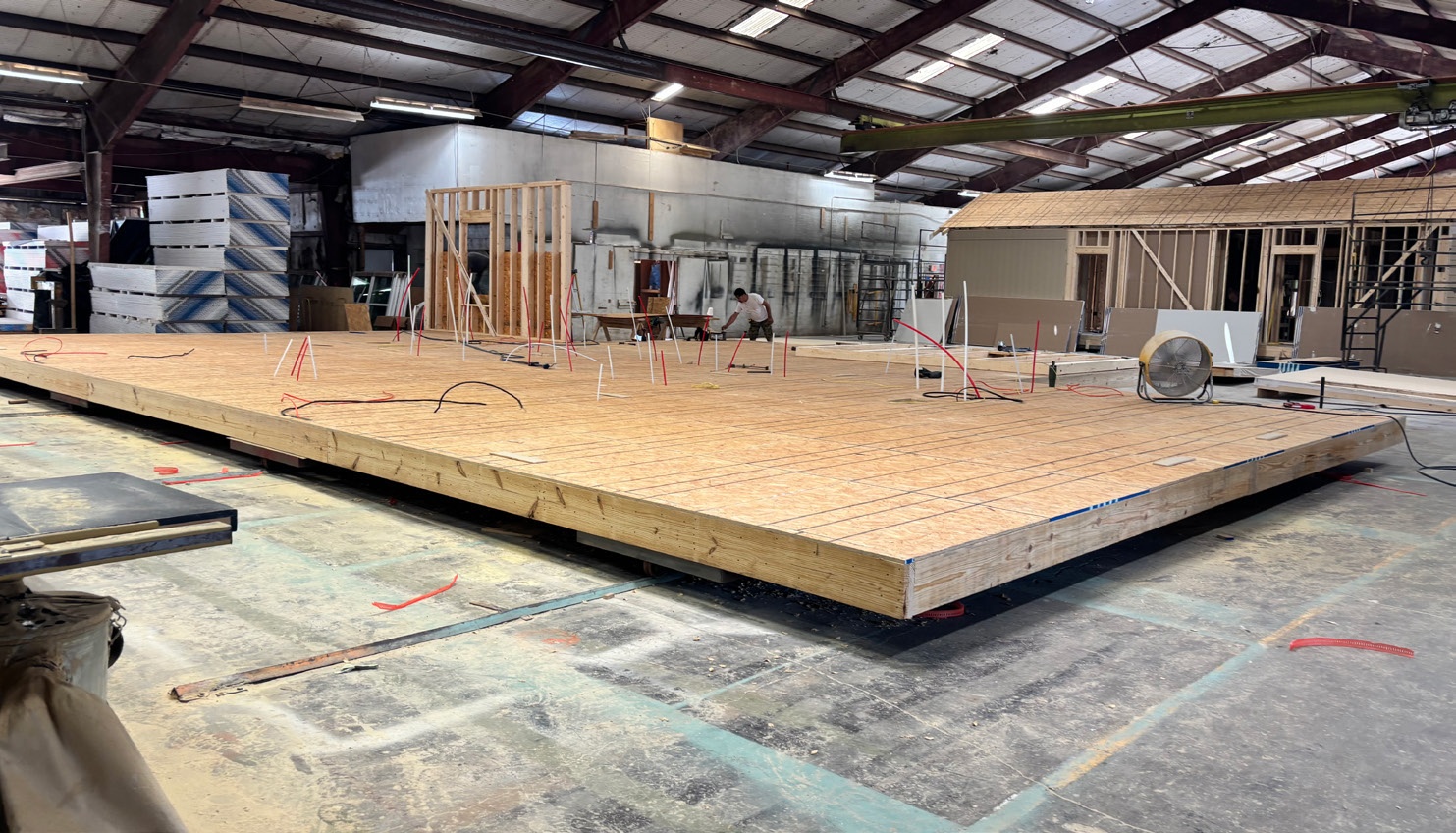
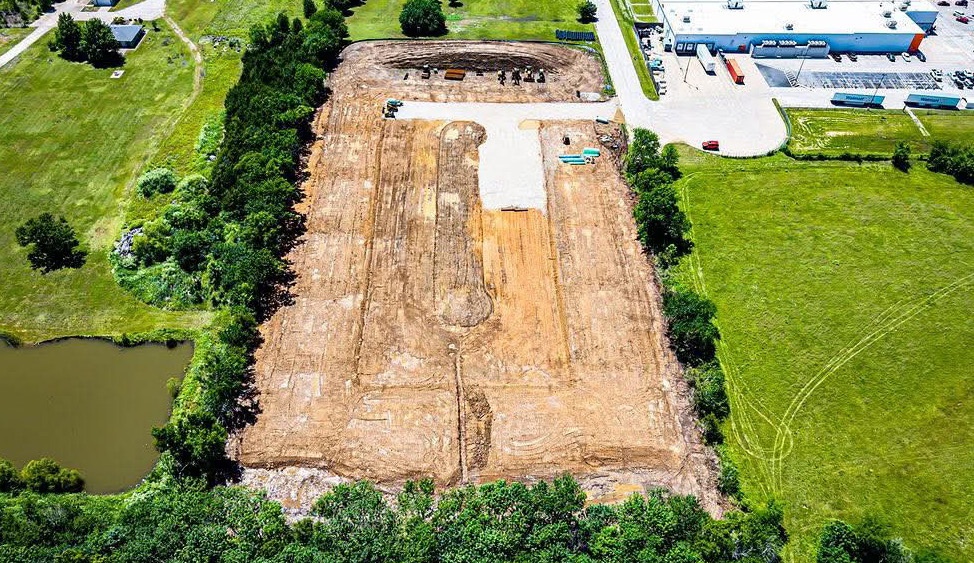
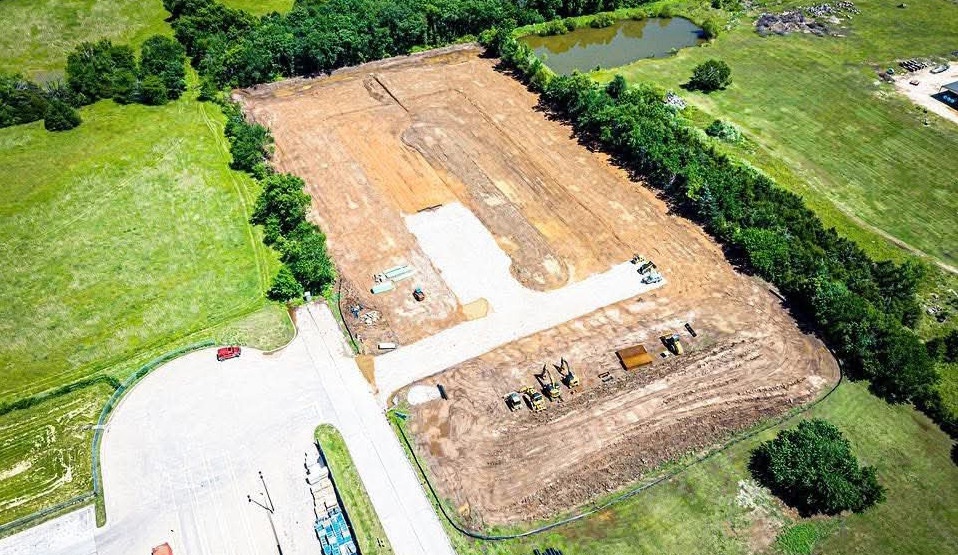
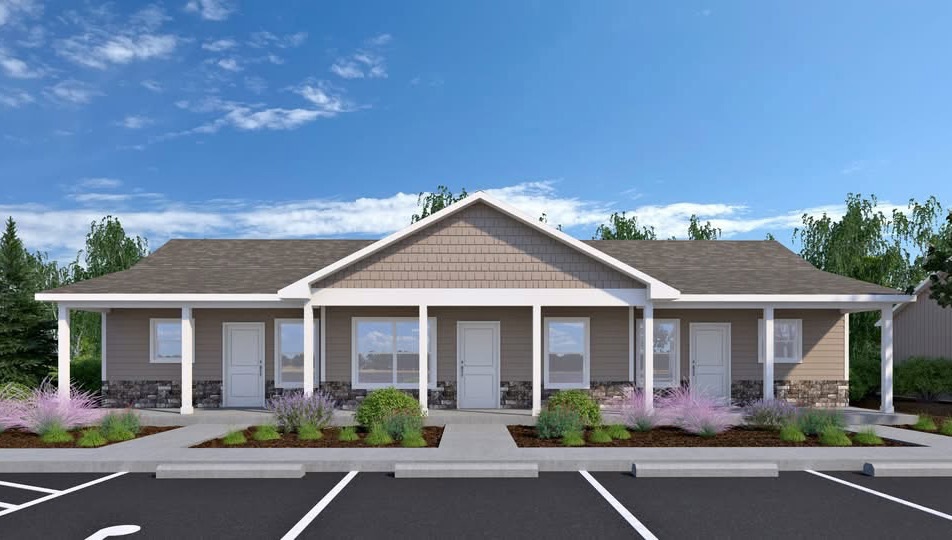
After recognizing a lack of apartments in the Chanute area for people just starting out as well as those entering retirement, Lubbering began planning another project using some of the same programs as those used in the Osa Martin subdivision. After acquiring the land and reaching an 18-year tax-abatement agreement with the municipality, ASH applied for RHID state tax credits for a 13-building, 32-unit complex.
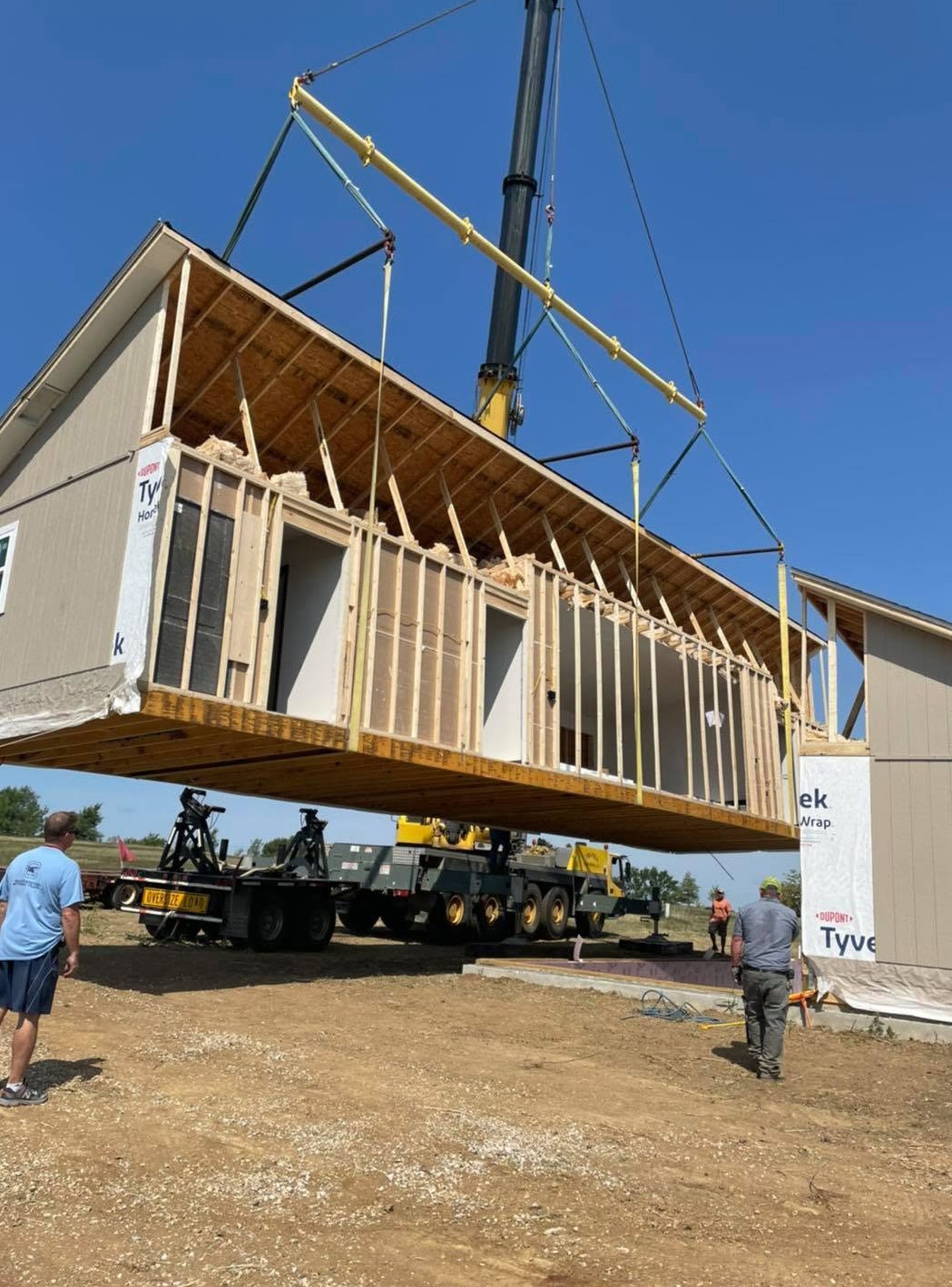
Site engineering has been completed, and foundations and infrastructure are currently being finished. The modular structures are also under construction at ASH’s manufacturing facility. The complex will consist of one- and two-bedroom units, with up to two bathrooms. Barring weather delays, the apartments are expected to be completed in early 2027.
The Importance of Modular
Modular construction has played a key role in shaping how these programs function today, particularly in communities such as ASH’s hometown of Chanute, says Vogel. “You’ve seen real housing growth as a result. In areas where there are limited traditional stick builders, modular construction has been essential to delivering new housing supply.”
Vogel says these programs benefit offsite builders in several important ways. First, they are specifically designed to support development in underserved markets — the same markets where modular and other offsite builders are often most active because of land availability. The alignment between where these programs are deployed and where offsite construction is most effective is a key advantage.
With a background in both banking and real estate, former Kansas State Senator Rob Olson played a major role in writing each of these bills. He characterizes himself as an “incentive and investment guy.” Having grown up in a small Kansas town, he says he understands the plight of rural communities and how population loss damages small towns and municipalities.
“People leaving small communities increases costs in small towns. New housing starts create increased property taxes that pay for new schools and help communities grow. Rural communities need people in the towns or those communities will die,” says Olson.
Olson says both municipalities and local hometown bankers in Kansas supported the legislation, which he describes as a “toolbox of tools for them to pick and choose what is right for them.”
The current RHID, KHITC and MIH grant programs have roots in federal low-income housing programs and other state housing initiatives. Many also began as incentives for commercial rather than residential development. Using those programs as templates, Olson rewrote them with rural communities in mind so that communities throughout Kansas could participate, earmarking specific funds for small- and medium-sized communities with populations under 60,000.
“We wanted to make sure that everyone got a piece,” says Olson.
Vogel says Senator Rob Olson was particularly instrumental in writing and securing passage of the legislation. Despite representing one of the larger communities in the state, Olson understood the challenges facing underserved markets and became a strong advocate in 2020.
That legislative session resulted in meaningful progress, including increased funding for the MIH program, improvements to the RHID program and the creation of the KHITC.
Projects move forward based on feasibility rather than relying solely on local government initiation. As a result, these programs have become more effective tools for delivering housing in underserved markets.
Units In Progress
Deanne Engstrom, Director of Housing Development for the State of Kansas says that projects awarded in 2025 totaled $6.2 million in MIH and $7.6 million in KHITC funding with 425 units created. These projects are generating over $95 million in total development. The projects range in scope from new construction to conversion and significant rehabilitation. The average cost per unit is over $236,000.
Martha Neu Smith, Executive Director of the Kansas Manufactured Housing Association (KMHA), which represents both the manufactured and modular housing industries, worked with former Senator Rob Olson and Ross Vogel on the legislation to ensure that offsite housing placed on permanent foundations would qualify for these programs.
“That was important to us because we wanted offsite construction to be recognized as a legitimate construction method within these housing programs,” says Smith.
She says homes constructed in a controlled environment offer construction efficiencies and can bring housing into communities where skilled labor and contractors can be difficult to find.
“If we’re serious about solving the housing shortage, particularly in rural communities, we need to use every viable construction method available to us,” she says.
Asked what the offsite building industry can do to become more involved in these programs, Smith says builders and manufacturers need to be at the table early. They need to understand what programs are available, work with local communities and housing authorities and help educate policymakers about what benefits offsite construction can bring.
“We also need to make sure that when new housing legislation is being developed, the offsite industry is involved from the beginning,” Smith concludes.
Reed Dillon is a content brand specialist, marketing consultant and freelance writer that focuses on offsite and new construction. He is the owner of Creative Brand Content in Moneta, Virginia. Contact: [email protected]