


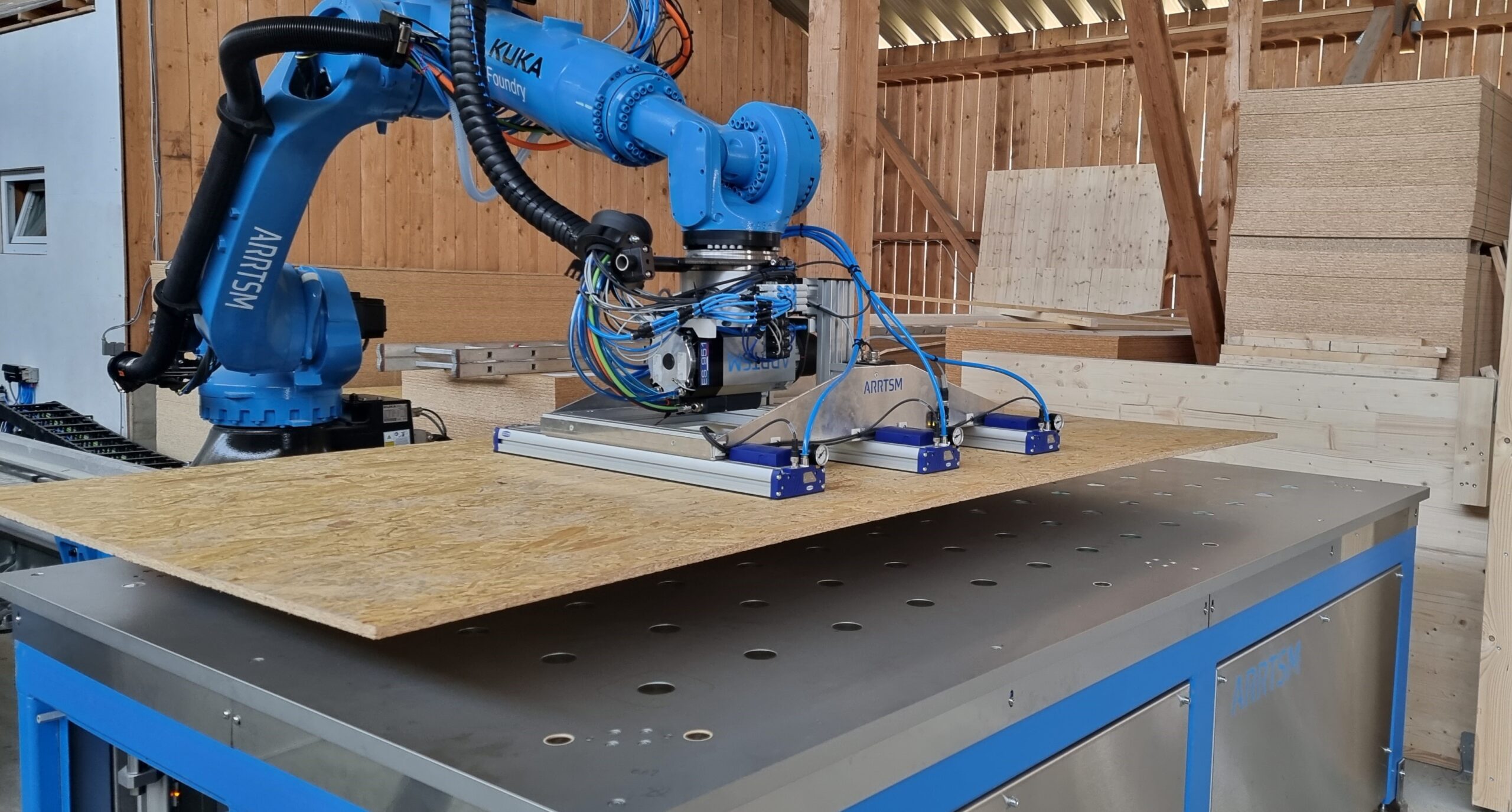
A conversation with Yudhistir Gauli on how to redefine modular manufacturing through AI-driven automation.
Yudhistir (“Yudhi”) Gauli has spent more than a decade designing, building and deploying robotic systems across various industries, from metal fabrication to modular housing. Through his companies FRAMEBOTIX (framebotix.com) and ARRTSM (arrtsm.com), he’s pioneering Aidriven automation in modular and panelized construction, applying lessons learned in Europe and Asia to offsite manufacturers in the US and beyond.
A veteran of the robotics industry who started experimenting with AI long before it became mainstream, Gauli’s approach to automation is rooted in purpose. His goal isn’t just to make construction faster — it’s to make it scalable, safer for workers and more sustainable for future generations.

He spoke with Offsite Builder about his experiences developing robotics for housing factories around the world, the challenges facing automation in North America and why the homes of tomorrow will depend upon smarter collaboration between humans and machines.
Q: What are offsite manufacturers in Europe doing with robotics and AI that the US can learn from?
A: Europe has been a leader in adopting automation, especially in countries like Germany where both steel and timber systems are highly advanced. We’ve been supporting both sides — robotic welding and steel assembly lines on one side, and complex joinery systems for wood to make wall panels and modules on the other.
In Europe, manufacturers think long-term. They aim to build durable homes that last 80, or even 100, years. That changes everything about how you approach automation.
The US industry, by comparison, is simpler and less automated, but that also presents an opportunity to advance quickly. I want to bring the engineering mindset from Europe to help North American builders scale their production efficiently while improving quality and longevity.
Q: How did you become involved in robotics and AI for construction?
A: I started developing AI-driven robots around 2010. At that time, machines were complex to program, and teaching them tasks was a slow and frustrating process. So, I started engineering my own systems using NVIDIA chips and computers that could “learn” patterns from data. This was long before most people even used the term AI.
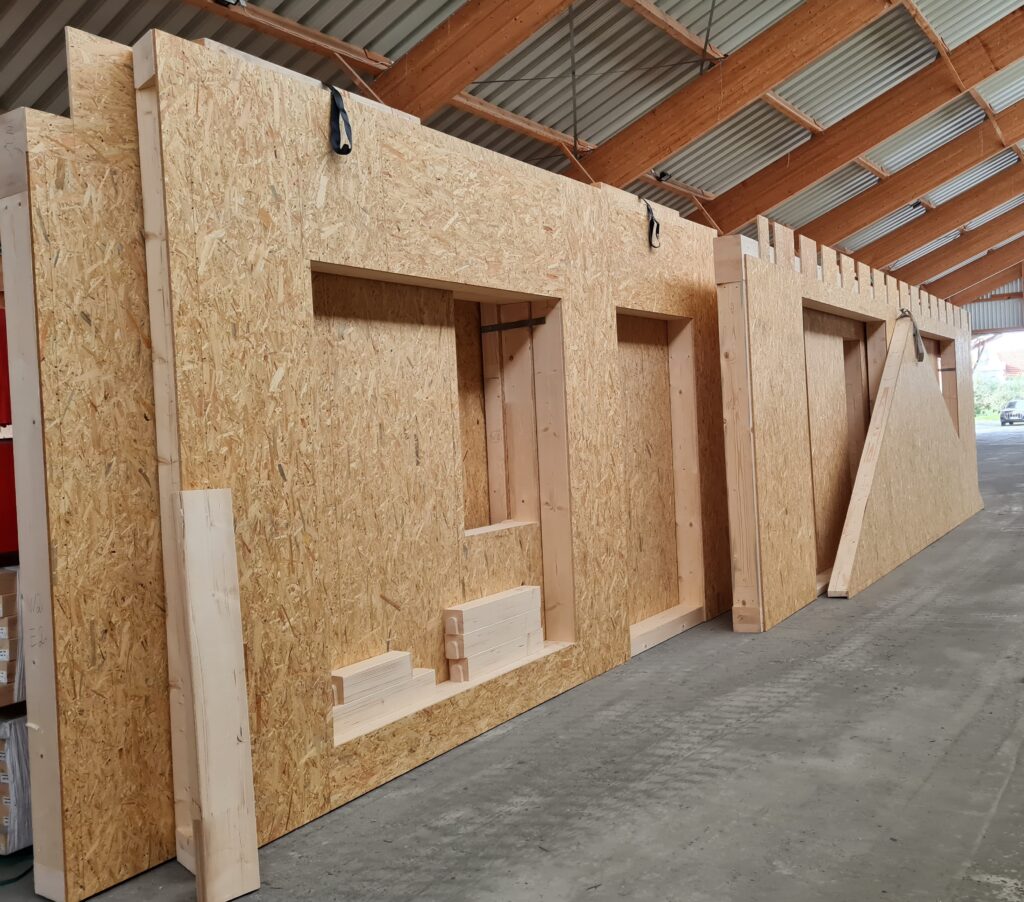
We built robots not only for housing, but also for metal, plastics and stone manufacturing. My philosophy was simple: let’s solve real customer problems, not just chase making money. Over time, that approach evolved into building automation for panelized and volumetric modular factories — integrating robotics and AI to achieve precision that humans alone can’t replicate.
Q: What’s your view of how robotics and AI are currently being used in modular and panelized construction?
A: In the US, there’s enthusiasm but not always a clear direction. I see many startups trying to replicate traditional homebuilding methods with robots, rather than rethinking the process from the ground up. That limits progress.
Also, I believe the future of housing lies in steel rather than wood construction. Steel is stronger, fire-resistant and better able to withstand climate-related disasters, such as wildfires and tornadoes. If you look at the severe weather in places like California or Florida, it’s clear that durability must be part of the equation. Homes should last at least as long as the people who live in them.
Q: You’ve worked in Japan and China as well as in Europe. What differences do you see in how those regions approach building and automation?
A: Japan’s culture emphasizes quality and longevity. When I studied housing there, I noticed that homes were built to last. They were beautifully crafted, with evident respect for the people who would live in them. In contrast, the North American mindset is often focused on speed and turnover — build, sell and move on. That mentality makes it hard to prioritize durability.
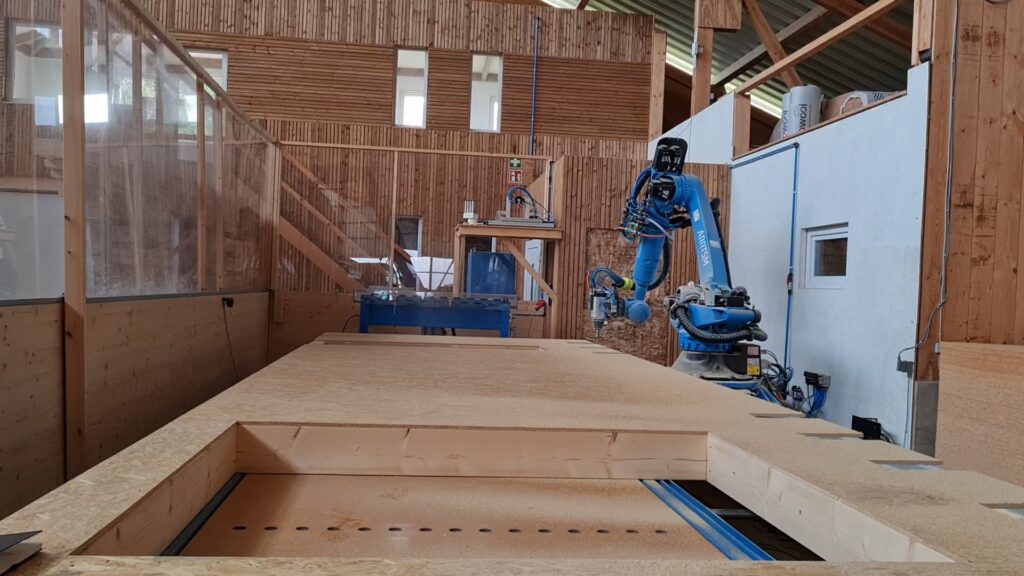
China, on the other hand, has mastered large-scale modular production. Their factories are incredibly efficient, producing complete units for high-rise modular buildings. But in the US, there’s much more land and a preference for individualized homes. That means automation here must be more flexible and capable of producing customized houses at scale.
Q: Which tasks do robots perform best in modular factories today?
A: The basics, like cutting, fastening, material handling and inspection, are well established. But we’ve gone far beyond that. Our systems now include autonomous mobile robots (AMRs) that navigate factories and transport loads of up to 2000 pounds — similar to self-driving vehicles. We also handle complex joinery, panel assembly and finishing operations. We’re now on our eighth generation of robotic systems, moving toward the ninth.
Over time, the biggest takeaway has been that automation isn’t about relacing humans. It’s about enhancing them, making their work safer, more precise and more creative.
Q: Can you share an example of where automation has made a measurable difference?
A: In modular construction, our robotic systems can be 12 times faster than human labor, with far fewer errors. That’s why we no longer sell robots — we use them ourselves to manufacture for builders. We have a plant in Avon, Ohio and will be expanding to California, Colorado and other places. We can reduce production costs by 30% to 50% percent while improving quality and delivery times. It’s what the modular industry has been waiting for.
Q: What are the main benefits of incorporating robotics and AI into construction, beyond speed and cost?
A: The human benefits matter most to me. In traditional factories, workers often spend years in noisy, dusty and hazardous environments that can damage their joints and hearing. Robots take on those repetitive, harmful tasks and free people to focus on higher-value work.
Automation doesn’t destroy jobs, it shifts them. As we scale to meet the global housing shortage, where millions of homes are needed worldwide, there will be more work for humans, not less. The jobs will just evolve toward managing systems, logistics and quality control.
Q: What are the main challenges or misconceptions builders should understand before pursuing automation?
A: Automation is complex and costly. I’ve seen many companies fail because they tried to automate without the right expertise. A single robot might cost between $20,000 and $120,000, depending on its size and payload, and that’s just the beginning. The engineering, software integration and ongoing maintenance often cost far more than the machine itself.
The biggest misconception is that automation is plug-and-play. It’s not. Without experienced partners, builders risk burning through cash and losing time. Automation should be viewed as a strategic partnership, not a quick purchase.
Q: What advice would you give to modular builders exploring robotics and AI?
A: Start by understanding your numbers. If you’re producing only 200 homes a year, automation won’t make sense financially. Once you reach 700 to 1000 homes annually, the economics start to work.
For smaller players, I recommend a shared factory model, like regional manufacturing hubs that multiple builders can use collaboratively. Think of it like renting a car — you don’t need to own the factory to benefit from it. This model spreads risk, keeps production lines busy and speeds up industry adoption.
Q: You’ve described automation as a partnership between humans and machines. What do you mean by that?
A: We shouldn’t aim for total automation. A semi-autonomous model, where robots handle tasks that are dangerous or repetitive and humans manage tasks that require creativity and quality, is more practical and sustainable. It’s a symbiosis, not a competition. If we remove people entirely, who will buy the products that the robots make? The future should be built on cooperation between technology and humanity, which means building factories that are high-tech but still human-centered.
Jim Mahannah is a freelance B2B technology writer specializing in construction, energy, water/ wastewater treatment, and cleantech. He is an engineer, and his work experience includes construction project estimating and management in addition to founding and operating a structural components fabrication company supplying residential and commercial building projects.