

A look at some of the building systems on display at HUD’s Innovative Housing Showcase.
Offsite construction was on full display in September at the 2025 Innovative Housing Showcase on the National Mall in Washington, D. C.
This year’s theme, “The American Home is the American Dream,” highlighted the dream of homeownership, the future of housing innovation and history-defining events in housing.
During a private media tour with Secretary Scott Turner, I asked him what the United States Department of Housing and Urban Development (HUD) will be doing over the next few years to help solve the nation’s housing affordability challenges.
“The way you [bring the housing supply up] is to bring the cost down,” says Turner. “And the way you bring the cost down is to build public-private partnerships and to take down burdensome regulations. There’s a lot of work to do, but those public-private partnerships are vital. The federal government, HUD, is a great convener, but the key question now is how do we unleash [innovators] to go do the kinds of things that we’re seeing here today?”
Discussions on innovation adoption continued during one of the Industry Education Panels where HUD Deputy Secretary Andrew Hughes asked panelists for their thoughts on the biggest barriers keeping housing innovation from scaling faster.
Because of the business risk in scaling, Brad DeHays, CEO of Connect Housing Blocks (a Columbus, Ohio manufacturer of steel-framed modular apartment buildings), believes there should be more investment into [housing] innovation.
“I think HUD can assist with innovative construction and scaling,” says DeHays. “We need money for innovation. Assistance for innovation using different construction methods will create a permanent movement that we’ll be able to sustain.”
Jess Lohse, Executive Director of the Structural Building Components Association (SBCA), would like to see incentives for builders to try new building methods.
“[Traditional builders] have 10 to 20 different subs that they’re dealing with on their projects,” says Lohse. “That’s a lot of moving parts to try to have any sort of disruption.” He notes that builders place a high priority on minimizing risk, which means that incentives are needed to get them to take a chance on different products or processes. “We need [to help them] adopt processes and products like those we’re seeing here on the National Mall.”
And while the overall tone of the event was hopeful, the next few years (and beyond) will determine how successful HUD is in pushing attainable housing initiatives forward.
Here’s a look at some of the companies I visited during the event and what they’re working on.
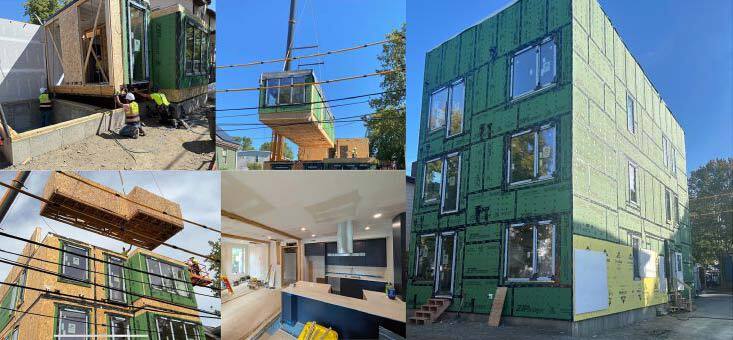
Net Zero With Microfactories
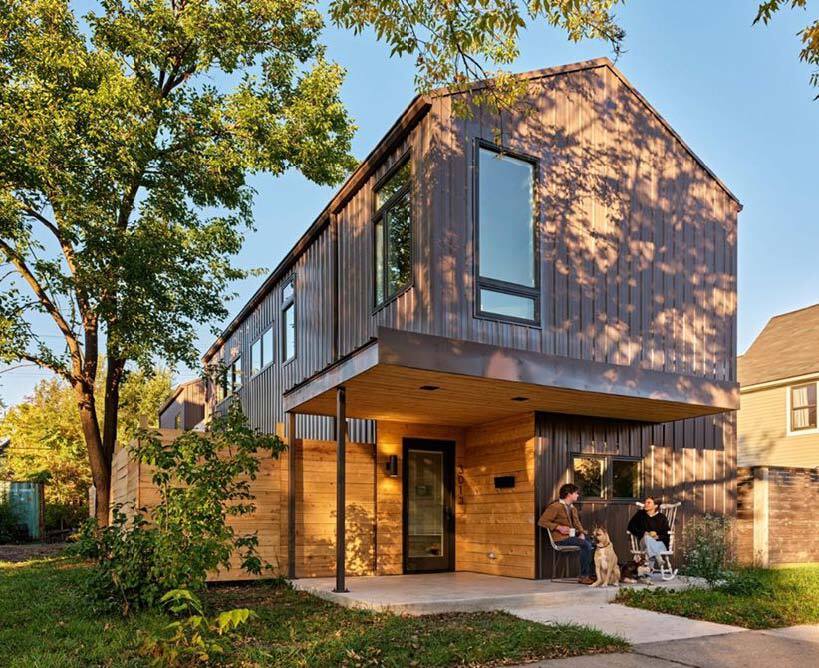
Reframe Systems, a housing technology company based in Andover, Mass., is focused on resilient housing and on building Net-Zero energy ready homes. Its robotic microfactories can be deployed in 100 days or less for around $1 million.
Reframe offers multiplex, duplex and single-family home options built to International Residential and International Building Codes (IRC/IBC codes). It claims to be able to build for up to 35% less cost than traditional stick-built homes in infill markets.
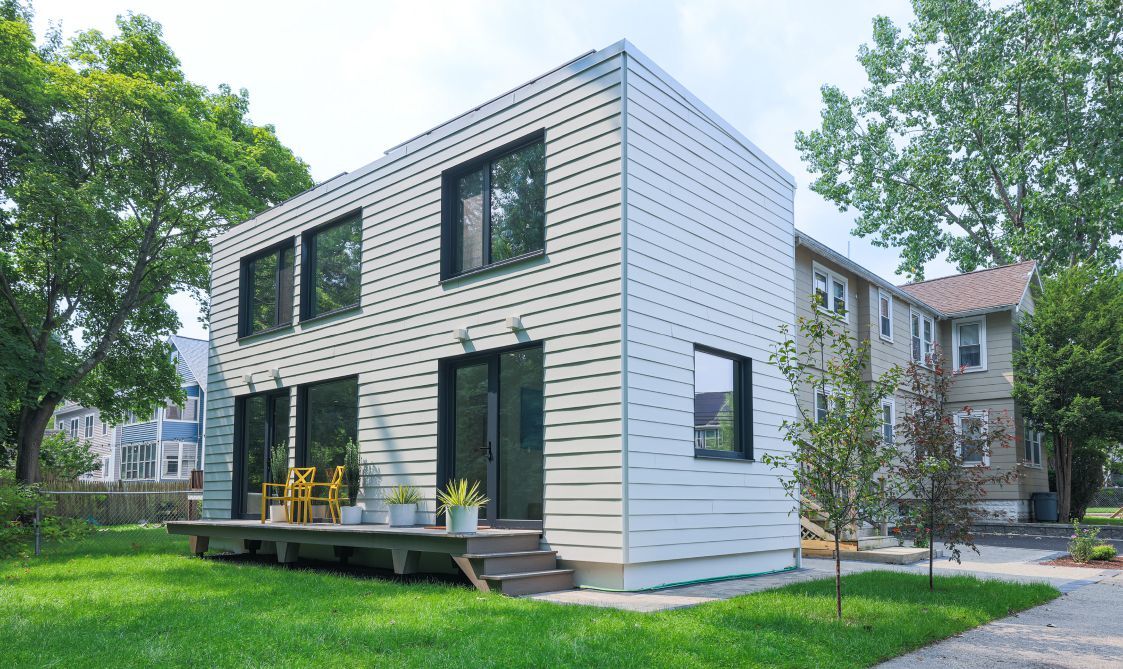
As of October 2025, Reframe has completed one 3-unit multifamily building in the New England area, as well as a 900 sq. ft. Energypositive ADU in Arlington, Mass. It’s in the process of completing a three-story project in Somerville, Mass., as well as a 12-unit singlefamily project in Devens, Mass. In 2026, they will begin shipping units to Los Angeles, Calif. To help with wildfire rebuilding and to drive demand, and they plan to eventually open a microfactory there.
Reframe is focused on serving small and medium-scale developers building missing-middle housing in North America and currently serves the New England and Southern California areas. Co- Founder and CEO, Vikas Enti, says over the next three years the company aims to launch microfactories in five new markets across the continent and build at least 500 housing units. For more information visit www.reframe.systems.
Showcasing the Advantages of Components
Since 1983, the Structural Building Components Association has represented and served manufacturers of structural building components across North America. With the help of many partners, its “Big Green House,” a two-story duplex, was assembled on the National Mall. It showcases the capabilities of structural building components including roof trusses, floor trusses and wall panels.
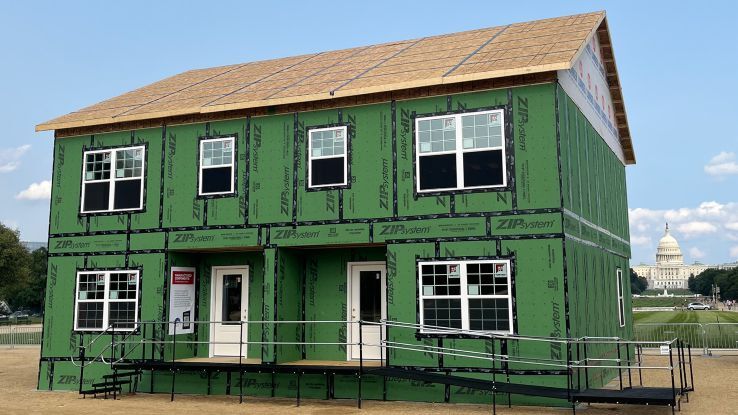
Photo: SBCA.

The structure was assembled by 84 Lumber’s installation team in less than 12 hours.
Educational signage displayed throughout the duplex told the story of component construction. HUD Secretary Scott Turner made a special visit to the “Big Green House” where he was able to see components as a proven and ready solution for meeting the nation’s housing needs.
Over 2000 people toured the home during the event. “What struck us was the genuine curiosity,” says SBCA Executive Director Jess Lohse. “People wanted to know how scalable components are, how quickly they can be built and how durable they are compared to [other building methods]. That kind of direct engagement is invaluable because it helps dispel misconceptions and shows lawmakers and the public alike that componentized framing is not only innovative, but also a proven, permanent and ready-to-go, scalable housing solution.”
The duplex was disassembled in less than six hours and transported to Staunton, Virginia, where Habitat for Humanity will rebuild it for two families in need of affordable housing. For more informationwww.Sbcacomponents.com.
Prefabricated Steel Apartments
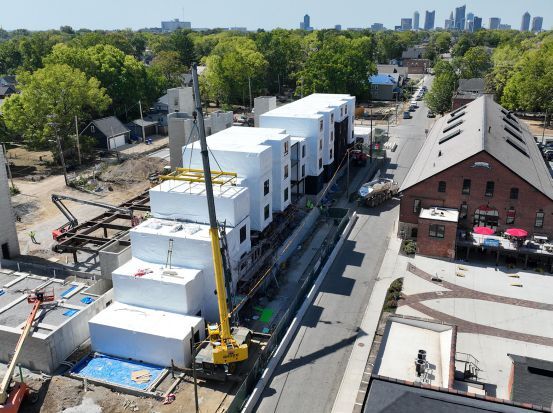
Connect Housing Blocks is a housing manufacturer and subsidiary of Connect Real Estate, based in Columbus, Ohio.
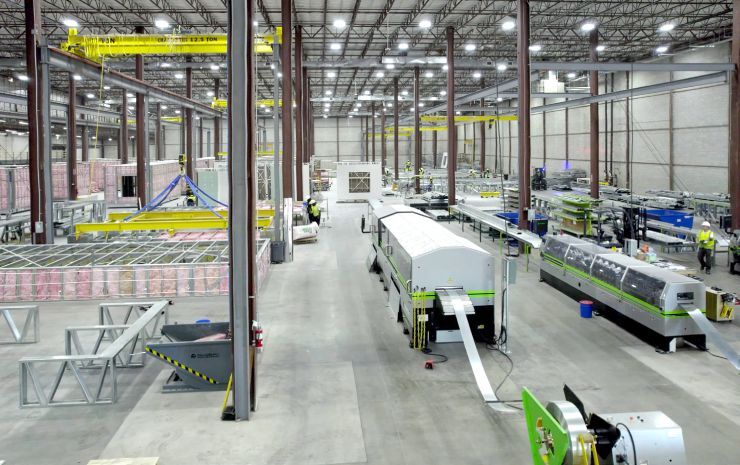
Founder and President, Brad DeHays says they spent three years on developing products and creating their manufacturing line. The goal of the line is to accommodate floor plans that can work for market-rate apartments and can be easily modified to work for tax credit affordable housing.
“We started with floor plans that would fit [tax credit] requirements,” says DeHays. “And then we began adding items that would appeal to market-rate buyers. From there, we felt like we had a good, versatile floor plan that we wouldn’t have to alter significantly.” By the end of 2025 they have produced over 550 modules representing three projects — all within 50 miles of their 630,000 sq. ft. Manufacturing facility.
DeHays has a background in the trades, and the company is focused on creating a culture that supports clear workforce development pathways. New employees receive a $2 per hour wage increase after their first 90 days, a period that includes a strict attendance policy. Once employees have made it past the initial 90 days, they are able to advance, earning additional raises and moving up the ladder towards one of the salaried management positions.
As of October 2025, Connect was hiring six to eight people per week. For more information www.connecthousingblocks.com.
Home Printing With Composites
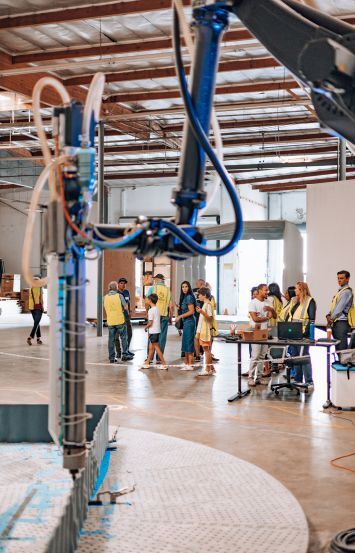
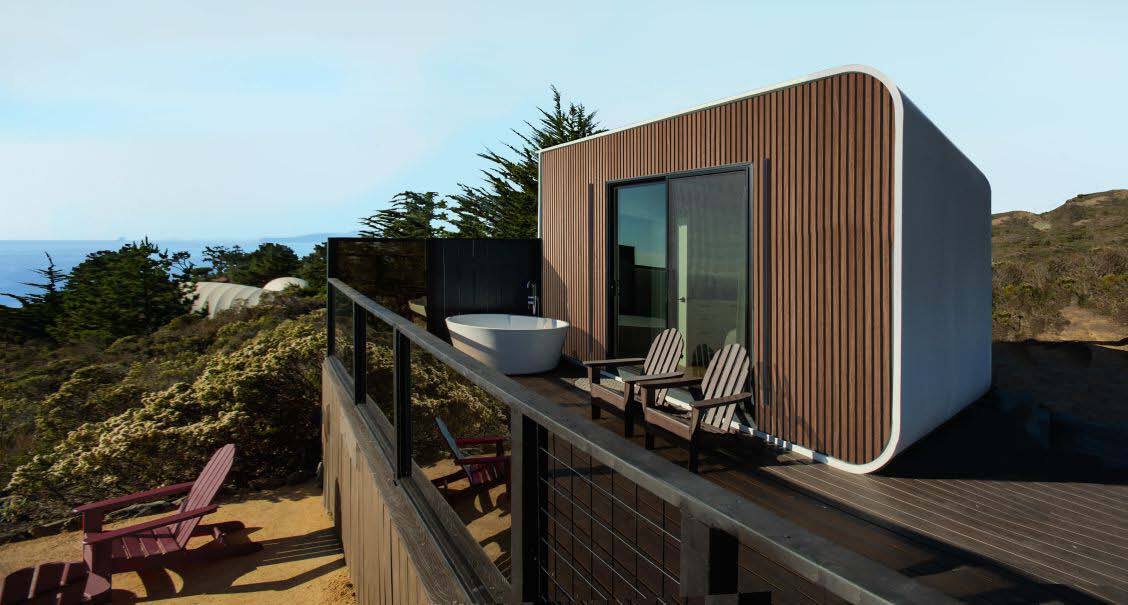
Gene Eidelman co-founded Azure Printed Homes after living through the 2018 Woolsey Wildfires in Malibu, California. Based in Los Angeles, Azure (a 3D-printed housing manufacturer) has installed units in California, Colorado, Texas, Arkansas, Georgia and South Carolina.
Azurefs products include Accessory Dwelling Units (ADUs), tiny homes and interim housing. They are currently working on numerous wildfire rebuilds in Southern California.
Rather than printing with concrete, Azure uses a composite material made from recycled polymers and fiberglass. Its units also incorporate light-gauge steel frames. Each is shipped more than 95% complete . Including MEP systems and finishes . And complies with IRC/IBC codes, state modular/ factory.built programs (e.g. CA HCD), energy codes (IECC/Title 24) , Wildland.Urban Interface requirements (CA Chapter 7A, where applicable) and ANSI A119.5 standards for Park Model/TOW (towable) products.
Over the next three to five years, Azure will be looking to scale their manufacturing operations in states facing affordable housing shortages and offering low-interest financing or grant funding to establish new factories. They will also begin producing units for multistory buildings in 2026. For more information visit www.Azureprintedhomes.com.
Energy Saving Panels
Guardian Structural Technologies has built over 1400 homes worldwide since 1983. Based in Cleveland, Ohio, the company is focused on providing long-term sustainability to customers with innovative building envelope systems.
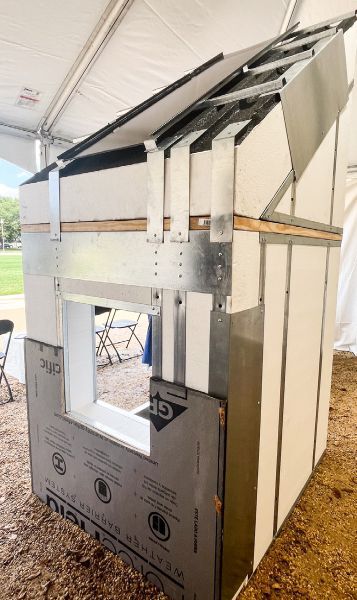
Their SHIELD Panel system is a high-performance engineered thermal envelope panel that consists of a cold-formed steel structure embedded in energy efficient thermal insulative Expanded Polystyrene (EPS) foam.
Guardian is currently developing a platform that will allow homeowners to obtain a mortgage for a more energy efficient home, or a better income-based ratio. They’re collaborating in this effort with the city of Cleveland, as well as with East Chicago, Ill., Memphis, Tenn. And the state of Indiana.
DJ Keehan, the company’s Marketing Director claims the system can save homeowners 75% or more on their heating and cooling costs.
Over the next few years, they hope to implement more automated systems into their manufacturing process and intend to continue supporting the affordable housing sector with energy efficient options. For more information visit www.guardianstructural.com.
Heather Wallace is a freelance writer and industry engagement specialist with over two decades of experience in various areas of the building industry. She has covered topics on construction, technology, workforce development, green building, and sustainable living.