
The Human Side of Lean in Offsite Construction
• Culture differentiates modular factories: engaged crews solve problems immediately; disengaged ones repeat them indefinitely.
• Operators adopt Lean when their ideas matter, improvements move fast and work becomes easier and more meaningful.
• Leadership ignites engagement by listening, praising effort and keeping feedback loops alive.
Engagement is the fuel that powers every great offsite factory. Machines, takt boards, SOPs and dashboards matter, but none of them come alive without people who care enough to make the work better.
Walk into any modular plant, and you can quickly spot whether or not workers are engaged —in fact, you can feel it within seconds. In one factory, a line lead quietly fixes the same recurring problem every morning because “that’s how we’ve always done it,” and no one bothers to ask why it keeps happening. In another factory, a crew notices the same issue, huddles for thirty seconds and eliminates the root cause before the next module rolls in.
The difference between these plants isn’t budget, equipment, or the org chart — it’s culture, lived out loud on the line every day.
If a Lean effort fails, it’s not because the tools don’t work. It’s because people never bought into the journey. Offsite construction depends on rhythm, coordination and flow, and that makes frontline engagement the lever that determines whether a Lean effort thrives or fizzles. When operators participate, Lean sticks. When they don’t, it never gets off the ground.
The Human Element Matters
Most modular factories start Lean backward. Leaders roll out new processes without involving the people who do the work. Those frontline employees quickly label Lean as another “corporate initiative,” and improvement dies before it starts.
The truth is that operators know the manufacturing process more intimately than the engineers who designed it. They know the shortcuts, the workarounds, the dead zones in material flow and the ergonomic pain points no spreadsheet can capture. When a change makes their work easier, they support it. When it adds friction, they quietly ignore it. When it feels forced on them, they resist it.
True Lean takes root only when people feel ownership. That ownership grows when leaders remove friction instead of adding it, and when operators see their ideas acted on quickly, respectfully and consistently.
The Frontline Engagement Toolbox
The six tools that reliably engage frontline teams are:
- Toolbox talks that spark operator dialogue
2. Idea boards that make improvements visible
3 .Suggestion systems that give workers a voice
4 .Quick-hit kaizen sessions to fix real problems fast
5. Recognition systems that reward contribution
6. Fast feedback loops that close the improvement cycle
Here are short explanations of each.
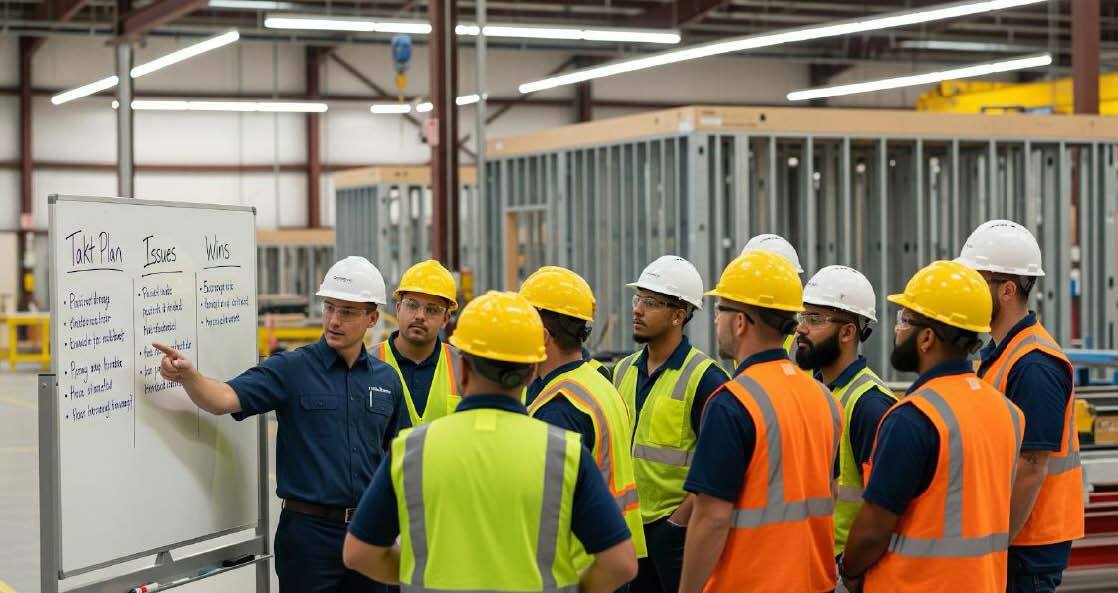
Frontline engagement begins with small, consistent habits. One of the most powerful is the daily Toolbox Talk. These moments shouldn’t feel like lectures or safety sermons — they’re quick check-ins where operators voice concerns, highlight risks and call out small wins. When a supervisor genuinely asks, “What slowed you down yesterday?” and then listens, the entire tone of the shift changes. In high-functioning factories, toolbox talks feel like team huddles: energetic, focused and grounded in reality.
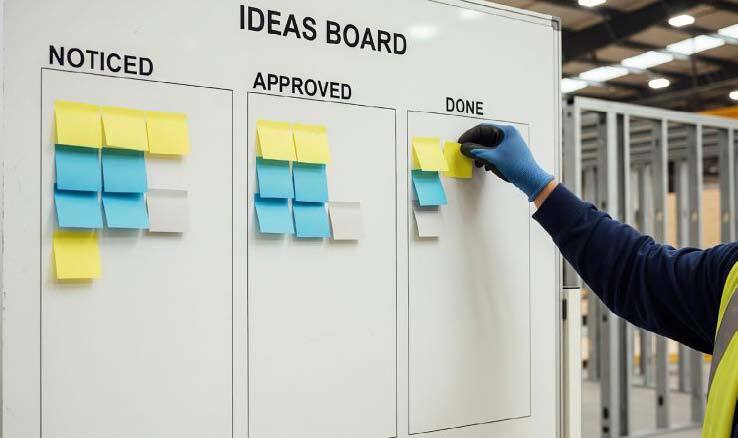
Another useful tool is an Ideas Board where employees can move improvement suggestions from “Noticed” to “Approved” to “Done.” The board becomes a living visual of progress People gather around it between tasks. They point to items they submitted. They watch in real time as their ideas move forward. Even a simple fix — like relocating a tool that everyone constantly hunts for — can shift the entire mood of a team when it’s implemented on the same day.
Suggestion systems also gain traction when the barrier to entry is low. A QR code taped to a workstation, a box for handwritten notes, or a quick conversation during a walk-through all work well. What matters isn’t the format, it’s the speed of the response. Suggestion systems only work when leaders respond quickly, explain decisions clearly and give credit visibly.
Kaizen sessions, meanwhile, can spark energy if they’re short and focused. The best kaizens in modular factories last a day or less and concentrate on hotspots — tool access, layout challenges, material presentation, or recurring frustrations. What makes them effective is not the duration but the involvement: operators codesigning improvements they’ll actually use. When the people who feel the pain help design the solution, adoption is effortless.
Recognition ties the whole effort together. Something as small as a shoutout in a toolbox talk or a handwritten thank-you card from a supervisor can shift attitudes more than any financial reward. People want to feel seen. They want to know their contribution matters. Recognition transforms engagement from obligation into pride.
Fast feedback loops keep improvement alive. When operators get quick, clear responses to their ideas (even when an idea isn’t adopted) trust grows and participation rises. Fast feedback signals that improvement is shared, valued and ongoing.
Mini-Case Study: How Local Ideas Saved 20+ Hours per Week
A modular plant struggling with chronic delays in its wall panel area brought six operators together for a short kaizen. Instead of the managers guessing, the team examined the flow firsthand and quickly uncovered issues no one had documented. Screws were stored nearly 50 ft. Away, adding more than an hour of walking per operator each shift. A tool-change process added several minutes per module. A poorly placed chop saw created a recurring traffic jam.
The operators designed the fixes themselves: a kitting cart that followed the workflow, a standardized arrangement for essential tools and a smarter saw location. Combined, these improvements reclaimed more than 20 hours per week — without spending a dollar on new equipment. As one operator put it, “We didn’t need more people. We just needed the work to make sense.”
The team felt energized because the improvements were theirs. Leadership gained a newfound respect for the insight sitting 20 ft. From their offices.
The 30-Day Improvement Challenge for Modular Lines
Factories that want fast, visible improvement can launch a 30-day challenge that puts ownership directly into the hands of the people doing the work. The challenge is as follows:
Week 1 – See the Work: Observe, listen and document opportunities.
Week 2 – Fix What’s Free: Implement easy wins immediately.
Week 3 – Build Momentum: Launch systems and track progress.
Week 4 – Lock It In: Standardize and assign ongoing ownership.
The first week is all about observation — supervisors and line leads walk the line daily, listening for frustrations, noting bottlenecks and asking operators what slows them down. The second week focuses on small, nocost improvements. Fixing what’s free builds momentum and proves that participation matters.
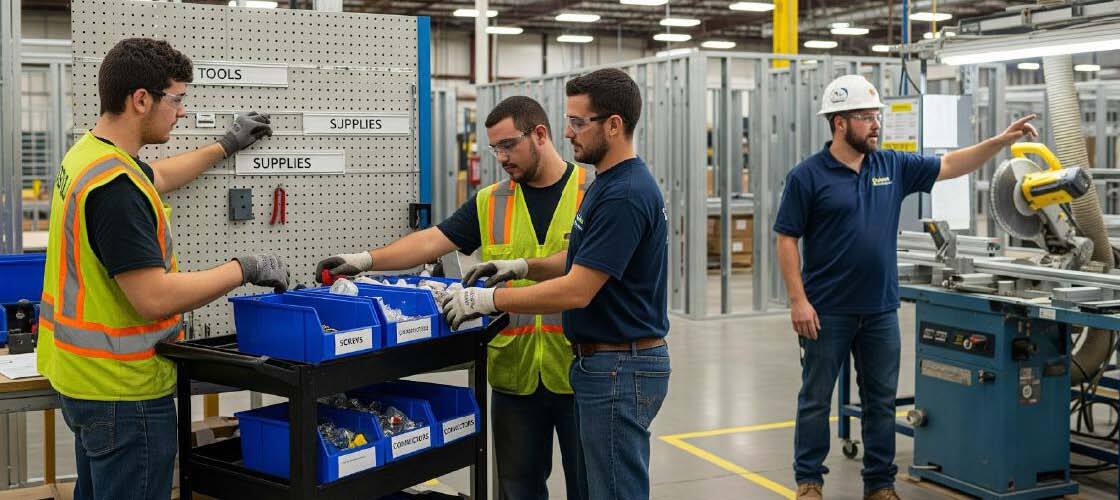
By week three, the shift on the floor becomes noticeable. Operators start pointing out issues unprompted. Line leads stop firefighting and begin anticipating problems. A sense of progress builds, and even small improvements — like a shadow board finally matching reality — create a sense of shared pride. By week four, the challenge turns toward locking in the gains. Standardizing layouts, updating SOPs, labeling tools and assigning Continuous Improvement (CI) champions at each station transform isolated wins into permanent improvements.
The power of this challenge lies in its immediacy, and in the way it shifts the emotional temperature of the line. Operators begin to expect progress — and then participate in creating it. They feel the changes within days, not months. And once they feel improvement, they keep seeking more.
Leadership’s Role in Sustaining Engagement
If frontline engagement is the engine, leadership is the ignition. Operators take improvement seriously only when leaders show up consistently. Daily line walks send a message that improvement matters. Leaders who ask questions — rather than giving directives — create an environment where people feel safe to speak up.
Protecting small pockets of improvement time, even just 15 minutes at the end of a shift, signals that CI is real. Recognition also plays an essential role. Praising effort, not just outcomes, encourages risktaking. Celebrating a failed idea shows that trying matters more than being right. And giving fast responses to suggestions, even if the answer is “not now,” preserves trust.
Conclusion: Engaged People Create Lean Factories
In offsite construction, Lean is more than a system — it’s a social contract. Improvement doesn’t come from binders or software; it comes from operators who feel empowered to make the work better. A factory that builds engagement builds flow. A factory that builds flow builds success.
Lean sticks when people choose it. And people choose it when improvement isn’t something extra — it’s how the work gets easier. And people choose it when it makes their work easier, safer, smoother and more meaningful. Engagement doesn’t just enhance Lean, it unlocks it.
Daniel Small helps offsite manufacturers increase factory throughput and eliminate waste using Lean strategies. As a specialist in Lean for offsite construction, he optimizes offsite production for scalability and efficiency. Contact him at 719-321-1953 [email protected], or visit www.DaVinciConsulting.co.