

Getting more modular homes built in the US requires education, incentives and innovation.
• Builders resist modular because advantages aren’t universal, profit impact varies and traditional stick-building feels safer.
• When they see high-quality modular results firsthand, a mindset shift occurs, enabling gradual adoption.
• Sustained growth depends on builder education, consistent demand, better financing alignment and more competitive offerings.
Readers of this publication likely agree on the benefits of offsite construction. However, there is a lot of debate about what’s holding back the growth of the modular or panelized single-family market.
Of course, there’s not one simple answer.
A quick check of the numbers confirms the market’s stagnation is real. The National Association of Home Builders reported that, in 2024*, just 3% of single-family homes in the United States “were built using modular or panelized/ pre-cut construction methods.”
The share in 2023, according to the NAHB, was also 3%. These paltry numbers mark a decline from the early 2000s and are significantly lower than those in some other parts of the world.
In Sweden, for example, “at least 45% of new homes are built using offsite manufacturing, with prefab dominating at around 80% of construction methods,” according to a report by Mordor Intelligence.
Builder Power
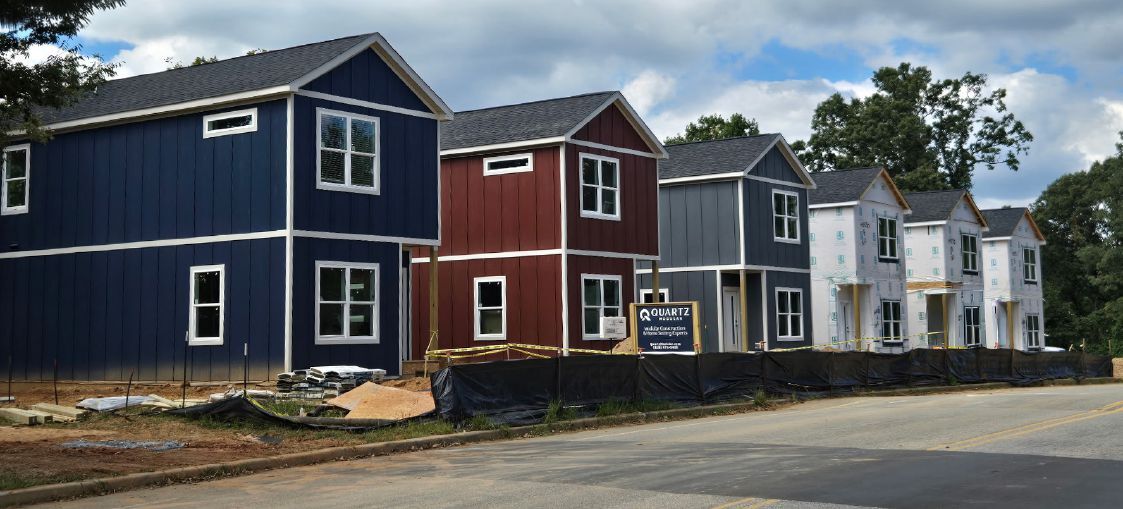
The top home builders — Horton, Lennar, etc.— hold sway in the production home market and generally stick build. “There’s a familiarity bias for stick building,” says Joanna Schwartz, CEO and Founding Partner of Quartz Properties, headquartered in Auburndale, Massachusetts, which self-performs modular and serves as a GC for modular projects.
Ali Salman, Partner and CEO of WorkSpace Modular Structures, a modular building company based in Edmonton, Alberta, Canada, adds, “Builders are adamant about building what they know.”
So, are builders locked in their ways? No, builders are locked into maximizing profit.
“Builders aren’t prioritizing modular construction because they don’t view it as that much more profitable given logistical differences,” says Andrew Xue, COO of Offsight, which operates out of San Francisco, Calif. And provides a software platform for modular and prefabricated construction. “The cost advantage often isn’t there given how they sell and the clientele they serve, and many can earn more by continuing to stick build.”
Schwartz explains that modular isn’t a universal fit, and that it doesn’t automatically lead to lower costs. Correcting the assumption that these advantages apply in all cases is key to showing the industry where modular provides the most impact.
Others involved in the homebuilding process are also holding modular back from growing.
“Most people in the construction ecosystem — general contractors, architects, engineers, designers — didn’t get into the field to disrupt it,” says Brice Leconte, Founder of iUnit, a Leesburg, Virginia real estate development tech start-up that is building sustainable, attainable modular cottages.

Education Is the Key
There’s a severe housing shortage across the United States,especially affordable housing. Paired with the construction industry’s labor shortage, the forecast is bleak.
“We’ve never had such a shortage of labor in the US, and the issue is worsening,” Leconte says. “My conclusion is that the issue will force people to turn to modular when it comes to affordable housing.”
Educating builders about the benefits of modular may be more potent.
“They [builders] know the benefits of modular construction, but no one has forced them into that direction,” Salman says. He maintains that a government mandate could help, yet a private-sector initiative would work better.
“We need a coherent policy to convince builders to adopt modular construction,” Salman says. “If a national coalition of manufacturers approached builders to discuss adapting to modular construction — you could start with the frame — it could convince them they’re not losing their scope or their profit margin.”
Leconte also believes education is the key, but suggests looking at the next generation. “Master’s programs [in design and construction related fields] should require students in the relevant fields to take a course that focuses on offsite construction.” He’s in talks with his alma mater, Johns Hopkins University, about teaching such a course.
Schwartz thinks the education process needs to be organic and is already seeing signs that it’s happening. The big players are focusing on builder education and pushing others to work with modular from an efficiency perspective.
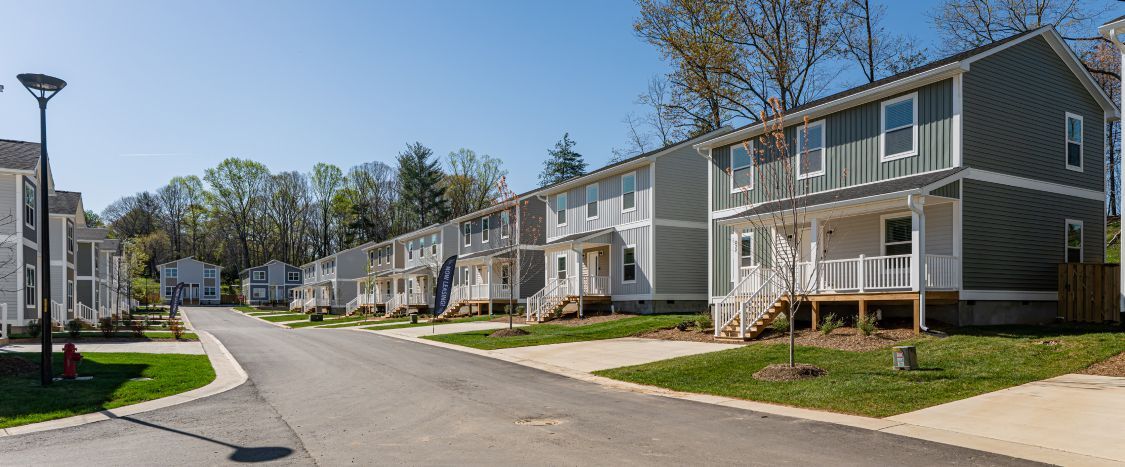
“We were recently involved in a multi-day program with Champion Homes where we showed builders successful developments,” Schwartz recounts. There were approximately 100 builders at the event. “When builders see the quality and consistency of the finished product, there’s a visible mindset shift — they start to recognize what’s possible with modular.”
Perhaps the education process can begin with today’s builders.
“We need to bring a network of builders together [in order to figure out] what would make modular construction a bigger offering for their consumers,” Xue says. “If we can get a network of builders to agree to promote modular homes, the manufacturers can produce at higher volumes, which makes the homes significantly cheaper.”
Pace of Change
So, how quickly can the modular or panelized single-family housing market substantially grow its market share? That depends on what changes are applied, and when.
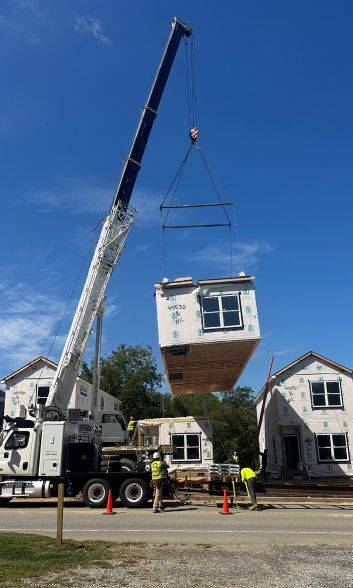
Leconte believes meaningful growth in the modular or panelized single-family housing market could occur within five years if colleges and universities implement the curriculum changes he proposes.
Obviously, the journey for moving the market depends on the level of knowledge a builder has regarding modular at the beginning of the process.
“Helping a builder with no background in modular become comfortable enough to try it doesn’t happen overnight,” Schwartz says. “It’s a gradual process that can take several months — sometimes about a year.”
If some of the bigger players successfully complete higher-profile projects, it could jump-start the market.
Builders should brace themselves and not expect instant success. It takes time to perfect a process and determine the best way to maximize profit. “Builders must be okay with losing money in the short term as an investment to make a large return in the long term,” Xue says.

Builders’ reluctance is not the only obstacle to expanding the modular or panelized single-family market.
“Manufacturing sites currently run on a feast/famine cycle,” Salman says. “If manufacturers could narrow down their offerings, they could compete on price.”
Xue points out that manufacturers don’t want to invest in new machinery unless demand justifies it. “If builders put equity into manufacturing facilities and commit to modular [increase demand], factories would become more efficient and drive greater profits for everyone.”
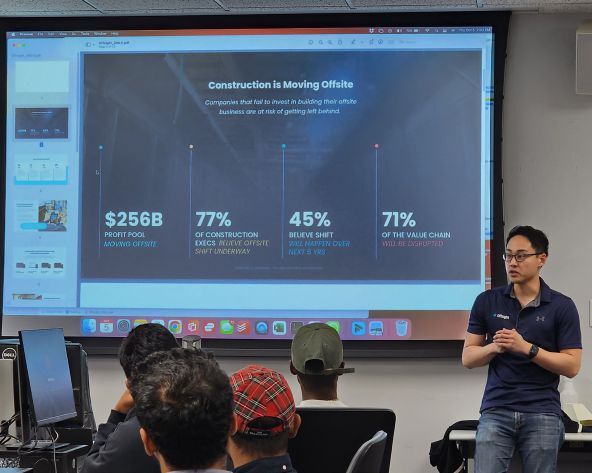

Another challenge, according to Schwartz, is that “lenders are used to ground-up construction lending, and many are not familiar with modular which has different financing needs. Getting lenders more comfortable with the timing needs associated is critical to drive broader adoption.”
As the housing shortage lingers and the labor force shortage persists, something must change. The modular or panelized singlefamily home should be part of the answer.
Larry Bernstein is a freelance writer based in northern New Jersey. He focuses on all things construction. Learn more about him on his LinkedIn profile.
https://wwwnahb.org/ blog/2025/08/the-offsiteconstruction-market-shareflattens-nationally-in-2024