

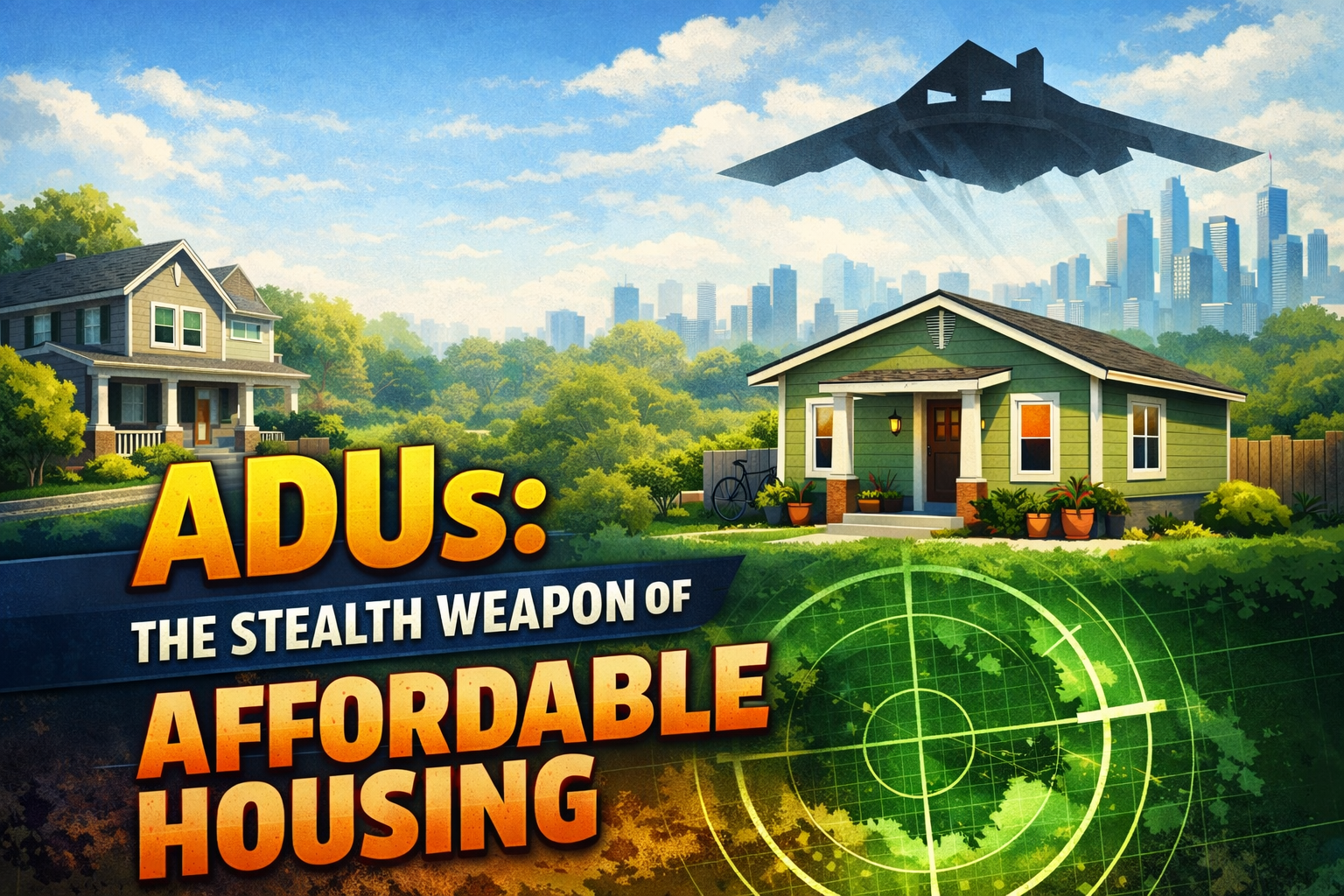
Forget skyscrapers and subdivisions — the real housing revolution might be happening right behind people’s homes.
Accessory Dwelling Units (ADUs) are having their moment, and that’s good news. They’re the quiet heroes of affordable housing. These compact structures — cottages, converted garages and basement apartments — are proof that big changes don’t always need big land.
The genius of ADUs is that they use what’s already there. They’re built on existing land. They make it possible for homeowners to transform underused parts of their property into living spaces that serve families, renters and communities.
California, Oregon, Washington, Vermont and Massachusetts are leading the way. Other jurisdictions are also getting on board. They’re cutting red tape to encourage ADU construction — fast-tracking permits and offering incentives for homeowners to add ADUs for rental income or multigenerational living.
The result? A new wave of small, flexible homes that slip right into existing neighborhoods and solve housing needs one yard at a time. In fact, many offsite manufacturers see ADUs as a real growth market, and are developing products aimed at serving it.
Why do I refer to these small structures as stealth weapons? Because even if 10% of eligible US homeowners built an ADU, we would add millions of new, affordable units to the housing market — without having to build a single new subdivision.
This is the kind of impact that changes communities. It’s housing that doesn’t bulldoze neighborhoods — it enhances them.
And unlike large-scale apartment developments, ADUs don’t trigger neighborhood backlash. They blend in. They fit into the community’s character instead of changing it. They add density without disruption. They let homeowners become part of the housing solution — and often, to profit from it.
For many families, ADUs are more than just an investment — they’re a financial lifeline. For example:
• A retired couple builds an ADU for extra income, which allows them to stay on their property.
• A young family creates one for aging parents.
• A homeowner rents an ADU out to a teacher or nurse who can’t afford nearby housing.
These small, everyday stories are driving a massive shift in how we think about community, family and affordability.
Here’s the twist — Gen Z might be the generation that fully unlocks the ADU boom.
They’re tech-savvy, sustainability-minded and not tied to the McMansion dream. They see ADUs as part of a circular economy — using less, wasting less, living more intentionally. Many are looking for rental opportunities in walkable neighborhoods close to work or school. ADUs check every box.
And as Gen Z starts inheriting or buying homes, they’ll likely see ADUs not as “addons,” but as built-in possibilities.
Accessory Dwelling Units aren’t just another housing trend — they’re the next logical step in how we live. They combine sustainability, community and practicality in a way that traditional housing can’t.
In a world chasing “bigger,” ADUs remind us that the smartest solutions often start small. So yes, the quiet power of ADUs is real. And the next time someone says there’s no room left to build, just smile — and point to their backyard.