


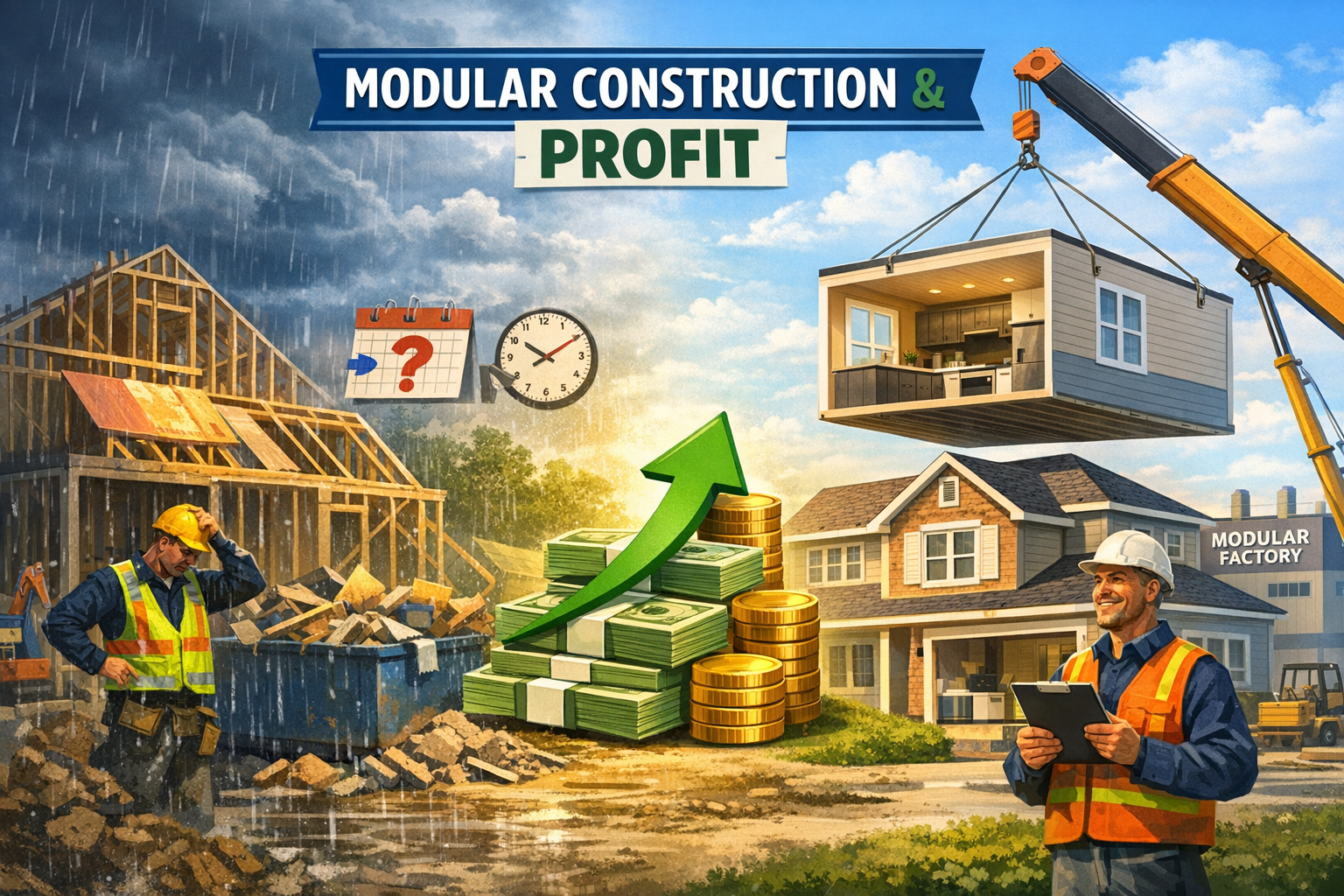
When a builder asks why they should consider modular construction, the real question is this: Will it make my business more profitable?
They’ve framed homes in the rain. They’ve waited weeks for subcontractors who promised to be there “next Tuesday.” They’ve absorbed surprise price increases and watched schedules unravel for reasons beyond their control. Yet they hesitate to make the change. Why? The old way is inefficient, but at least it’s familiar. For builders to get over this fear, they need to truly grasp modular’s intrinsic values. Here are the main ones:
Less waste. Jobsite waste is so common that it’s barely noticed. Dumpsters overflow. Scrap piles grow. Cleanup eats labor time. With modular construction, that waste disappears. And it’s not just on the site; most factories operate with a high level of material discipline. Excess lumber becomes blocking and bracing. Scrap wood fuels heating systems. Drywall and cardboard are recycled. This controls costs.
Shorter timelines. A custom home can take six to eight months after excavation to complete. Modular compresses that. When the modules arrive, what’s left is finish work, not months of exposure to weather delays and rescheduling chaos.
Schedules you can count on. A factory’s controlled environment offers predictable timelines. That, in turn, improves subcontractor coordination, customer communication and overall stress levels. Building becomes easier, and the business becomes stronger.
Fewer labor worries. Most of the skilled workers who left the industry when work slowed down aren’t coming back. But factories’ core workforce stayed intact.
Easier inspections. Every site builder has lived this nightmare: a failed inspection, a delayed subcontractor and a second inspection scheduled weeks later. Modular homes are inspected repeatedly in the factory by third-party inspectors. Problems get identified and corrected immediately. There are fewer delays, fewer surprises and more time to focus on what actually grows the business — selling homes and maintaining relationships with customers, suppliers and trade partners.
Consistent quality. In a factory, the same skilled people perform the same tasks over and over, using approved materials and standardized procedures. Builders need not wonder if two homes were built the same way to the same standards — because they were.
Price stability. With modular, pricing decisions happen upfront. And because what happens in the factory accounts for a large portion of the total cost, a lot of price volatility is absorbed before the home ever reaches the site. That allows builders to plan, price confidently and protect margins.
Modular isn’t a silver bullet. It doesn’t eliminate all risk. But it does reduce uncertainty — and in today’s market, that’s priceless.
For site builders who are still sitting on the fence, the real question isn’t whether modular works. It’s whether or not continuing to build the same way — while costs continue to rise, labor disappears and schedules stretch — is the bigger risk.
Faster innovation. In a factory environment, new products are vetted, priced and added to standard option lists. Builders don’t have to chase information or negotiate details. They can stay competitive without increasing their workload.