
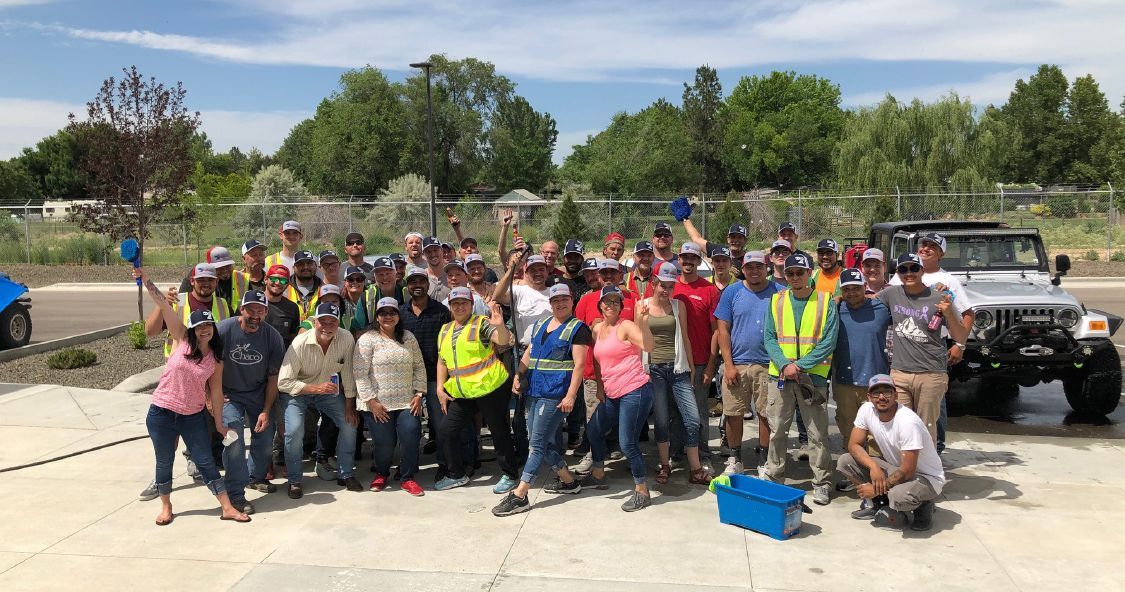
Offsite industry leaders explain how authentic company culture strengthens teams, improves retention and drives business results.
- Manufacturers facing labor shortages can gain competitive advantage by making employee experience a strategic business priority.
- Recognition, flexibility, clear communication and shared purpose motivate teams to achieve higher quality and greater production goals.
- Companies that invest in human infrastructure create stronger workforces capable of tackling increasingly complex projects.
A great company culture is clearly beneficial for employees. After all, it’s better to work somewhere that has a pleasant, comfortable atmosphere than one that doesn’t. But instituting and maintaining great culture takes resources, so company leadership naturally asks: What are the business benefits?
Culture as Infrastructure
Merrick Macomber is the Founder of Modular Maven, a consulting company based in Boise, Idaho. She directs culture at Autovol in Nampa, Idaho and does the same work at sister companies, Prefab Logic (which is also based in Nampa, Idaho) and PFL Engineering (which has offices in Nampa, Idaho and McKinney, Texas).
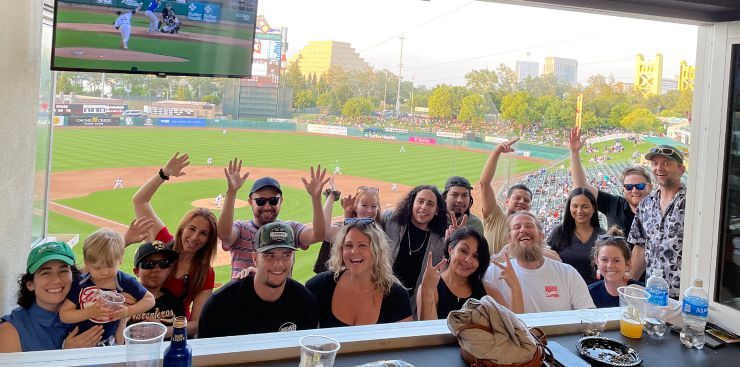
Macomber defines company culture as “taking care of the whole person.” She finds that employees are more productive and more likely to stay with the company if they feel heard, if it’s clear to them that they matter beyond their labor and if the company’s values are aligned with theirs.
She says that culture is part of a company’s infrastructure. “It’s the nuts and bolts of whether a company survives. It’s not optional fluff.” In fact, culture directly impacts retention, innovation, accountability, safety and morale. “The pizza parties and birthday celebrations are the cherry on the pie, and that’s okay, but you still have to have the pie,” she says, “and the pie is the human connection between the people in your company.”
Isaac Lassiter is President of Cutting Edge Modular, a small custom modular manufacturer based in Woodland, California. Lassiter says that his company’s culture is focused on supporting employees’ family lives and on being friendly and flexible, particularly in scheduling. “It’s really tailored to what our people need.” He gives the example of his office manager who needs to leave early a couple of days a week because of childcare needs. It’s not ideal from his own perspective, but because she’s a valued employee, it’s essential that the company adapts to her needs.
Lassiter wants employees to feel that working at Cutting Edge Modular is “a fair bargain” instead of feeling like they’re just “cogs in a machine and they’re being taken from.”
He adds that “When people feel like they’re part of something, when they feel safe and looked after, when their interests matter beyond the profit motive, the business goals — whether they’re financial or production or whatever else — tend to follow.”
He says that companies with weak cultures are like high school classrooms where teachers assign the work and students laugh and do the bare minimum they can get away with. In contrast, when the company culture is broadly accepted and employees feel like they’re part of something, “you can tell people you want to build 10 houses in the next month, or whatever your production goal is, and they take that seriously.”
The Retention Reason
For Lassiter, the main business benefit of healthy company culture is retention in a tight labor market. He calls Woodland a “tomato town” near Sacramento. Agriculture is the big employer, and factory work is hard to recruit for. “People can also drive to the Bay Area and earn 50% to 100% more than what we’re able to offer. So we have to find ways to keep them over time.”
And his company has been successful in that goal. More than 65% of Lassiter’s employees have worked there for four years or longer, and about a third nearly the whole eight years the company has existed.
Macomber believes that more companies will need to take culture more seriously in the future because “attracting and retaining employees is only going to get more difficult.”
Get To Know the Whole Person
Both Macomber and Lassiter think it’s important for company leaders to know their employees as whole human beings.
At Autovol, every new hire fills out a form with about 50 questions, including a “deep dive” section. “Some people are excited to fill out the whole thing, and some give you the bare minimum, and that’s okay too,” she says. The form asks new hires about their goals for the next two years and what they’re struggling with, and Macomber and her assistant check back in with people later. “If you’ve achieved your goal, you get a green light. Yellow if you’re not quite there yet. Red if it’s unclear how you’ll get there, and we’ll see how we can support you.” In addition to big goals, the form also asks for little details. “If someone says purple is their favorite color and they land in the hospital, we’ll bring them purple flowers,” she explains.
Lassiter and Briana Kresic, Cutting Edge Modular’s Co-Owner and Chief Operating Officer, get to know employees by being involved in operations every day. “I’m involved in everything from engineering, surveying, sales and deliveries,” Lassiter explains. “Kresic is involved in all the contract signings, any major HR issues and dealing with all regulations and taxes.” Because of this involvement, they know right away if someone’s repeatedly late, for example. Lassiter mentioned a case in the previous year, when an employee’s attendance slipped. His response wasn’t to reprimand them. He showed that he cared and sat down with them to try to understand their situation and also to remind them that they do need to show up for work.
Ultimately, he says you have to “tailor your expectations to the individuals you have and try to be responsive to their needs. Focus first on them and almost secondarily on profits.”
Employee Recognition
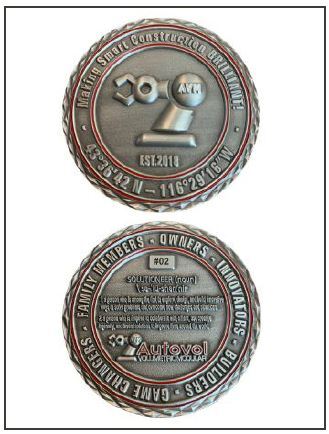
Autovol’s signature recognition is a numbered coin, given to Solutioneers (the company’s word for its people) who “are living by all our values.” The twist is that coworkers nominate people, not management. The coin is presented by the people who nominated the recipient, in front of the whole company. “It’s peers recognizing their peers,” Macomber says. “That makes a difference.” In particular, it avoids accusations of supervisors’ favoritism.
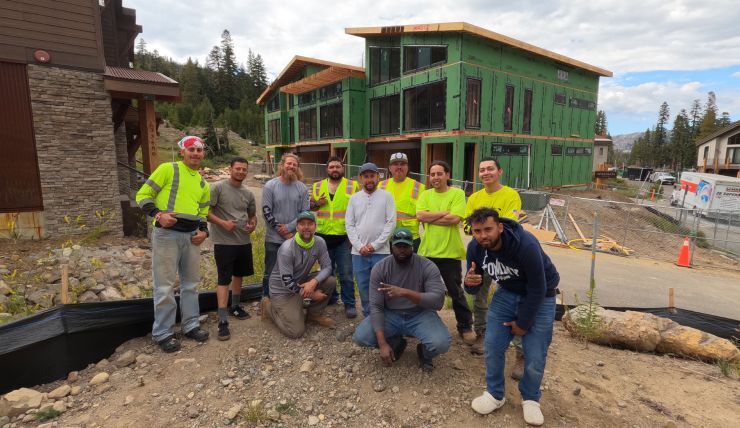
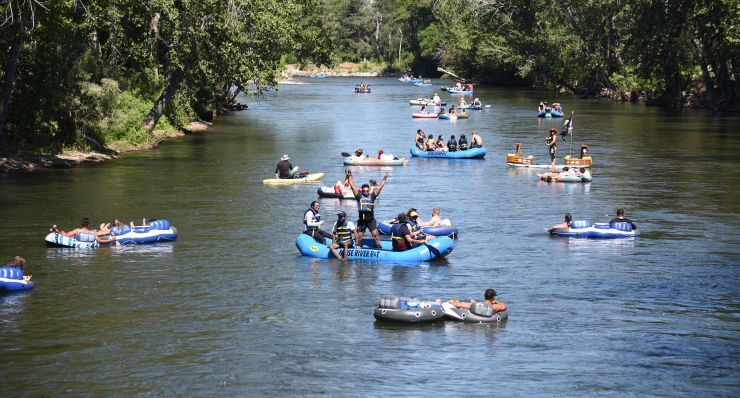
At a small company, Lassiter has found that recognition wears out fast and the gesture becomes meaningless. You can’t keep giving the same people awards. Injecting some humor helps keep things fresh. He once gave Employee of the Month to a drywall cart. He says, “The drywall cart does a great job and never complains.”
Mistakes
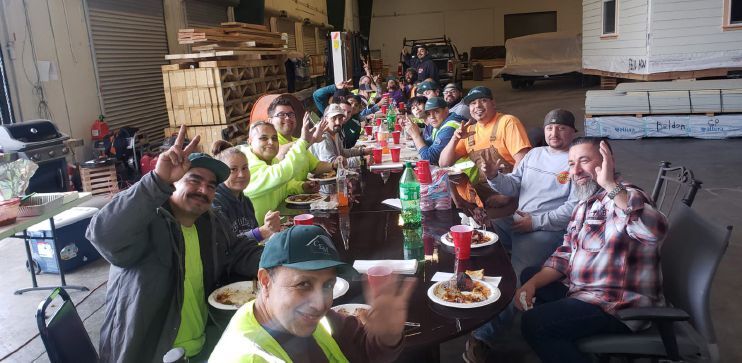
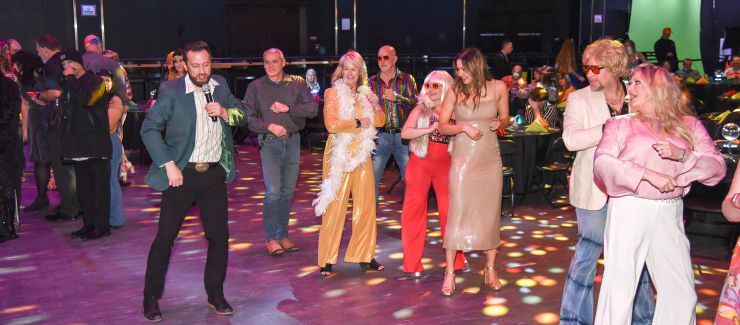
When asked about mistakes she’d made regarding culture, Macomber said she piled up so many traditions (Galentine’s Day, Mother’s Day, Friendsgiving, Fourth of July, a Halloween chili cook-off, a 500- person summer party…) that she couldn’t keep up. The lesson hit hard when she forgot an employee’s birthday at Prefab Logic. “He had no family of his own. And he was a more depressed type of person. He noticed everyone else got celebrated, and I wasn’t even there that day,” she recalls. She felt terrible and stopped doing individual birthday celebrations, except for milestone birthdays. Instead, “We give everyone the Friday of their birthday week off, which is 10 times more meaningful.” And it also costs less than cake and ice cream for everyone for all those parties.
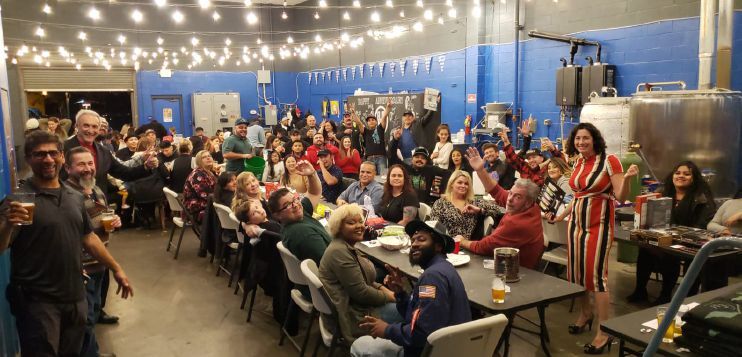
Lassiter’s mistake was to force the owners’ ideas onto their employees, instead of asking what they wanted. A couple of years prior, the team was working on a rural project high up in the mountains and there was nowhere nearby to buy food. “We had a large workforce up there and decided we were going to provide all their food.” Kresic even cooked for everyone. “She mobilized everything and did an amazing job. We were trying to make sure they were well taken care of and had healthy food.”
Although the owners were doing what they thought was best, the employees didn’t like it. “They wanted to bring their own frozen pizzas, burritos and Monster Energy drinks. We were almost trying to force our choices on to them.” He acknowledges it was a mistake. “Just give people the money for their per diem and let them bring their own food, they’re adults,” he says.
Grow Slowly to Preserve Culture
Another mistake Lassiter says Cutting Edge Modular made was related to rapid growth, which he says puts a strain on company culture. “We did a big social housing project and our company doubled in size in one year. We had a ton of new faces around here. We were running field and factory operations, and we were a little light on management and supervision.” He explains that you can’t double the number of employees but keep the same number of support staff. “If you try, you’ll pretty quickly see HR issues and other problems crop up, or some level of unhappiness or turnover of the employees.”
When possible, Lassiter favors slow, organic growth — letting people get to know each other over time, a process that helps shape the company culture. If you grow fast, he says, you quickly introduce a different atmosphere, which can tempt you to “put your blinders on” and impose culture from the top down. But people can tell when it’s fake. “It does have to feel authentic.”
Growth is a challenge to culture that has to be actively managed. Autovol has run a culture survey every year for six years, which helped land it on Idaho’s Top Workplaces five years running and USA Today’s list three times. The survey — which can be signed or completed anonymously — asks employees questions about what they’re struggling with, what’s causing them problems at work, suggestions for things that would improve their work life, and so on. Specific examples Macomber mentions are strain between departments, issues with work processes, training and development concerns, leadership accessibility and communication friction.
This year, Macomber felt nervous giving the survey, because the company just started a second shift. “Since introducing the second shift, we’re having communication struggles that we need to figure out. We need to make sure we’re working together as one team with one goal. Not just managers and supervisors, but the people working on the line. Our goal is to get everybody aligned and on the same page.” She acknowledges that after a few weeks of the second shift being instituted, they’re not there yet.
Autovol’s hiring process also reflects the importance of getting buy-in from people on the factory floor. Macomber explains: “Job applicants’ first interview is with company leadership. But then they have a second interview with the hourly people who are going to be on their team.” Macomber says the interview with the hourly employees who’ll actually be the ones working with the new hire is the biggest “go or no go” factor in hiring.
The Future of Culture
Macomber thinks culture is the “next breakthrough in industrialized construction, and in manufacturing as a whole.” She says, “Unless they invest in human infrastructure, manufacturers will struggle to keep their people.”
In addition to high employee retention, Cutting Edge Modular has experienced another kind of business payoff from looking after their employees. Lassiter’s crew “were so quality-focused, doing such good work and became able to handle more complexity, that we were able to move our products upmarket,” he says. The market kept asking for higher-priced homes and “the team wanted it. Their capabilities and performance supported it and, frankly, it’s more interesting and exciting for people to be part of quality, rather than pure production. If you give people an opportunity to help create a quality product, that’s a huge motivator.”
Zena Ryder is a copywriter and content strategist. She writes for magazines and companies, and also helps B2B service business owners and consultants turn their expertise into content that converts traffic and followers into clients. Find her at zenafreelancewriter.com.