

Disciplined scope and factory-grade standardization have helped this company scale. But the process hasn’t been without challenges.
• Regulatory complexity, especially in Massachusetts, pushed Backyard ADUs toward advocacy, licensing partnerships and modular manufacturing.
• Factory selection prioritized consistency, engineering rigor and robust ERP systems over price alone for sustainable scaling.
• Scope discipline — limited finishes, integrated delivery, repeatable processes — enabled weekly ADU production and controlled growth.
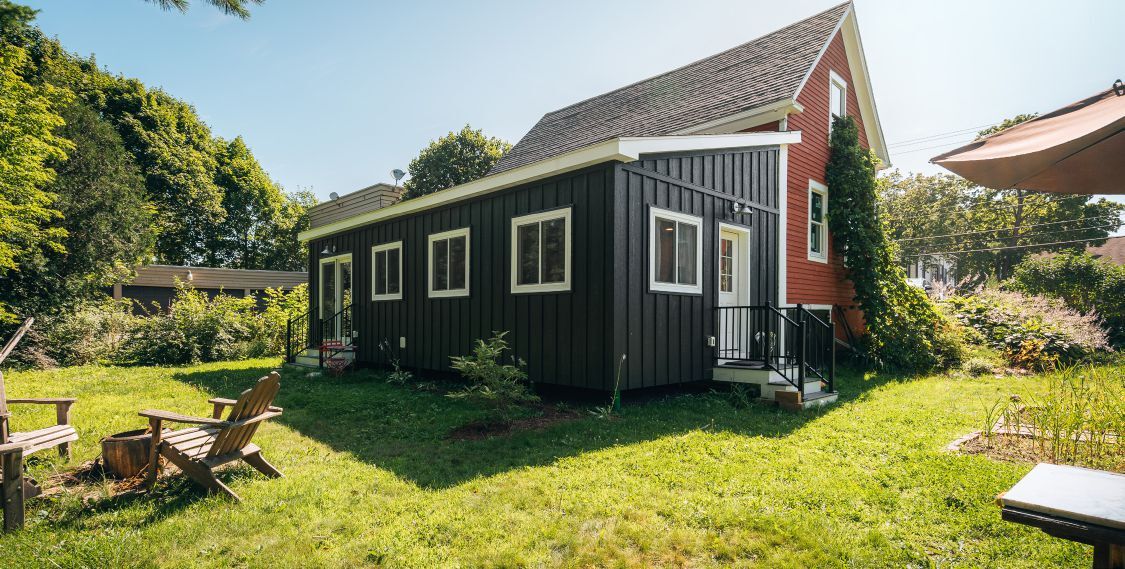
When Christopher Lee was working in product development for technology companies and renovating houses on the side, he “stumbled on the concept of ADUs,” he says. The fact “that you could build a small Accessory Dwelling Unit in somebody’s backyard,” looked like a business opportunity.
So, in 2019, Lee founded Backyard ADUs, which is headquartered in Brunswick, Maine. He assumed that homeowners would want “oversized tiny homes” as rental units on their property, but demand came from a different direction. “My original premise was wrong,” Lee admits. “Instead, it turned out that a lot of people wanted to build small houses for their aging parents.”
Staying flexible allowed Backyard ADUs to build a business around a use case Lee hadn’t initially imagined.
Licensing and Regulations
The company works in Maine, New New Hampshire and Massachusetts. That means navigating the regulations of three different states.
While Maine and New Hampshire were manageable, launching in Massachusetts presented some hurdles. For one thing, all new construction projects need someone with a Construction Supervisor License, or CSL. Without that credential himself, he brought on a partner to cover the regulatory requirement. “The CSL was just something that Massachusetts required, not something that was going to add a lot of value itself.”
However, he says that other issues with Massachusetts often felt like “a total nightmare.” For instance, each municipality has its own approach to building permits and inspections. “Individual electrical inspectors have different opinions on the electrical code, and they take it upon themselves to enforce it differently,” he says. “Such variations make it very hard to do the same thing multiple times, and to create repeatable processes.” These and other regulatory issues can add 10% to construction costs.
Despite the difficulties, Massachusetts offered a lot of demand, and the company has responded by investing time in advocacy. They’re helping municipalities draft ADU rules and working with state legislatures to help them understand what’s needed “to get ADU development to the levels of California and Seattle.” If fact, Backyard ADUs’ first home was built in Massachusetts, in the town of East Hampton.
Factories and Partnerships
That was just a start and Lee wanted to scale quickly. He wanted Backyard ADUs not to be “an East Hampton, business, but a New England business.”
He also believed that scaling would require them to commit to modular construction. “Modular allows you to augment a smaller local workforce with the brawn of an existing factory,” he says. In addition, “the best factories help you navigate code compliance, eliminate the need to hire an architect and produce stamped permit set drawings,” Lee explains.
The first steps Lee took were to “cold call modular factories on the East Coast, and hunt down a General Contractor (GC) who wanted to take a leap with me,” as business partner.
Not all factories called back, but some did, and selecting which factory to work with largely depended on consistency. “I was essentially looking to see which factory had the best controls in the manufacturing environment and was able to do the same work over and over again with consistently high quality,” Lee says.
Lee’s business partner, Austin Gregory, is a professional structural engineer, holds a CSL and serves as Backyard ADUs’ Head of Construction. “He plays a huge role in all our foundation plans, in checking what the factory does and in construction management.” Before bringing Gregory on, the company was reliant on the factory’s engineering.
The modular manufacturer the company eventually selected is Professional Building Systems based in Middleburg, Pennsylvania. What started as a focus on build quality has evolved into a deeper appreciation for systems and processes. “We find that what makes a manufacturing partner really good is having a really robust ERP [Enterprise Resource Planning] system, really knowing their costs and having that buttoned up, so it feels like you’re buying a product with specific features,” Lee says.
Clearly, in Lee’s view, price is just one factor when choosing a manufacturing partner. Robust systems, reliable engineering and consistency are what make the partnership sustainable.
Shaping the Business Model
At first, Backyard ADUs offered “DIY shells” to customers. That model didn’t last.
“It ended up being a bad experience for everyone involved,” Lee says. “We tried it because it was the traditional model for dealers: Design, sell the house, set it and then let the homeowner finish it. But we found that most homeowners aren’t capable of that. It’s too complicated, even if the home is 90% complete.”
Instead, the company moved toward a vertically integrated model, handling design, engineering, permitting and construction as a one-stop shop.
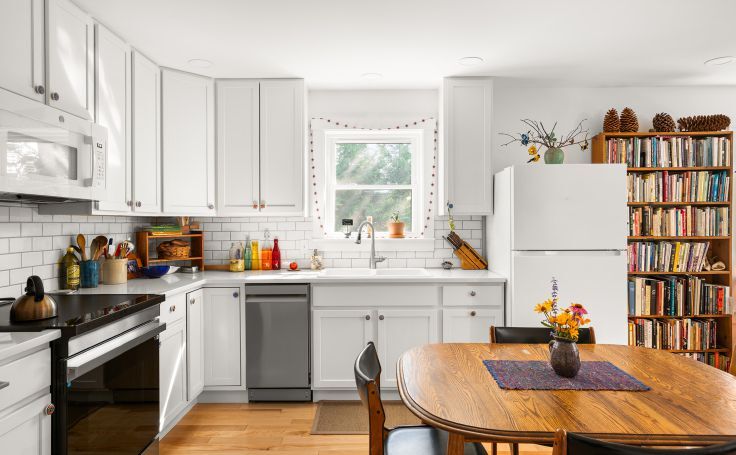
That focus included learning what not to do. “We don’t do landscaping. That’s a hard no,” Lee says. “We’re not going to get into planting or pavers.” The company also limits product choices, standardizing on a narrow set of plumbing fixtures, for example.“If somebody wants something other than that, we’re probably not the builder for them,” he says.
At the same time, Backyard ADUs offers flexibility where it matters most: in layouts and roof designs. “I don’t think we’ve done the same floor plan twice,” Lee says. But offering unlimited finish options proved far more disruptive to schedules and budgets. “It seems easier to do floor plan customization than offering more choice on the countertops,” he explains.
Customer Process and Design
Backyard ADUs has refined its customer process into three phases: site constraints and budget, floor plan design and finish selections. The goal is to move customers through these steps in less than three months.
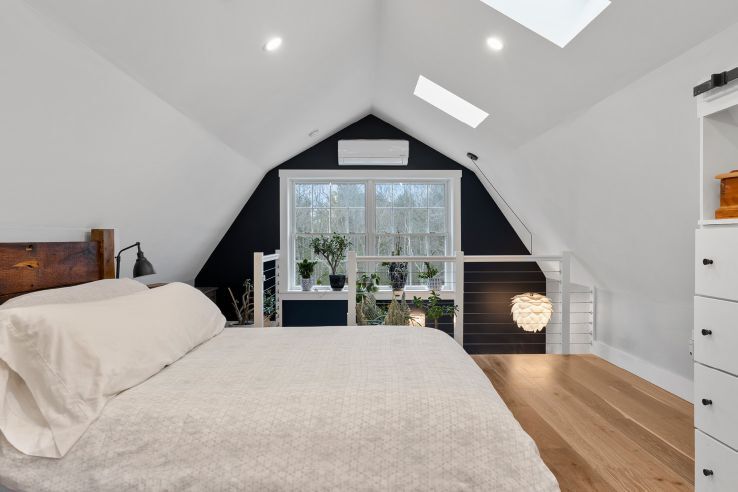
A surprising aspect of this process is how closely it considers furnishings. Many clients are older homeowners downsizing from larger houses. “When we’re doing customizations, one of the things that we ask for is a list of the furniture they’re bringing,” Lee says. “Because when you downsize into 1000 sq. ft., you actually need to think about the furniture. There’s no room for error on that.” This attention to detail prevents regrets by ensuring the finished home works for the customer.
Financing Challenges
Like many startups, Backyard ADUs began on a shoestring. Lee worked without pay for the first few years, supported by rental income and his wife’s salary. Fortunately, startup costs were inexpensive. “We paid maybe $500to Squarespace for a website, and $200 a month for Home Designer Pro software.” The software allows homeowners to design their own homes without needing to hire an architect.
By the end of 2025 (its sixth year) the company has completed about 120 ADUs. They are setting homes at a rate of one per week and their goal for 2026 is to bump that up to two per week. The company has also recently moved into multifamily projects, setting their first 3-story building in late 2025. The 16-unit project was located in Portland, Maine, and required 24 modules, which they set in two days.
But as volume increases, so does the need for working capital to sustain growth. “We’ve got a $5 million multifamily project going, plus an ADU a week,” Lee says, adding that cash flow has been tight. A local bank extended the company a line of credit and they were also able to secure a $750,000 loan through the Finance Authority of Maine and Coastal Enterprises Inc., which are lenders of last resort. “That loan was crucial,” he says.
Looking Ahead
Despite the expansion into multifamily, ADUs remain the company’s core business. “If we’re selling one or two ADUs a week, it doesn’t matter if one of them doesn’t make it through permitting, or if the homeowner decides not to build for a reason outside our control,” Lee says. “It has no impact on our business, and we can just keep moving.”
But multifamily doesn’t offer that flexibility. “If you build a business around a couple of large projects a year, then if you lose one, you go bankrupt.” Because of this, he says that the company will make sure that ADUs continue represent at least 50% of its business.
Backyard ADUs’ journey from a shoestring start-up to a regional modular builder offers practical lessons for the industry. Strong partnerships with manufacturers, disciplined scope management and clear customer processes have allowed the company to scale in New England’s complex regulatory landscape.
Zena Ryder writes about construction and robotics for businesses, magazines, and websites. Find her at zenafreelancewriter.com.