

A Factory That Runs Itself
Inside a new wave of robotic systems that cut and assemble engineered structural components with almost no human labor.
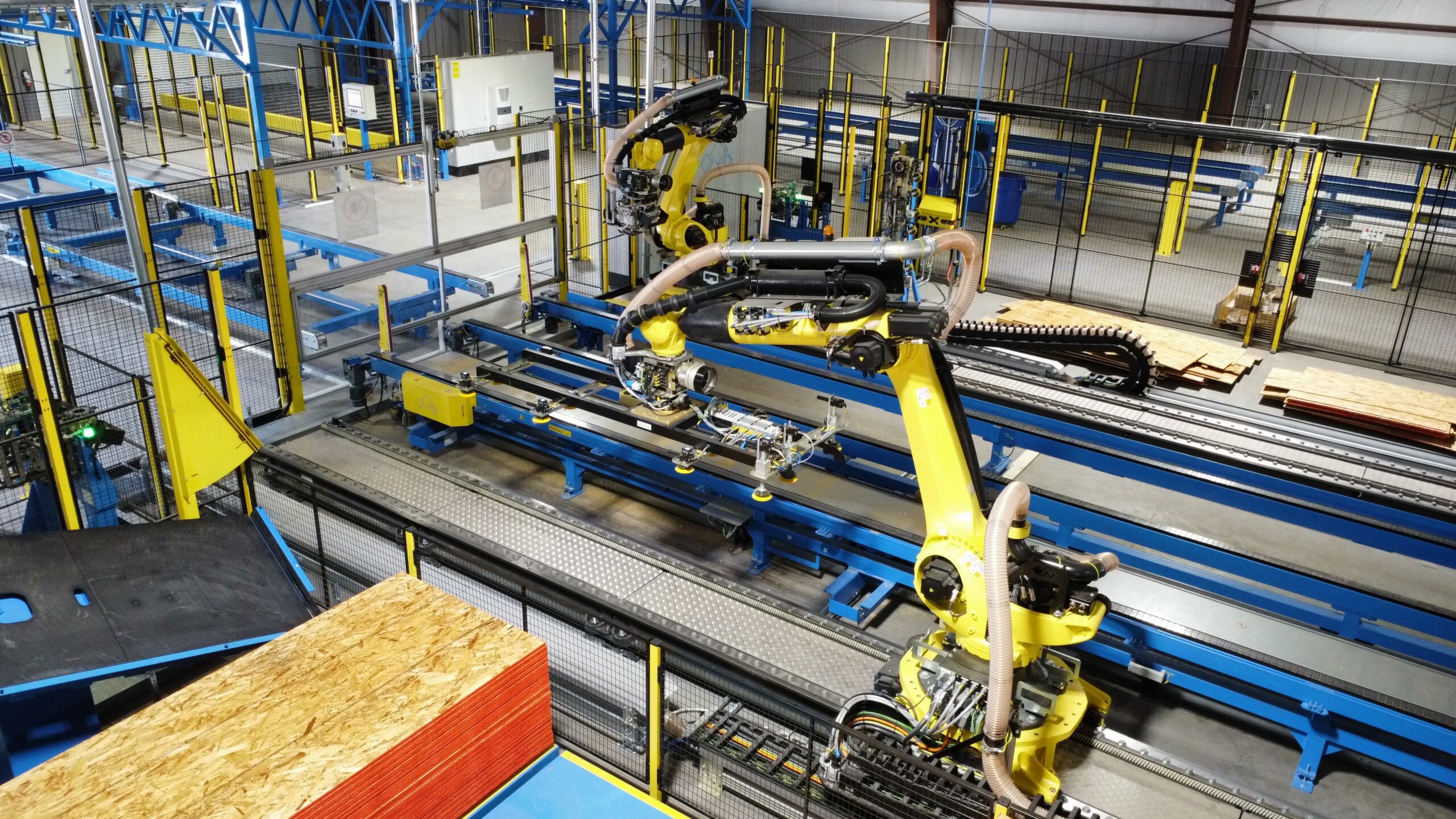
- Randek’s ZeroLabor robots can cut, frame, sheath and glue, with minimal human input.
- Factories can automate step by step or build full-scale smart systems with multiple robots.
- Automation addresses worker shortages, cuts costs and future-proofs offsite construction without losing flexibility.
Finding workers is a challenge for everyone in the offsite world. Randek, which designs and manufactures robots and other machinery for prefabricated homebuilding, says the technology is already available to let manufacturers phase humans out.
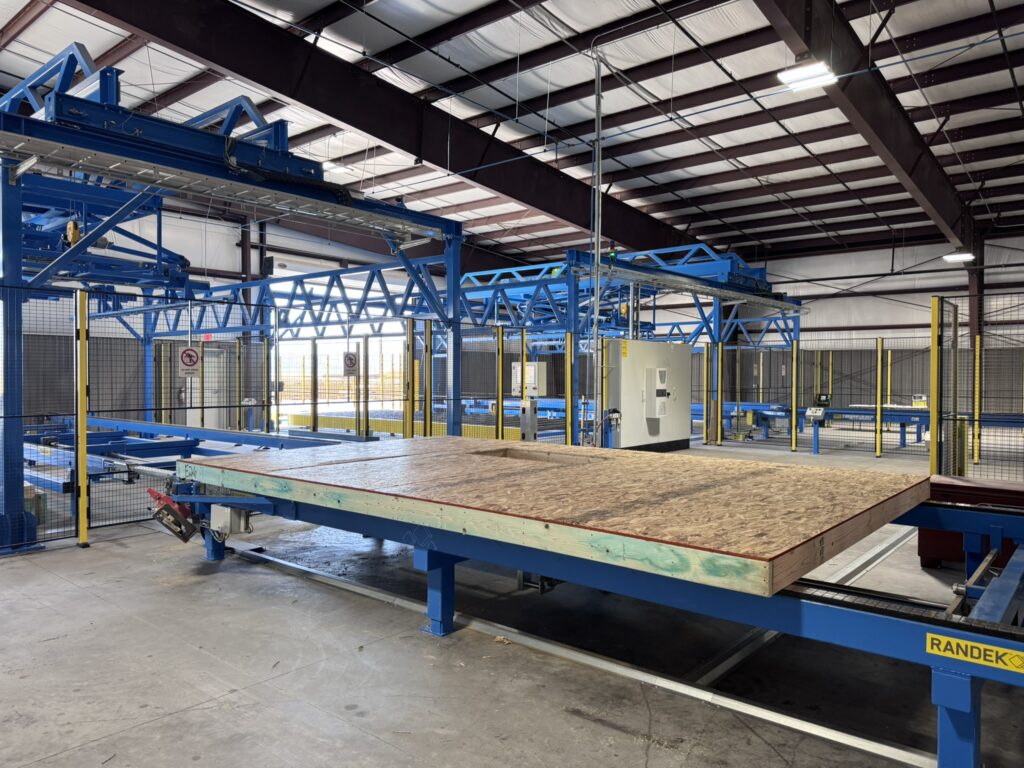
The company is headquartered in Falkenberg, Sweden and has a US office in Duluth, Georgia. Early in 2025, Randek officially launched its ZeroLabor robotic system: automated equipment that can be assembled in ways that eliminate the need for most human labor — the only exceptions being someone to monitor the line and workers to unload raw materials.
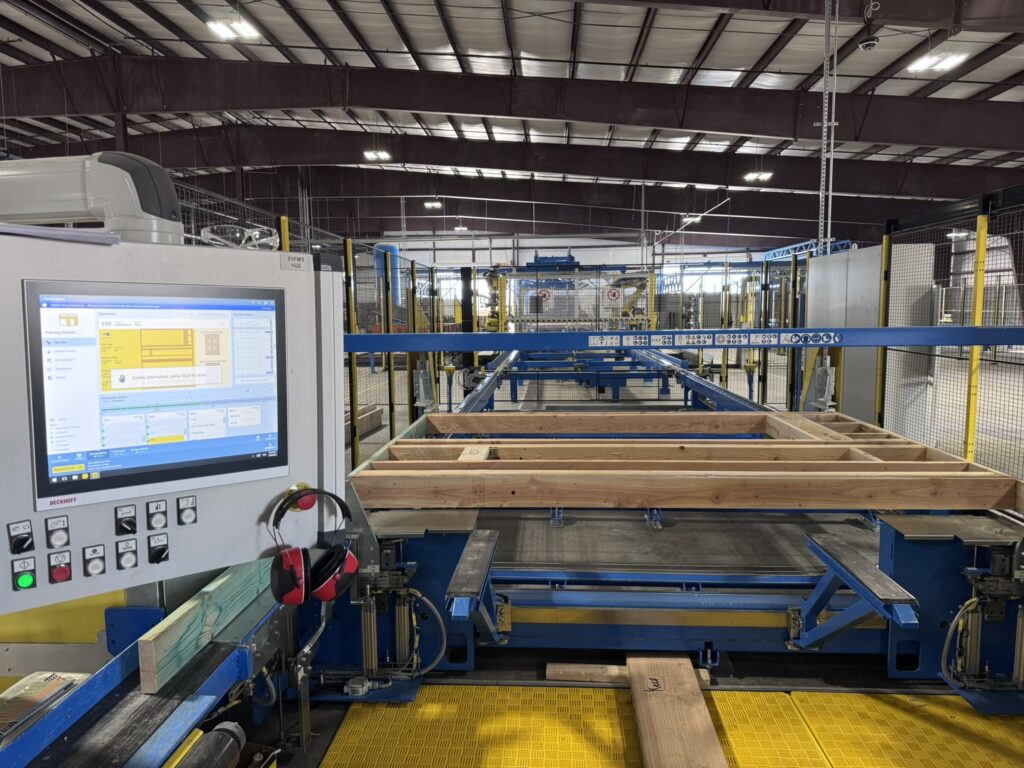
“Our ZeroLabor system can do pretty much every aspect of home manufacturing,” says Denis Zulfic, Randek’s Sales and Operations Director for the US. “They can cut, frame, sheath. They can glue, route, insulate, stack. So, it’s very highly automated.”
For manufacturers who are cautious, the system need not be implemented at once. Companies can add automation one piece at a time at whatever pace makes sense for them.
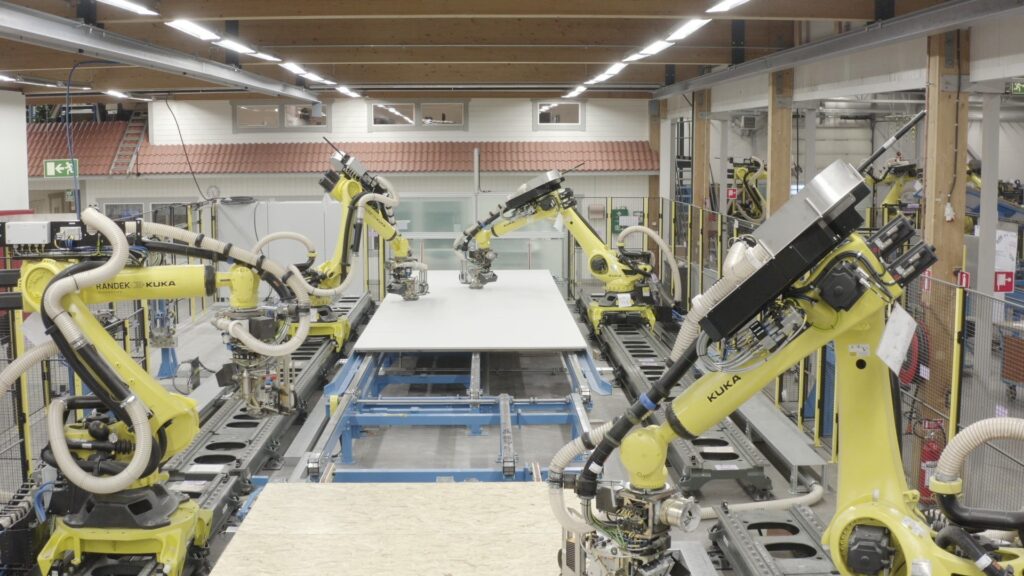
The reason for this adaptability, says Zulfic, is that the ZeroLabor system is modular. “A manufacturer could start with just one robot by itself, or they could design a full-scale smart factory, with multiple robotic cells that each have two to five robots.”
How Much to Automate
One company taking the gradual approach is FrameTec, a full-service component manufacturer and framing contractor based in Camp Verde, Arizona. FrameTec has several pieces of Randek equipment that could eventually be part of a ZeroLabor system and with these pieces have already managed to eliminate a lot of their labor needs.
Josh Lewis, Chief Operations Officer at FrameTec, says that automation has allowed them to reduce operators on their wall panel extruders from seven to three people. “We could pare that down to two if needed.” However, they chose not to go all the way at this time.
One reason they didn’t choose full automation is that doing so would have introduced limitations on the rough openings for doors and windows. “These include how close a cripple stud at the top of a window can be to a king stud — simple things like that where the human hand is still the best tool to do the more fine-tuned work,” explains Lewis.
However, the technology has improved in the time since FrameTec bought its equipment. “Our latest robotic systems are much more capable of managing those kinds of complex details with greater precision and flexibility,” says Zulfic.
Despite these advancements, there are still places where skilled workers make sense. That’s why, before any robots are ordered, Randek engages in a detailed process of investigation to determine what’s appropriate for that specific customer. Variables include what components they’re making and the size of their physical space.
“There might be custom shapes that a factory wants to be able to do that need to be handled manually,” Zulfic says. “We’re always upfront with the customer, letting them know we need to review their designs to see which steps — if any — it makes sense for them to automate. For some, it’s the entire factory. But some factories have been around for 50 or 60 years, and they don’t have the space for full automation, even if it would otherwise make sense for them.”
Other factors to consider when deciding to automate are the willingness and ability to train operators and, of course, cost and ROI. Zulfic says Randek also “looks at the materials the manufacturer’s using. Maybe there are some materials that aren’t easy for the robots to handle or they’re too heavy. We have to look into every aspect of what they do.”
Like any equipment — from hammers and handsaws to 21st century robotics — there are limits to what Randek’s system can handle. “The system can do anything up to 40 feet or 12 meters in length, and 4 meters in height,” Zulfic says.
Putting It in Place
Automating a factory is not an overnight task. “With any automated machine — whether it’s a robot or just a standard bridge type machine — it will take us 10 to 12 months to manufacture it,” Zulfic says. After shipping, installation is the next step. “If it’s just one robot it might be as quick as three weeks. Multiple robots could take eight weeks.”
Depending on various details, Zulfic says, “From placing the order for the robots to walls coming out takes 12 to 18 months.”
He also emphasizes that Randek is a hardware manufacturer, and that their robots can be made adaptable to whatever design software their customers use. “European customers might work with Vertex or Revit. In the US, it might be MiTek or Eagle Metal. We need the CAD file from the design software to be exported as a CDT file which drives the logic behind the automation of our systems — whether it’s a robot, a framing machine, or a bridge,” Zulfic explains.
Getting the set-up right between the design software and the hardware can take a little time. FrameTec uses truss design software from Eagle Metal (headquartered in Mabank, Texas.) Lewis says, “Eagle and Randek had never worked together before, so we spent quite a big of time collaborating to get everything working together well in the same ecosystem. Even today, we’re still finding ways to improve how the Eagle files come through, and how the code is written, and how the files interact with the Randek equipment.”
He says that the set-up process was painless. “The Randek equipment was up and running quickly, pretty much flawlessly from day one.” And Lewis has continued to be pleased. “We’ve now done a couple hundred cycles and there have been only very minor issues, such as a bolt coming loose. I’ve been very impressed with the equipment.”
How Much?
Costs for automation vary widely, depending on the number of robots and the overall extent of the automation. Zulfic says, “If someone wants just one robot to do just one task and it’s not integrated into a line, that could be around $600,000.” But a manufacturer could have five robots in one cell doing multiple tasks — cutting, gluing, nailing, sheathing, etc. — and they could have multiple lines with robots. “That could be from $2 million to upwards of $5 million.”
Of course, one of the main problems that robots help to solve is the shortage of human labor. Lewis says that while it hasn’t opted to eliminate labor totally, FrameTec’s equipment has made its limited labor pool more effective.
FrameTec also uses a robot from Mountain View, California-based Dusty Robotics to print the framing layout on concrete slabs, instead of relying on manual layout.
The point is that full automation isn’t a utopian dream. It’s here, now, and can be implemented one step at a time. “Builders [can] reduce today’s labor pressure and future-proof their businesses,” says Zulfic.
The equipment isn’t difficult to use, either. “These systems are very intuitive and easy to operate,” Lewis says. “Our younger hires are digital natives. They’re used to things like touch screens. Within a week of training and mentoring with a more experienced operator, they’re pretty much ready to run the equipment on their own.”
He also finds that automation makes hiring easier. “We can hire people who wouldn’t be going to work out in the field banging walls together manually. We’re able to get the work done in a controlled environment.” And, he adds, “It’s a lot funner!”
Zena Ryder writes about construction and robotics for businesses, magazines, and websites. Find her at zenafreelancewriter.com.