


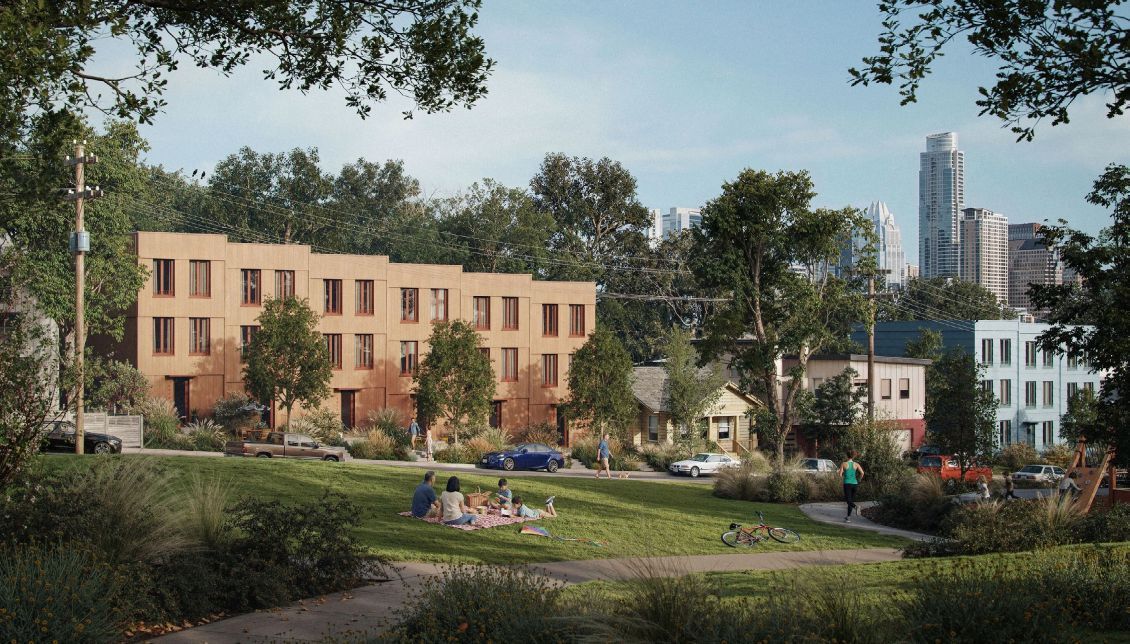
How The American Housing Corporation is rethinking the starter home.
• The company wants to help alleviate the housing shortage by vertically integrating land, design, manufacturing, assembly and sales.
• Its rowhome focus targets missing-middle housing in job-rich, established neighborhoods.
• Offsite manufacturing and repeatable systems aim to cut cost and time.
For years, we’ve watched the same slow-motion movie play out in city after city.
Young couples end up renting longer than they had planned to. Families delay having kids. Teachers, nurses and early-career professionals get pushed farther out from the city — until the commute becomes a second job. And when someone finally does propose building more housing “where the jobs are,” the plan gets killed by the same familiar problems: land costs, permit timelines, labor, supply chain and the endless handoffs between designers, manufacturers, GCs and sales channels.
So, when I see a company stand up and say: “Fine. We’ll do it all — land, design, manufacturing, logistics, assembly and sales,” my first reaction isn’t skepticism.
It’s respect.
That’s the bet The American Housing Corporation (AHC) is making. It’s building a fully vertically integrated model that treats housing less like a one-off craft project and more like an industrial product, using mass-produced offsite components. And their goal is to do it without sacrificing the neighborhood feel that families want.
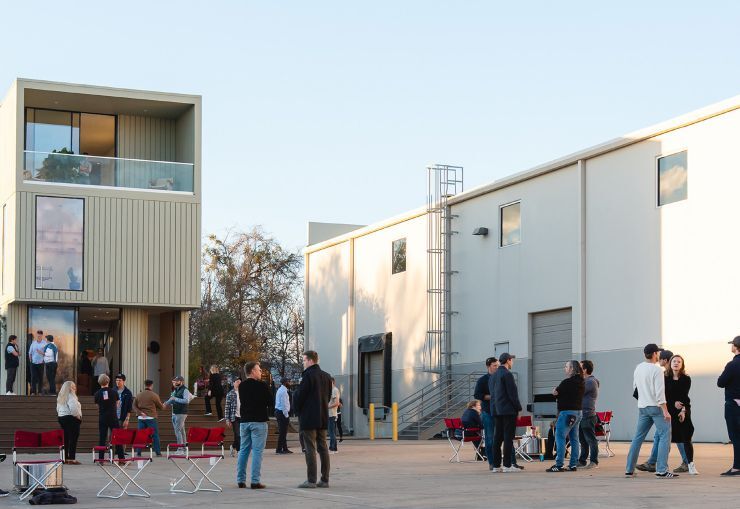
The company was founded in 2024 in Austin, Texas, and opened its first factory there in 2025. They claim to have projects planned in several states, including Texas, New Mexico, California, Washington and Montana.
Missing Middle You Can Build
Their first product is a housing type most Americans recognize, but too few builders are producing at scale today: the rowhome (or townhouse, depending on where you live). It offers enough density to make an infill project pencil out, as well as enough production efficiency to build again and again. And it feels like a real home to potential buyers.
In an article published on February 3, 2026 at FastCompany. com (“The row house is back to solve the housing crisis” by Adele Peters), AHC Co-Founder and CEO Riley Meik points out the obvious truth many developers dance around: the US is very good at building single-family homes at the edge of town, but the production homebuilding machine rarely shows up in the neighborhoods where people already live and want to stay. “Row homes are an underbuilt category in the United States,” he says.
And that’s the heart of AHC’s mission — starter homes in what the company’s website describes as “centers of prosperity,” not starter homes two counties away.
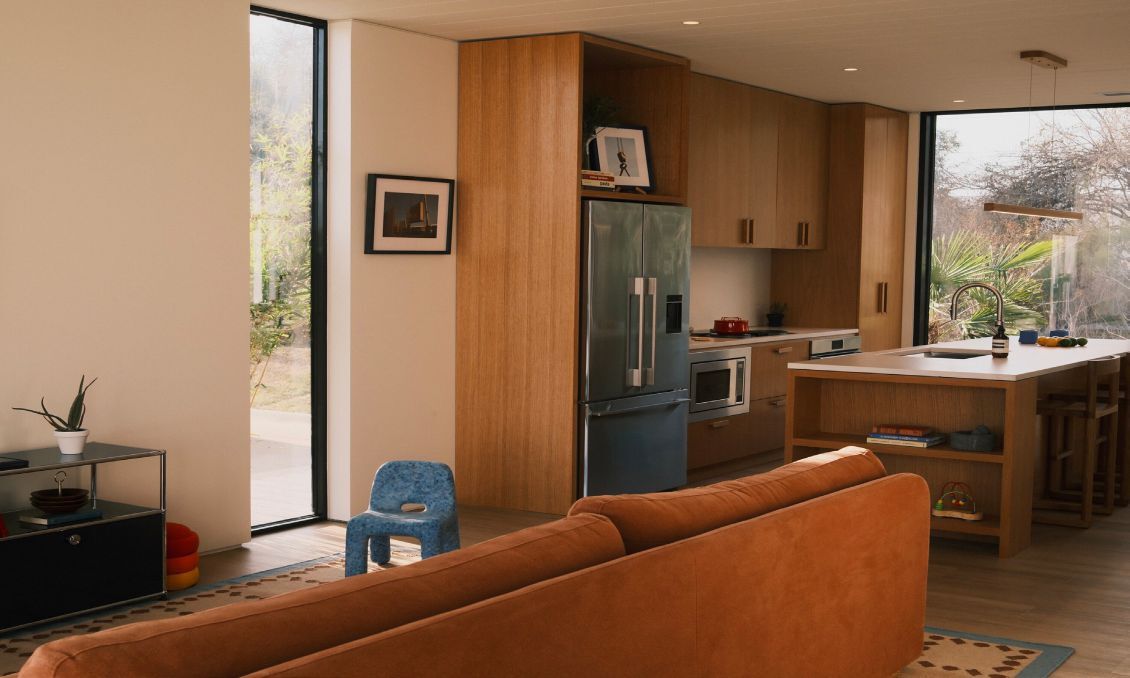
Of course, many startups have big ideas and beautiful renderings, but the real players are those that pour concrete, run equipment and finish a prototype. AHC has already completed a first prototype rowhouse at its Austin operation, and has publicly positioned it as the seed of a broader rollout.
Vertical Integration. Manufacturing Brain.
When people hear the term “vertically integrated,” they often think it just means “we own more steps.” What stands out here is exactly how AHC is trying to own the steps — with systems, tooling and repeatability.
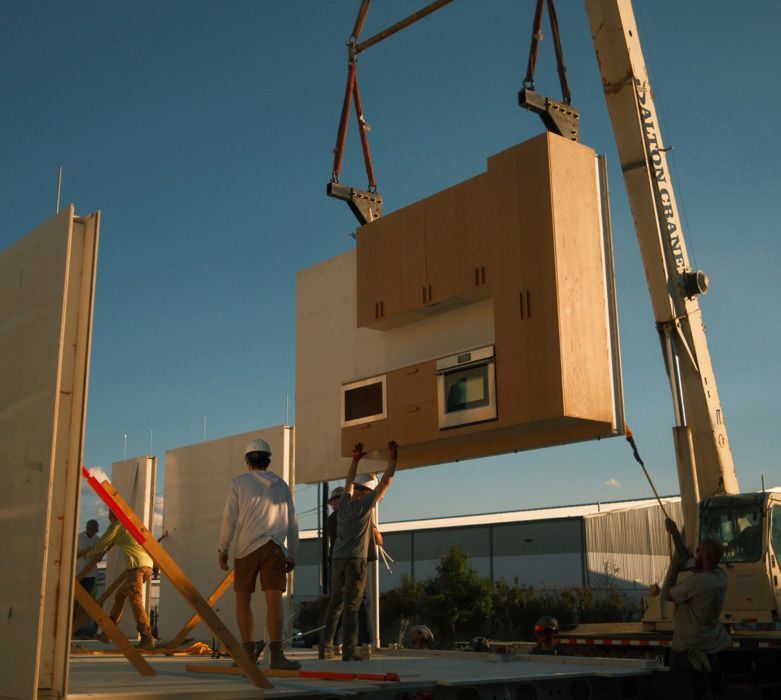
The company uses a proprietary kit-of-parts approach for its rowhomes. Their production system is designed for mass production, low-cost shipping and rapid on-site assembly. They claim to manufacture major components in-house using custom machines and tools that use automation for consistent output.
The operation folds land acquisition, home design, component manufacturing and direct sales into the organization. Their logistics is built around flat-packing components into intermodal containers and assembling on-site in days using repeatable processes.
If you’ve spent time around offsite construction, you know why this matters: consistency isn’t a motivational poster. It’s a process decision.
They also claim to have an internal software platform (which they call Alamo) that coordinates the development stack — from underwriting and site planning to factory production and on-site assembly.
I’ve watched too many projects stumble because the factory schedule, the site schedule and the financing schedule weren’t living in the same universe. If AHC can truly unify those workflows, that’s not just nice to have, it’s survival gear.
From Outside the Echo Chamber
One reason the housing world doesn’t change quickly is because most of the decision-makers grew up inside the building industry, and they tend to share the same sets of assumptions.
Meik brings an outsider’s perspective. The FastCompany.com story describes him as an engineer who had been thinking about the housing problem while working at SpaceX’s former Los Angeles-area headquarters. He connected online with others who shared his obsession to solve that problem, and cofounded AHC with them.
The company’s decision to embrace software development, manufacturing and real estate can lead to disaster if done wrong. But it can be a powerful combination if approached with an open mind and a willingness to learn. That’s what AHC seems to be doing. They aren’t pointing fingers at zoning boards, inspectors, labor markets, or the supply chain as an excuse to sit still. Instead, they’re taking responsibility for the entire cycle.
Their goals include:
• Buying land in strong neighborhoods
• Designing and engineering homes for repeatability
• Manufacturing components in automated facilities
• Assembling homes rapidly on-site
• Selling or renting directly to customers
That level of integration is the opposite of the fragmented model that lets everyone blame someone else when timelines slip and budgets blow up.
After the Prototype
A company can be right about the problem and still get bruised by the realities of creating housing at scale. Here are three pressure points to watch as they grow:
- Local approvals at infill scale. Rowhomes sit in the crosshairs of neighborhood politics. The model works best where cities actually allow missing-middle housing to move through permitting without a three-year wrestling match.
- Cost targets vs. starter home expectations. The FastCompany.com article mentioned that early Austin homes could sell for around $750,000 (with prices varying by market). That may qualify as a starter home in certain high-cost neighborhoods — but affordability is local, and the perception battle is real.
- Scaling manufacturing without losing the plot. In a business that depends on volume, the factory becomes either your best friend or your loudest critic. AHC’s emphasis on custom machinery, repeatable installation and intermodal logistics is promising, but the scaling curve is always steep.
For those of us who’ve lived in the offsite/modular world for decades, this model — developer and manufacturer under one roof — has both a familiar ring and a new twist.
The familiar part is that when you control more of the process (especially design and logistics), you’re better able to protect quality and margins. What’s new is that they’re aiming that control at infill missing-middle housing — not only greenfield subdivisions — and they’re trying to ship components efficiently and to assemble them fast, like a field-deployable manufacturing product.
If they succeed, they won’t just add units. They’ll provide a modern proof point that “industrialized housing” can feel like traditional neighborhood architecture while using offsite manufacturing to build at scale.
And in an industry that’s been promising transformation for as long as I’ve been writing about it, I’m always gratified to see someone stop promising — and start building.
Gary Fleischer serves as Editor-in-Chief of Offsite Builder, as well as Editor of ModularHomeSourcePro.com.