

Why consistent, educational communication outperforms discounts and urgency in offsite construction marketing.
• Offsite builders need email marketing because buyers require education, reassurance and repeated exposure to the company’s message.
• Visual storytelling, project updates and behind-the-scenes content humanize the brand and support credibility.
• Email newsletters support both new prospects and past clients, influencing future projects and referrals.
Tess Wittler has spent more than 17 years working as a marketing consultant for the residential construction industry. She works primarily with custom homebuilders, remodelers and specialty construction businesses. She also runs an online community, The Construction Collective, which helps small construction companies improve the effectiveness of their marketing dollars.
“A lot of my clients may have someone doing part of their marketing or they may even be using an agency,” she says, “but they still want to be educated to ensure they’re making smart decisions.”
The Value of Email Marketing
In Wittler’s view, email newsletters are a valuable tool for companies in the offsite construction industry. Prospects might discover a business on social media, but email is where businesses built trust with them.
“Companies in this industry are trying to build relationships and educate their customers, and email’s perfect for that,” she says.
Linda Klētniece, Head of Marketing at Manta North, a modular homebuilder that uses Cross Laminated Timber (CLTs) to manufacture its modules, agrees. The company’s head office is in Stockholm, Sweden, and their North American assembly center is in Salt Lake City, Utah. “Email gives us a direct channel to people who have already expressed interest. We can stay present without being intrusive. It builds familiarity and trust.”
Craig Toohey, who leads Marketing and Business Development at Collective Carpentry, a prefab builder based in Invermore, B.C., Canada, concurs. “Email nurtures potential clients, keeps them informed of what’s happening at our company and the projects we’re working on,” he says. “It keeps us top of mind.”
The Role of Social Media
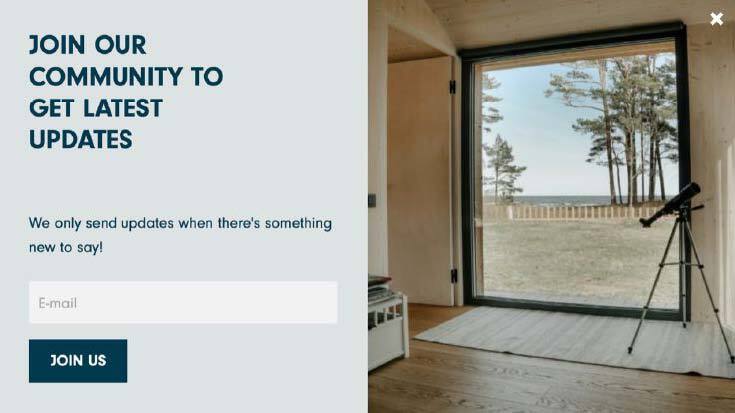
Social media content can be used to “tease” and drive traffic to a company’s website, where prospects can subscribe. Make sure your Sign-Up form is prominent, not hidden at the bottom of your Contact page.
Different social media platforms suit different companies. Instagram is Manta North’s platform of choice because it helps people “understand the visual identity of our homes,” Klētniece says. Wittler agrees that when selling directly to homeowners, “putting beautiful photos of finished homes on Instagram” is a good route, especially if you’re marketing to older buyers. “If you’re targeting Millennials or younger, you might want to go to TikTok.”
When selling to developers or other businesses, she says that LinkedIn is likely a better fit.
Wittler also recommends YouTube’s broad audience for everyone. “You can put a link in the show notes to sign up for your email newsletter.”
She cautions never to add people to an email list without their consent, to keep from running afoul of anti-spam laws.
Planning Sequences
Downloadable lead magnets can be an effective way to win subscribers. Three possible ideas, according to Wittler, are “a preconstruction checklist for modular or panelized projects, a builder’s guide to preparing for crane day and a timeline comparison of stick-built versus offsite.” These and other resources help prospects understand your process and should lead them to your email welcome sequence.
New subscribers should automatically receive a welcome message with a link to the free downloadable lead magnet and, over the next few days, perhaps one or two additional automated messages. If a subscriber downloads a lead magnet, the welcome sequence can expand on that content. Wittler says, “educational material is gold, especially if you’re a manufacturer trying to bring more builders into your fold.”
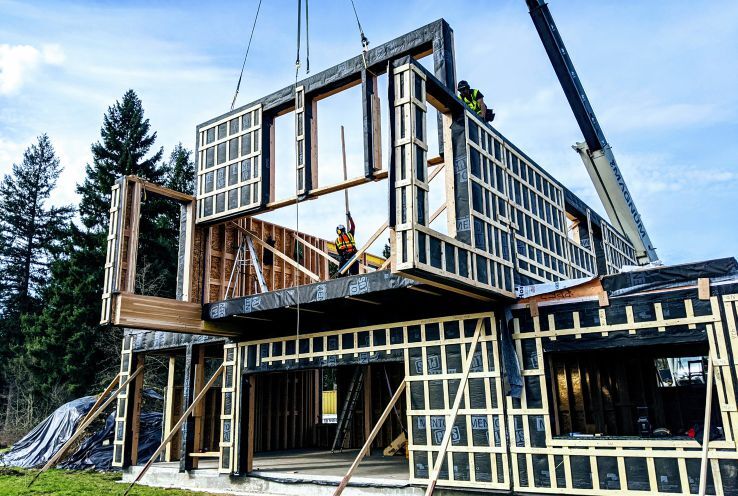
After the welcome sequence, everyone receives the same ongoing content. Wittler suggests categories like “project spotlights, installation photos, framing and timeline details, crane-day images, labor considerations, lessons learned, production updates, new equipment, improvements in lead times, new product offerings and team insights.”
Toohey uses email as a news outlet. “We update clients on where and when we’re installing new projects, hosting open houses, attending conferences, making investments in production, etc.”
No matter the content, Wittler says, emails “should be written for skimming, with section headings, bullet lists, important points in bold, things like that.” Never send big blocks of text. “Photos are really helpful for breaking up text.”
Manta North relies heavily on images. “Our content tends to be highly visual. Sometimes it’s a completed project, sometimes an insight into materials or architectural choices,” Klētniece says.
While companies differ in ‘personality’ and how businesslike versus informal their style is, in all cases — including business-to-business — Wittler says, “people want to know the humans behind the business.” Highlighting engineers, project managers, or plant staff helps audiences understand who they would be working with and who can answer their questions.
‘Evergreen’ content is especially valuable. “That means it needs to be updated no more than annually, maybe with just a few updated numbers here and there,” says Wittler.
Content can also be repurposed over time and across multiple channels — blog posts, videos, sponsored articles and various social media — as long as it’s still relevant. And the same newsletter content can be re-sent after a year or so. “Not everyone reads every word you publish,” she says. And reuse ensures that new subscribers see it.
Although Manta North doesn’t resend old content, they put new stuff to more than one use. “A story introduced on Instagram might be expanded in a newsletter. A newsletter topic might develop into a longer feature. Each platform has a role.”
Same with Collective Carpentry. “We often post a newsletter, and to Instagram, Facebook and LinkedIn at the same time,” Toohey says.
How Often?
How important is consistency? Wittler recommends sending newsletters monthly, or every other month for companies with longer project cycles, such as custom homebuilders. Pick a time of the month and stick to it. “Show up in their inbox month after month,” she says. This builds trust and name recognition.
However, each company will have to run tests to figure out what generates audience engagement. For instance, Manta North only sends newsletters “when there’s something meaningful to say. Our audience responds well to relevance rather than frequency,” Klētniece says.
Formats and Measurement
How long should newsletter articles be? “Some companies send a 300 to 500-word (or even shorter) email introduction to an Allowing subscribers to choose their preferences and segmenting your list accordingly reduces unsubscribes and increases engagement rates.article and link to the full version on their blog,” says Wittler. Others give a synopsis of a whole article in the newsletter, so the reader has an overview of all the key points — and then invite them to the website for more detail. Others put full-length articles in their emails.

Again, testing is a key to making the right choice. Companies should monitor open rates, click-through rates, bounces and unsubscribes to see what works for their specific audience.
“Engagement metrics, especially open rates, help us understand whether a topic resonated,” Klētniece says. Toohey’s company also measures “open rates, click rates and conversions (clients reaching out).”
How long does it take for a subscriber to become a customer? “There is no standard timeline,” according to Klētniece. “A home is a carefully considered purchase; some people decide quickly, while others follow the brand for a longer period.”
Furthermore, says Toohey, “there’s not always a clear flow of subscribe, nurture, quote, sell. Often the newsletter is as useful for customers we’ve worked with before or customers we’ve quoted in the past, where a first project might not be a no-brainer, but future projects may make sense.”
Klētniece says that one consistent insight is that “promotional tactics don’t work for Manta North homes. Our audience doesn’t respond to discounts or urgency. So we focus on clarity and meaningful content rather than promotional pushes.”
List Health: Scrubbing and Segmentation

Email lists naturally degrade over time as people change roles or lose interest. Wittler recommends reviewing lists at least annually and removing subscribers who haven’t opened or interacted with emails in 90 days or so. If you hesitate to simply delete contacts, “You could run a re-engagement campaign by asking inactive subscribers if they still want to receive your messages,” Wittler suggests.
Segmentation can further improve performance. Different people in your audience may want different content. “Some might prefer project updates, others want technical content, while others want only major announcements,” Wittler says. “It’s important to send people what they want, as opposed to just everything,” she adds.
This is especially important if you have very different customer profiles, such as developers and homeowners. Allowing subscribers to choose their preferences, and segmenting your list accordingly, reduces unsubscribes and increases engagement rates.
Email Service Providers
Most of Wittler’s clients use MailChimp as an email service provider (ESP) because it’s simple, but others prefer Constant Contact, MailerLite, or CRM integrated systems like GoHighLevel. Free plans may be tempting, but they often lack key features such as automation, which is essential for lead magnet delivery and welcome sequences.
ESPs can differ in other ways, too. “Constant Contact is easy to use and has some decent reporting and analytics, but it doesn’t provide landing pages, whereas MailerLite does. MailChimp has over 300 integrations, whereas some of the others do not integrate well.”
An Important Part of the Sales Process
Email ‘signals’, such as clicks or replies, are important to the sales process. Toohey says, “we reach out to people who click on links in our newsletter to offer support — sometimes in an automated way, sometimes in a more manual way.”
Similarly, Klētniece says, “we look at conversations that start after a newsletter is sent. Those replies or requests for more information often signal the beginning of a project.”
Wittler cautions that while you can’t expect your email newsletter to do all the work, it can do a lot. In an industry where projects are complex, timelines are long and trust is essential, the human connection matters.


Zena Ryder writes about construction and robotics for businesses, magazines, and websites. Find her at zenafreelancewriter.com.